Fellowship Alumnae


Afghanistan (10 fellow)

Algeria (1 fellow)
Armenia (1 fellow)
Bangladesh (6 fellow)
Belarus (1 fellow)
Bosnia and Herzegovina (1 fellow)
Brazil (1 fellow)
Cameroon (3 fellow)
Colombia (7 fellow)
Ethiopia (1 fellow)
Fiji (2 fellow)
Georgia (1 fellow)
Haiti (1 fellow)
India (19 fellow)
Iraq (42 fellow)
Jordan (5 fellow)
Kashmir (13 fellow)
Kenya (5 fellow)
Lebanon (15 fellow)
Libya (23 fellow)
Malaysia (1 fellow)
Maldives (2 fellow)
Mexico (1 fellow)
Morocco (6 fellow)
Myanmar (4 fellow)
Nepal (8 fellow)
Nigeria (8 fellow)
Pakistan (17 fellow)
Palestine (15 fellow)
Peru (2 fellow)
Philippines (3 fellow)
Saudi Arabia (1 fellow)
Somalia (1 fellow)
South Sudan (8 fellow)
Sri Lanka (16 fellow)
Sudan (5 fellow)
Syria (53 fellow)
Tunisia (6 fellow)
Turkey (10 fellow)
Uganda (3 fellow)
Ukraine (7 fellow)
Venezuela (1 fellow)
Yemen (52 fellow)
Zambia (1 fellow)
Zimbabwe (4 fellow)
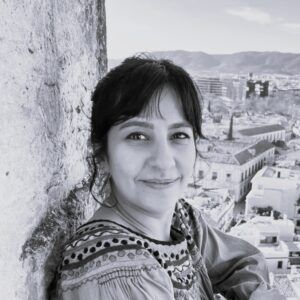
Najd
Najd is a Human Rights Lawyer with 12 years of experience leading gender justice work in conflict-affected countries across the SWANA region and in Africa. She has supported grassroots feminist and women-led organisations in addressing the gendered impact of conflict. Najd worked with UN agencies to promote gender-transformative policies and programmes, drawing on her legal expertise and feminist knowledge. She also has experience supporting governments in developing national action plans on WPS that centre women’s-led civil society organisations. She has led WPS trainings with the military and law enforcement in Jordan.
Najd is from Riyadh, Saudi Arabia. She was in the first cohort of Saudi women who graduated from law school. Despite not being allowed to practice law due to her gender, she continued to develop her skills, as she is committed to supporting women’s rights in Saudi Arabia and the region, and she obtained her master’s in International Human Rights Law from Northwestern University.
Participant in: July 2026 Fellowship: Peacebuilding and Women’s Meaningful Participation in Peacebuilding Processes

Olha Nykorak
Dr Olha Nykorak has been coordinating the Human Security Programme at the Heinrich Böll Foundation – Kyiv Office since September 2023. Her work focuses on promoting human security in Ukrainian and global discourse and raising the visibility of Ukraine’s vision in European and transatlantic security debates.
Olha has worked as a policy advisor to a member of the Ukrainian Parliament, as an analyst at the Lviv Center of International Law and Human Rights, and as a project and programme manager at the Ukrainian Catholic University and Internews Baltia. She is an alumna of the German Marshall Fund’s Policy Designers Network and the ReThink.CEE 2022 programme.
Olha Nykorak was a Kolasky Visiting Researcher at the Canadian Institute of Ukrainian Studies (University of Alberta) and a Re:Constitution Fellow 2025/2026. She holds a PhD in Law and is a member of the International Society of Public Law. Previously, she was a research fellow at the College of Europe in Natolin, a visiting researcher at the University of Warsaw (Eastern European Studies Programme) and the University of Graz (Department of Foundations of Law). She studied international public law at the University of Tartu and completed a postgraduate programme in strategic communications at the Sympodium Institute.
Participant in: July 2026 Fellowship: Peacebuilding and Women’s Meaningful Participation in Peacebuilding Processes
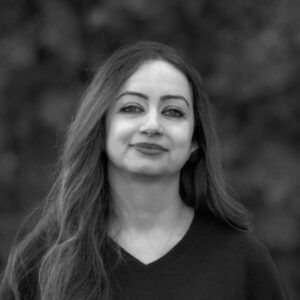
Reem Ghassan
Reem Ghassan is an Iraqi human rights defender, peacebuilding practitioner, researcher, and trainer with extensive experience in the Women, Peace and Security agenda, transitional justice, and community-led peacebuilding. She currently serves as Women Program Manager at Peace and Freedom Organization (PFO), leading initiatives that strengthen women’s participation, social justice, and inclusive peace processes.
Her work focuses on supporting women, youth, survivors, and marginalized communities to engage in dialogue, advocacy, and decision-making processes. Reem has designed and delivered trainings on WPS, peacebuilding, and transformative change for civil society actors and governmental institutions, with a particular focus on promoting meaningful participation and addressing unequal power dynamics in conflict-affected contexts.
Participant in: July 2026 Fellowship: Peacebuilding and Women’s Meaningful Participation in Peacebuilding Processes
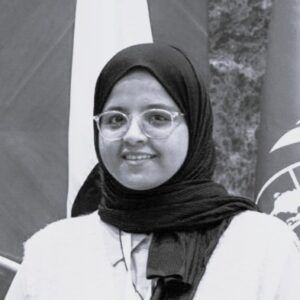
Ghadir Taira
Ghadir Taira is a freelance journalist, media producer, and dedicated feminist activist from Al-Hudaydah, Yemen, widely recognized for her steadfast focus on the Tihami cause and utilizing media to advocate for the Women, Peace, and Security (WPS) agenda. Amid the complexities of the Yemeni context, she transforms creative vision into tangible community impact as the Co-Founder of the Women Impact platform and the Green Voices Network for Arab Youth. Ghadir serves as the Program Manager at the Yemen Platform—an independent, English-speaking platform reshaping Yemen’s narrative through authentic, on-the-ground storytelling—and acts as an Executive Committee Member of LOYAC Yemen (a branch of the Kuwait-based non-profit dedicated to youth and women empowerment), alongside her role as a Local Producer for the global agency Storytailors.tv.
Her strategic leadership and grassroots peacebuilding expertise are anchored in a solid professional trajectory. She is a Fellow in the Hikma Fellowship for Public Leadership, an alumna of the SAWT Fellowship (2023) at the Asfari Institute within the American University of Beirut (AUB), and the Aflamuna Fellowship (2022-2023) for impact producers. Active in high-level advocacy, she is an influential member of the Women’s Solidarity Network and the second cohort of the “Strengthening the Feminist Movement in Yemen” project, and has represented Yemen’s civil society at international platforms including the UN Climate Change Conferences. Holding a Bachelor’s degree in Mass of Media – Public Relations and Advertising, Ghadir leverages her expertise in media consultation, script development, and documentary filmmaking to challenge restrictive narratives, utilizing visual media not just as passive documentation, but as an active mechanism for community mediation and localized peacebuilding.
Participant in: July 2026 Fellowship: Peacebuilding and Women’s Meaningful Participation in Peacebuilding Processes
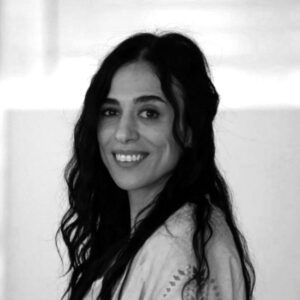
Raghda Da’boub
Raghda Da’boub is a gender justice practitioner with over fifteen years of experience advancing women’s rights in the OPT. She currently serves as Gender Justice Program Manager at Oxfam, where she leads programmes across the West Bank and Gaza focused on Women, Peace and Security, gender-based violence, and sexual and reproductive health and rights.
Her work bridges programming, policy, and advocacy, with a focus on addressing structural barriers to women’s participation and protection in the context of occupation. She collaborates with national and international actors to design and implement initiatives that advance the social, economic, and political rights of women and young people, with particular attention to the intersection of gender and occupation.
Participant in: July 2026 Fellowship: Peacebuilding and Women’s Meaningful Participation in Peacebuilding Processes
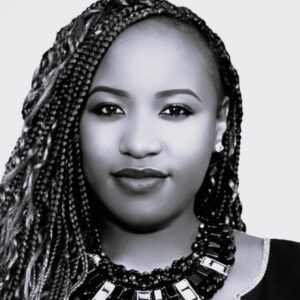
Mary Yvonne Ododah
Mary Yvonne Ododah is a Development Specialist and Executive Director at Nuru Trust Network, where she leads initiatives focused on peacebuilding, governance, human rights, and the meaningful participation of women, youth, and marginalised communities across Sub-Saharan Africa. Her work is deeply rooted in advancing the Women, Peace and Security (WPS) agenda through community-led peacebuilding, civic engagement, youth inclusion, and policy advocacy that centres the voices and leadership of women in conflict prevention, peace processes, and sustainable development.A Fellow of the Institute for Economics and Peace and a One Young World Ambassador, Mary Yvonne actively contributes to regional and global policy spaces shaping the future of peace and security. She serves as a member of the UN Women Regional Civil Society Advisory Group for Eastern and Southern Africa and the UN CSO Coalition on Human Rights and Counter Terrorism, where she engages in advocacy and dialogue on gender-responsive peacebuilding, human rights protection, countering violent extremism, and the implementation of the WPS agenda across the continent.
As the Founder of Jarumi Ventures Africa, a women-led Pan-African strategy and development firm, Mary Yvonne continues to champion women’s leadership, feminist approaches to development, and inclusive economic empowerment for startups, SMEs, and community organisations across Africa. Her peacebuilding and advocacy work has received international recognition, including nomination for the Kenya Diplomatic Awards in the Peace and Security category and the International Youth Peace Award 2024. Through her leadership, she has championed initiatives that strengthen intergenerational dialogue, women’s civic participation, climate justice, and locally led approaches to peace and resilience. Recognised among Africa’s Brightest Young Minds by the BYM Foundation and as one of the Top 20 Female Social Impact Founders in Africa by MentHer Magazine, she bridges grassroots realities with high-level advocacy and systems change. Her participation in the Women in Conflict (WiC) 1325 Fellowship reflects her long-standing commitment to advancing the principles of United Nations Security Council Resolution 1325 by strengthening women’s meaningful inclusion in peacebuilding, conflict transformation, mediation, and peace governance.
Participant in: July 2026 Fellowship: Peacebuilding and Women’s Meaningful Participation in Peacebuilding Processes.
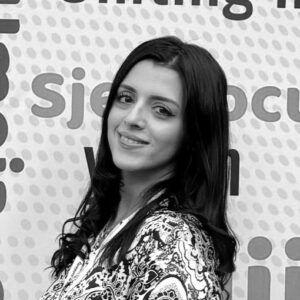
Ronza Eddeb
Ronza Eddeb is a consultant, researcher, and the co-lead of Twiza Rising, an indigenous, feminist, youth-led collective focusing on community resilience, climate justice, and reproductive health. Her work within the collective centers on designing safe spaces for collective care, raising mental health awareness, and fostering solidarity through knowledge sharing. She participated in regional consultations on women’s empowerment.
In addition to grassroots advocacy, Ronza serves as an external consultant and evaluator for private sector development and economic growth projects, drawing on a background in business law, marketing, and seven years as a legal officer at the Libyan General Consulate in Tunis. Her professional practice focuses on analyzing complex structural systems and designing balanced, community-led development initiatives.
Participant in: July 2026 Fellowship: Peacebuilding and Women’s Meaningful Participation in Peacebuilding Processes
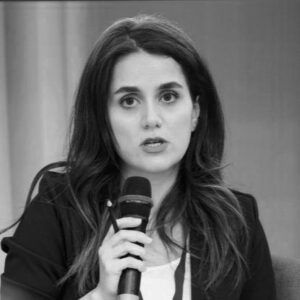
Remy Makhlouf
Remy Makhlouf is a mediator and conflict prevention practitioner from Lebanon, currently serving as Head of the Conflict Prevention Unit at the Center of Accompaniment and Mediation under the Maronite Patriarchal See. She specializes in family and community mediation, conflict prevention, dialogue facilitation, and psychosocial accompaniment, working with individuals, families, women, youth, religious leaders, and local communities.
Over the years, she has mediated numerous family and community conflicts, facilitated conflict resolution and dialogue trainings, and contributed to strengthening local mediation capacities across Lebanon. She has also supported grassroots peacebuilding and insider mediation initiatives during periods of crisis and instability.
Remy is a member of the Global Platform of Women Insider Mediators and the UNDP Insider Mediators Network of Lebanon. Her work focuses on strengthening social cohesion, promoting women’s participation in peacebuilding, and supporting communities in addressing conflicts through dialogue, mediation, and locally led solutions.
Participant in: July 2026 Fellowship: Peacebuilding and Women’s Meaningful Participation in Peacebuilding Processes
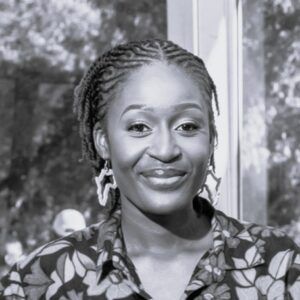
Larisa W Chikanya
Larisa W Chikanya is a Zimbabwean feminist researcher and peacebuilding practitioner with over seven years of experience working at the intersection of conflict documentation, transitional justice, conflict-related sexual violence (CRSV), and gender-responsive advocacy across Southern, Central, and East Africa. She currently serves as Advocacy Task Force and Early Warning Analyst at Genocide Watch, where she produces conflict and atrocity risk assessment reports focused on gender-sensitive early warning analysis across the Horn of Africa, Great Lakes, and broader East, Central, and Southern African regions. Her work is grounded in the Women, Peace and Security agenda, centering women’s meaningful participation in conflict prevention, peacebuilding, accountability, and recovery. Larisa is also a member of FemWise-Africa, the Network of African Women in Conflict Prevention and Mediation, a mechanism of the African Union under the Panel of the Wise.
Participant in: July 2026 Fellowship: Peacebuilding and Women’s Meaningful Participation in Peacebuilding Processes
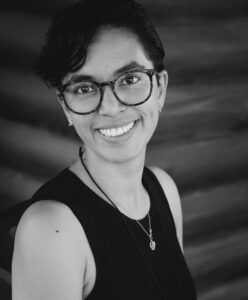
Isabelle Clérié
Isabelle Clérie is a Haitian anthropologist and a peacebuilding and transitional justice expert with over a decade of experience advancing community-led solutions in Haiti and beyond. Her work is grounded in an asset-based approach, recognizing and amplifying the strengths, knowledge, and experience of local communities. In the last ten years, she has led initiatives that link collective memory, restorative justice, and survivor-centered processes with broader state and international mechanisms, ensuring that transitional justice efforts are not externally imposed but locally designed and owned. She was the UN special consultant on transitional justice in the UN’s Office of the High Commission for Human Rights and wrote the first National Strategy for Transitional Justice; wrote a national strategy for disarmament, demobilization and reintegration as well as community violence reduction (DDR-CVR) and supports the work of the national DDR commission. She has also facilitated community dialogues and designed a national dialogue strategy.
Isabelle has advised on strategies connecting truth-telling, reparations, and dialogue to peacebuilding, and has facilitated partnerships between civil society, philanthropic actors, and international institutions, including multi and bilaterals. Through her research, writing, and facilitation, including her “Repairing Development” column for Proximate Press, she consistently advocates for community-driven, peace-centered development models that can outlast international aid.
Participant in: July 2026 Fellowship: Peacebuilding and Women’s Meaningful Participation in Peacebuilding Processes
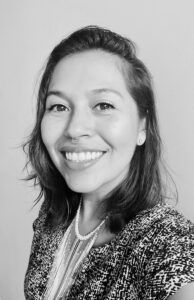
Natalia Suarez Viatela
Natalia Suarez Viatela is a peacebuilding, security, and conflict transformation professional with more than a decade of experience. Her work has focused on counterterrorism, illicit finance prevention, the reintegration of former combatants, and dialogue between communities and local authorities in conflict-affected regions of Colombia.
Committed to peace education and to preserving the legacy of Colombia’s Truth Commission, she has led initiatives that promote dialogue within civil society on the country’s armed conflict. She has also facilitated the “Women as Peacebuilders Certificate Program” and volunteered with Embrace Dialogue for the past ten years.
She holds a master’s degree in Peace and Conflict Studies from the University of Queensland, earned through the Rotary Peace Fellowship. This experience also deepened her knowledge of UNSCR 1325 and the WPS agenda through fieldwork in the Philippines. Natalia currently serves as a senior professional in the Technical Secretariat supporting the Peace Negotiations for Territorial Peacebuilding in Nariño.
Participant in: July 2026 Fellowship: Peacebuilding and Women’s Meaningful Participation in Peacebuilding Processes
Zvijezdana Marković
Zvijezdana Marković is a gender equality and human rights professional with over 12 years of experience advancing women’s empowerment, gender-responsive governance, peacebuilding, and social cohesion in Bosnia and Herzegovina. She currently serves as a Programme Coordination Analyst at UN Women, where she leads the implementation of UN Women’s component of the Joint UN Programme on Hate Speech and Divisive Narratives, overseeing strategic planning, coordination, monitoring, reporting, advocacy, and partnerships across government institutions, civil society, media, and cultural actors.
Previously, Zvijezdana worked as a Monitoring, Reporting and Coordination Analyst at UN Women, playing a key role in integrating gender equality and women’s empowerment across the UN Sustainable Development Cooperation Framework and strengthening inter-agency coordination through the Gender Theme Group and International Working Group on Gender Equality. Her work has contributed to improved institutional accountability, gender-responsive policies, and stronger collaboration between UN agencies, national gender mechanisms, and women’s rights organizations.
Her earlier experience includes advisory and coordination roles with IOM, the National Democratic Institute, Helsinki Citizens’ Assembly, and Foundation United Women, where she provided legal aid to women survivors of violence, supported gender-based legal reforms, trained female parliamentarians, and led youth and reconciliation initiatives.
Zvijezdana holds a Bachelor’s degree in Law and is an MBA candidate at International Burch University. She is trained in gender-responsive evaluation, results-based management, and human rights–based approaches, and is a published author on constitutional law, austerity policies, and women’s rights.
Participant in: February 2026 Fellowship: Peacebuilding and Women’s Meaningful Participation in Peacebuilding Processes
Walaa Ahmed
Walaa Ahmed is a policy and strategic leadership expert with over 15 years’ experience spanning government, politics, academia, civil society, and the private sector. As Sudan’s youngest and first female Minister of Youth and Sports, she led national reforms and institutional transformation during a period of transition, demonstrating innovation and resilience in complex political settings. She is the former Chairperson of the East and Central African Regional Advisory Board for the Mandela Washington Fellowship for young African Leaders.
Walaa served in the public sector, she was the first female mechanical engineer in Sudan’s Sugar Company’s workshop since its establishment, she also worked at Sudanese Standards and Metrology Organization. In addition to that she worked in the private sector as Process Integration Specialist at DAL Group, Sudan’s Largest Conglomerate, the civil society, and as a Lecturer at Sudan University for Science and Technology. Walaa founded and led several initiatives in Sudan and across the African continent, she was part of the peaceful revolution that overthrew the 30 years of dictatorship in Sudan. Walaa was selected among the 100 most influential young Africans in 2020 by Africa Youth Award and among the 100 most influential African women by AvanceMedia.
Holding Masters degrees in Mechanical Engineering (Imperial College London) and Public Policy (University of Oxford), her work bridges technical and policy domains , from energy transition to digital governance. Her Oxford policy report, ‘Scaling Solar in Africa: Technical Realities and Policy Lessons from Nigeria’, provides practical insights for designing resilient solar solutions to meet Africa’s rising energy demand.
Participant in:
February 2026 Fellowship: Peacebuilding and Women’s Meaningful Participation in Peacebuilding Processes
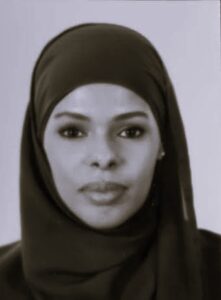
Shukri Abdullahi
Shukri Abdullahi is a gender, research and conflict specialist with extensive experience working across Somalia and Somaliland, focusing on women’s rights, peacebuilding, civic engagement, and protection in conflict-affected and displacement settings. Over the past eight years, she has led and contributed to research, evaluations, and gender programming with national and international organisations, including work on Women, Peace and Security (WPS), access to justice, localisation, and women’s political participation. Her work has covered a wide range of thematic areas; violence against women and children in IDP settlements, menstrual health management, immunisation barriers, and gender-sensitive humanitarian response. She has worked closely with women’s organisations, civic space actors such as SONSAF and Nagaad, and community-level networks to strengthen women’s voice, representation, and leadership in peace and governance processes. Her recent focus includes conducting conflict and power analyses in displacement settings, examining identity, stereotypes, and structural inequalities that shape women’s lived experiences. Across her roles, she has consistently applied a WPS lens, promoting safe programming, supporting women’s meaningful participation, and generating evidence to inform gender-responsive policies and interventions. She brings a deep understanding of the Somali context, strong research expertise, and a commitment to amplifying women’s leadership in conflict transformation and peacebuilding.
Participant in:
February 2026 Fellowship: Peacebuilding and Women’s Meaningful Participation in Peacebuilding Processes
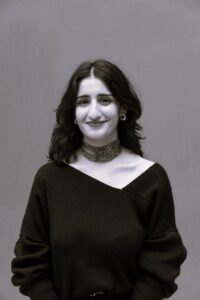
Revşen Berfin Coşkun
Revşen Berfin Coşkun is a PhD researcher at KU Leuven in Belgium. She holds a background in sociology and political science and completed her master’s degree in Conflict and Development Studies at Ghent University. Her master’s thesis, Ethnic Identity from an Intergenerational Perspective: An Ethnographic Study of Kurds in Diyarbakır, Turkey, examined intergenerational dynamics of Kurdish identity in Turkey.
Her academic and professional work focuses on peacebuilding, social cohesion, and the role of media and culture in shaping political and social identities. Before starting her doctoral studies, Berfin worked as a senior researcher at the Kurdish Studies Center (KSC), where she contributed to research projects on Kurdish society, public opinion, and conflict dynamics in Turkey. She also served as a project coordinator at the United Nations World Food Programme (WFP), supporting projects related to social cohesion and livelihoods.
Alongside her academic work, Berfin is actively involved in civil-society initiatives focused on dialogue and inclusive peace processes. She is a board member of Young Peacebuilders of Turkey and a member of the Turkey chapter of the Mediterranean Women Mediators Network. Through her research and civil-society engagement, she is particularly interested in youth participation, gender inclusion, and the role of knowledge production in supporting sustainable peace.
Participant in:
February 2026 Fellowship: Peacebuilding and Women’s Meaningful Participation in Peacebuilding Processes

Peculiar Caleb
Peculiar Caleb is the President and Board Chair of the Africa Network Campaign on Education for All (ANCEFA), a continental civil society network advocating for equitable, inclusive, and quality education across Africa. In this role, she contributes to regional advocacy efforts aimed at strengthening education systems, advancing policy dialogue, and promoting accountability for education commitments across African countries.
She is also currently the National Moderator and Board Chair of the Civil Society Action Coalition on Education for All (CSACEFA), a coalition advocating for girls’ and women’s rights to quality education, especially in conflict-affected and violence-prone communities across Nigeria. In this role, she leads national advocacy efforts, strengthens civil society coordination, and consistently calls attention to the urgent need for education in emergencies as insecurity continues to force school closures and disrupt learning. She works closely with government actors, community leaders, and youth networks to ensure that girls in vulnerable communities remain at the center of education recovery, safety planning, and national policy dialogue.
Alongside her national and regional leadership, she serves as the Executive Director of Achieving Girl Pride Initiative (AGIP INITIATIVE), where she has spent over five years working directly with women, girls, and young people in crisis-affected communities. Through AGIP Initiative, she designed and led the S.A.F.E. Circles project in Adamawa State, an initiative that trained youth mentors within IDP camps to identify, support, and safely refer GBV survivors while creating trusted spaces where women could speak openly about their experiences. Her work blends community mobilization, youth engagement, and survivor-centered advocacy, reflecting her commitment to the pillars of UNSCR 1325 participation, protection, prevention, and recovery. She remains driven by the belief that sustainable peace begins at the community level and that women and girls must be supported and empowered to lead those efforts.
Participant in: February 2026 Fellowship: Peacebuilding and Women’s Meaningful Participation in Peacebuilding Processes
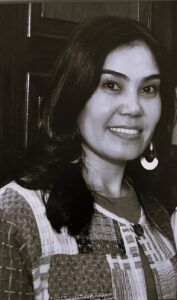
Marzia Ayubi
Marzia Ayubi is a humanitarian protection specialist with extensive experience supporting conflict-affected communities across Asia, the Middle East, the Balkans, and East Africa.
Her background includes managing large-scale humanitarian and protection programmes in Afghanistan, Serbia, South Sudan, Iraq, and Uganda, covering protection case management, psychosocial support, community-based protection, legal aid, and GBV prevention and response. She has also led capacity-building for diverse teams and partners on GBV, protection coordination, and community-led protection strategies, advancing women’s leadership and meaningful participation in humanitarian action. As a consultant supporting Afghan diaspora organizations, she has delivered protection and advocacy trainings and conferences, and strengthened organizational strategies and networks, contributing to broader policy influence and women-led advocacy efforts.
February 2026 Fellowship: Peacebuilding and Women’s Meaningful Participation in Peacebuilding Processes
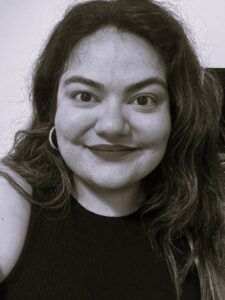
Marina Garcez
Marina Garcez is a human-rights lawyer and researcher with extensive experience documenting abuses, monitoring civic space, and advancing advocacy and strategic litigation strategies across Latin America. She has worked with leading organizations such as Robert & Ethel Kennedy Human Rights Center, the International Bar Association Human Rights Institute, and the Center for Justice and International Law, contributing to reports and petitions before UN and Inter-American mechanisms.
Marina is co-founder of the group WILPF Brazil and has served as a Women, Peace and Security fellow with the Women’s International League for Peace and Freedom, where she monitored UN Security Council reports and supported policy briefs. Her professional focus has centred on gender-based violence, freedom of expression, and the protection of human rights defenders, combining rigorous legal analysis with advocacy and training. Marina speaks Portuguese, Spanish, English, and French and holds an LL.B. in Law and an LL.M. in International Law.
Participant in:
February 2026 Fellowship: Peacebuilding and Women’s Meaningful Participation in Peacebuilding Processes

Katherine Martell
Katherine Martell is a Latin American practitioner specializing in gender equality, youth empowerment, and community-based approaches to violence prevention and peacebuilding. With over eight years of experience designing, coordinating, and evaluating multi-country initiatives, she has worked extensively with adolescent girls, women leaders, and grassroots organizations to strengthen protective environments, expand civic participation, and promote conflict-sensitive programming. Her work emphasizes developing safeguarding frameworks, building local capacity for early detection of gender-based risks, and facilitating cross-cultural learning among communities navigating structural inequality and social instability. Fluent in English, Spanish, and French, she brings a regional perspective to the Women, Peace and Security agenda, with a strong focus on participation and prevention as tools to advance inclusive, feminist, and context-responsive peacebuilding processes.
Participant in:
February 2026 Fellowship: Peacebuilding and Women’s Meaningful Participation in Peacebuilding Processes
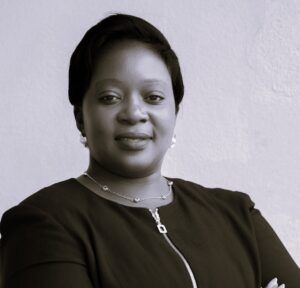
Dopgima Stella Epse Eteki Njoh
Dopgima Stella Espe Eteki Njoh is an accomplished community development practitioner and gender advocate with more than 18 years of experience advancing women’s empowerment, peacebuilding, and social cohesion in Cameroon. Her long-standing commitment to promoting peace and strengthening women’s rights earned her national recognition as the 2024 Peace Woman of the Year in Cameroon.
In her current role, she serves with the Ministry of Women’s Empowerment and the Family as the Director of the Women Empowerment and Family Centre in Buea, where she oversees program development and implementation. She leads initiatives that equip women with economic, leadership, and livelihood skills, while supporting survivors of conflict-related vulnerabilities through trauma-aware and gender-responsive services.
Stella is also the Founder and CEO of the Centre for Youth and Family Empowerment (CEYOFE), a community-based organization working to enhance the wellbeing of women, youth, and families. CEYOFE is the only organization in the South West Region of Cameroon actively localizing United Nations Security Council Resolution 1325 on Women, Peace and Security, bridging policy commitments with community-level action. CEYOFE implements programmes that promote women’s participation in peacebuilding, strengthen early-warning and conflict-mitigation mechanisms, and build the resilience of women and girls affected by conflict.
Stella holds a Master’s degree in Women and Development from Ewha Woman’s University in South Korea, and has established herself as a leading voice in gender equality, conflict prevention, and community resilience.
Participant in: February 2026 Fellowship: Peacebuilding and Women’s Meaningful Participation in Peacebuilding Processes
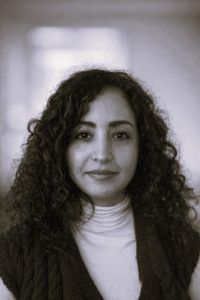
Alma Anaam
Alma Anaam is a grassroots feminist and women’s rights defender from Yemen, currently based in Ireland. She began her activism during the 2011 Arab Uprising in Yemen and has since built more than a decade of experience across the humanitarian, development, and refugee-support sectors in Yemen, the Horn of Africa, and Ireland.
Alma has held both leadership and technical roles with international organisations, where she has led gender analysis, safeguarding systems, conflict-sensitive programming, refugee, and community engagement initiatives.
A committed advocate for feminist issues both internationally and locally, she is a long-standing member of the Intersectional Feminist Collective (IFC), an alumna of the Women in Conflict 1325 Resolution Fellowship (2020), and a member of the 1325 Fellowship Advisory Board with Beyond Borders Scotland. In addition, she is a published writer, with articles on gender, patriarchy, and humanitarian practice.
Alma is currently pursuing a Master’s degree in Gender, Politics, and International Relations at University College Dublin.
Participant in:
November/December 2020 and February 2026 Fellowship: Peacebuilding and Women’s Meaningful Participation in Peacebuilding Processes
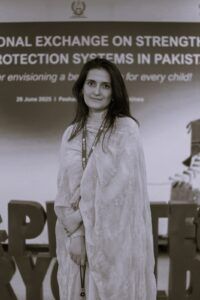
Aliya Harir
Aliya Harir is a peacebuilding and gender equality practitioner from Chitral, Pakistan, with experience in child protection, adolescent engagement, religious freedom, and rights based programming. Her work is based on feminist, participatory, and preventative lens on the peace-humanitarian- development nexus.
She currently consults with the Government of Khyber Pakhtunkwa in programming for prevention of violence against children and women, empowering adolescents, and peacebuilding, and systems strengthening work. She most recently served as Child Protection Officer with UNICEF in Khyber Pakhtunkhwa, Pakistan, where she provided technical guidance to government to strengthen child protection systems, case management for gender inclusive children protection programming, community-based protection mechanisms, and supporting adolescents through creative/locally grounded approaches in protection, prevention – in 21 (settled and merged) districts of the province. Her work with other organizations has also focused on inclusive programming on social cohesion, rights of religious minorities, women’s political empowerment. She has been part of multiple fellowships and advisory boards focused on women rights, violence prevention, religious freedom, and countering violent extremism. She was awarded the N-Peace Award by UNDP in 2017 for her work in fostering peace between India and Pakistan, including leading delegations of women across borders. During her MPhil from Quaid-i-Azam University, her academic work focused on localizing UNSCR 1325 in Pakistan and reimagining security through the lived experiences of women and girls in peripheral and patriarchal settings (like Chitral).
Participant in:
February 2026 Fellowship: Peacebuilding and Women’s Meaningful Participation in Peacebuilding Processes
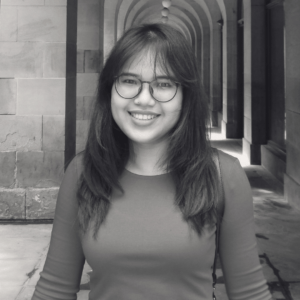
Than Zin Sann
Than Zin is originally from Myanmar and currently residing in the UK. She holds a Master’s degree in Development Studies from the Institute of Development Studies (IDS) at the University of Sussex. She is now working at a London-based charity which supports children from marginalized backgrounds. Her professional experience lies in advancing women’s leadership in Asia, where she managed a global leadership programme for emerging women leaders across the globe, a mentorship programme for human rights practitioners from Southeast Asia, and a mentorship initiative that supported the resilience of refugees along the Thai-Myanmar border. Her commitment towards women’s leadership and human rights is deeply intersectional, grounded in her lived experience and her belief that empathy must be at the heart of meaningful social change and the pursuit of justice.
Academically and personally, Than Zin’s work focuses on violent conflict and justice. Her research has examined violent conflict and wartime polarization in Myanmar, as well as social protection in conflict-affected and fragile contexts. She is committed to advancing accountability for perpetrators of violent conflict and aspires to build safety nets that protect women and survivors in conflict-affected areas who remain vulnerable to systemic oppression. She believes that there can be no peace without justice and continues to advocate for a future rooted in empathy, accountability, and justice.
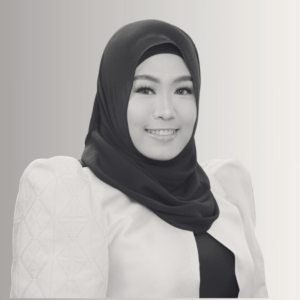
Sittie Janine Gamao
Sittie Janine M. Gamao is the Chief of the Peace Education Division at the Ministry of Public Order and Safety (MPOS) in the Bangsamoro Autonomous Region, Philippines. She leads initiatives on Women, Peace and Security (WPS), preventing and countering violent extremism, transitional justice and reconciliation, and peace education. Her commitment to peacebuilding is not only professional but also deeply personal, grounded in her advocacy for inclusive and enduring peace in the Bangsamoro amid its dynamic peace and security situation. She uses these platforms to amplify the voices of vulnerable women at the margins, particularly widows and orphans of violent conflict, as well as women mediators.
Janine is also at the helm of the Bangsamoro Peace Institute, which strengthens the capacities of peace practitioners in the region. Among its notable initiatives, she conceptualized the Advanced Course on Women, Peace and Security (WPS), now implemented for three cohorts, to build stronger constituencies and advocacy for WPS in the Bangsamoro’s political transition.
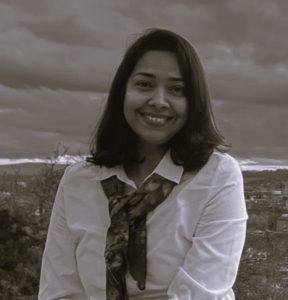
Saummya Indivarie Amarasinghe
Saummya Amarasinghe is a peacebuilding practitioner with over a decade of experience working with local and international non-profit organizations across diverse communities to promote social cohesion and reconciliation in Sri Lanka. Her work focuses on developing creative and participatory approaches to peacebuilding that encourage dialogue, empathy, and inclusive engagement.
Saummya has worked extensively on community media initiatives, including forum theatre, radio drama, and community video storytelling, using these platforms to amplify community voices and foster dialogue on sensitive social issues. She was involved in implementing the Travelling History Museum, an initiative designed to encourage more inclusive and pluralistic public discourse surrounding Sri Lanka’s history. She has also managed projects that engage youth and women political leaders to raise awareness about the impacts of online hate speech and to build their capacity to produce positive digital content that promotes peace and reconciliation. Her work in digital peacebuilding explores how online spaces can be transformed into platforms for constructive engagement rather than division.
Saummya brings strong expertise in project management and monitoring and evaluation, along with subject knowledge in transitional justice, conflict transformation, pluralism, and non-violent communication.
In addition to her professional work, Saummya was a founding member of the People’s University at GotaGoGama, established during Sri Lanka’s 2022 People’s Struggle at the Galle Face protest site. During the height of the protest movement, the People’s University served as an alternative intellectual platform that challenged traditional forms of knowledge production and created a space for ordinary people to share their ideas and engage in critical dialogue.
Participant in: October 2025 Fellowship: Peacebuilding and Women’s Meaningful Participation in Peacebuilding Processes
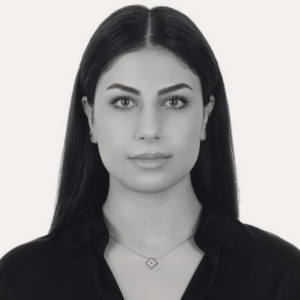
Maha Saadi Yadallah
Maha is a peacebuilding and localization specialist with extensive experience leading over 20 projects in Iraq on reintegration, preventing violent extremism (PVE), climate security, and women’s empowerment. Currently with IOM-UN Migration, she has established and supported initiatives such as the PVE Women’s Working Group and 13 local Crisis Committees, enabling women leaders to mediate conflicts, prevent honour killings, and support returnee reintegration. Rooted in the Women, Peace, and Security agenda, her work emphasizes trauma-informed, gender-sensitive approaches and collaboration with local CSOs to ensure dignity and meaningful participation for marginalized women. She is passionate about amplifying women’s voices in policy and peace processes and aims to expand her impact across the region through inclusive, locally driven solutions.
Laura Elisa Ruth Niño Vázquez
Elisa Niño Vázquez is a feminist researcher, educator, and activist whose work bridges academic inquiry and grassroots engagement in contexts marked by systemic violence. Trained in psychology, gender studies, and Latin American studies, she brings an interdisciplinary lens to conflict, with particular attention to the emotional, cultural, and political dimensions of harm. Her collaboration with the Mexican Forensic Anthropology Team (EMAF) on disappearances and femicide in Guerrero has highlighted the gendered impacts of organized crime and impunity, while her facilitation of creative workshops has created community-based strategies for collective healing and resistance. She founded Remendarnos, a project dedicated to exploring conflict and care within community settings, fostering non-punitive approaches to repair and coexistence. She has also worked with collectives supporting the development of non-punitive conflict management protocols and fostering inclusive spaces of care and dignity. Elisa has actively lobbied for migrant women’s rights in Chile, designed and delivered trainings on gender, inclusion, and non-discrimination, and collaborated with institutions across Latin America to develop tools for addressing sexual violence. Her commitment to feminist, antiracist, and decolonial perspectives links diverse tools with transformative practices for peacebuilding and social justice.
Participant in:
October 2025 Fellowship: Peacebuilding and Women’s Meaningful Participation in Peacebuilding Processes
Laura El-Hayek
Laura Elhayek holds a Master’s degree in Human Rights from the University of Sussex in England and a Bachelor of Arts in English Language and Literature from Al Azhar University of Gaza in Palestine.
Laura currently serves as a Women, Peace, Security, and Humanitarian Action Programme Associate at UN Women Regional Office for the Arab States, where she supports gender equality and peacebuilding initiatives across conflict-affected countries. Prior to this role, she worked with UN Women Palestine Country Office, contributing to programmes that support women in some of the region’s most challenging humanitarian contexts.
Growing up and working in Palestine—under conditions of occupation, blockade, repeated violence, and most recently the genocide—has deeply shaped Laura’s commitment to supporting people affected by war and displacement. Her lived experience fuels her dedication to inclusive peacebuilding and to helping communities, especially women and girls, recover and rebuild with dignity.
With nearly six years of experience in international human rights organizations—including the Euro-Mediterranean Monitor for Human Rights, ImpACT International for Human Rights Policies, and ALQST for Human Rights—Laura has developed strong expertise in research, advocacy, and programme coordination.
Deeply committed to human rights and philanthropy, she focuses on supporting marginalized communities in conflict zones to realize their rights, reclaim their voices, and lead transformative change.
Karen Arteaga Garzón
Karen Arteaga Garzón is a feminist peacebuilder and dialogue facilitator with over a decade of experience supporting inclusive, community-led peace processes in Colombia. As Executive Director of Rodeemos el Diálogo (Embrace Dialogue, ReD), she coordinates multi-stakeholder projects on dialogue, memory, reconciliation, and peace pedagogy. Currently, Karen serves on the Technical Secretariat in the peace negotiations between the Colombian government and the armed group Comuneros del Sur, providing methodological and strategic support to advance a restorative and participatory approach. Her work has focused on creating spaces that elevate women’s voices, integrate restorative justice practices, and strengthen civil society’s role in peacebuilding. She brings expertise in designing collaborative methodologies with a gender and restorative lens, bridging grassroots initiatives with national and international policy arenas. She has also partnered with academic institutions in the UK and beyond to research polarisation, unarmed civilian protection, and transitional justice—always with a focus on women’s meaningful participation in peacebuilding. For Karen, peacebuilding is both professional and personal: a commitment to ensure that women are not only present but central in transforming conflict. She believes in the power of dialogue, feminist practices, and restorative justice to heal divides and reimagine relationships.
Jomana Abunahla
Jomana O. Abunahla is a Palestinian researcher, writer, and advocate from Gaza. She is currently pursuing an MSc in Global Migration and Social Justice at the University of Glasgow, and her work focuses on forced displacement, refugee rights, gender justice, and storytelling that centres the voices of displaced communities.
Participant in:
October 2025 Fellowship: Peacebuilding and Women’s Meaningful Participation in Peacebuilding Processes

Iyala Bachir Saadi
Iyali Bachir Saadi works as a Gender, Protection & Empowerment Coordinator with Norwegian People’s Aid (NPA) in Northeast Syria, where she leads integrated programming on gender-based violence (GBV), protection, and countering violent extremism across Raqqa, Deir-ez-Zor, Al-Hasakah, and other conflict-affected regions. With over eight years of humanitarian and development experience, she has coordinated Women & Girls Safe Spaces, case management services, community-based protection committees, and economic empowerment initiatives, while ensuring gender-responsive approaches are mainstreamed across sectors. As NPA’s PSEA focal point, she also drives accountability and safeguarding systems.
Iyala holds an MA in Gender, Violence, and Conflict from the University of Sussex as a Chevening Scholar (2023/24). Her research focused on women’s agency in GBV case management in Syria, reflecting her commitment to amplifying local voices and advancing feminist, intersectional approaches in conflict-affected contexts. Iyala’s work combines practice, research, and advocacy, engaging with local civil society and international actors to influence policy and practice. Recently she has been contributing in drafting the Gender Strategy across Syria alongside with other NGOs. Through the Fellowship, she seeks to deepen her contribution to global dialogues on women’s leadership in peacebuilding, transitional justice, and gender equality in fragile and conflict-affected settings.
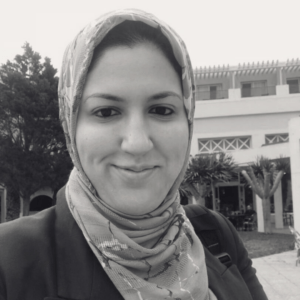
Hanaa Muntasser
Hanaa Muntasser is a dedicated advocate for women’s rights and justice in Libya, bringing over 14 years of professional experience in leading development and peacebuilding programs. Her work has focused on reconciliation, transitional justice, and the implementation of UN Security Council Resolution 1325 on Women, Peace, and Security, with programs funded by international partners, including USAID and the European Union. She has consistently ensured high-quality implementation, strong accountability, and sustainable impact.
Hanaa has played a pivotal role in advancing initiatives that promote women’s meaningful participation in peace processes, address gender-based violence (GBV), and strengthen the rule of law in Libya. With a strong legal background and deep engagement with Libyan civil society, she has significantly contributed to the design and implementation of programs focused on human rights, access to justice, and justice-sector reform.
One of her most notable achievements is the establishment and management of Libya’s first coordinated legal aid network for survivors of GBV. Through close collaboration with civil society organizations and legal professionals, the network has provided essential legal representation, psychosocial counselling, and protection services to survivors.
In addition to her programmatic work, Hanaa is a researcher who has conducted several important studies, including a comprehensive report on the status of women in Libya that examines the gap between de facto realities and legal protections. She has also led assessments on the status of reconciliation in Libya and the critical role of women in advancing sustainable peace.
Participant in:
October 2025 Fellowship: Peacebuilding and Women’s Meaningful Participation in Peacebuilding Processes
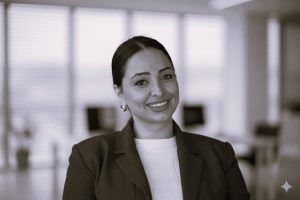
Chourouk Kouteich
Chourouk Kouteich is a Gender Equality, Safeguarding, and Social Inclusion Specialist with over a decade of experience working at the intersection of humanitarian response, peacebuilding, and institutional reform in conflict-affected contexts. Based in Lebanon, she has led the integration of gender-transformative and disability-inclusive approaches across multi-sectoral programming, including livelihoods, education, protection, CVA, and social cohesion initiatives.
Her work bridges policy and practice, supporting organizations to strengthen safeguarding systems, mainstream gender and disability inclusion, and design conflict-sensitive strategies aligned with global frameworks such as the Women, Peace and Security agenda. Chourouk has trained faith leaders, educators, civil society actors, and frontline staff on gender equality, conflict sensitivity, sexual harassment prevention, and community-based peacebuilding.
She is also the co-founder of “Joulia’s Friends,” a grassroots initiative supporting displaced communities and amplifying women’s leadership in humanitarian action. Passionate about feminist leadership and locally led peace processes, Chourouk brings a practitioner’s perspective grounded in field experience, institutional advocacy, and community engagement.
Participant in:
October 2025 Fellowship: Peacebuilding and Women’s Meaningful Participation in Peacebuilding Processes
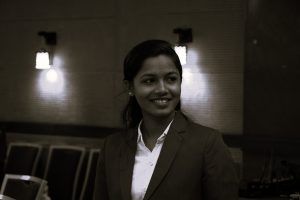
Ayesha Akther Eti
Ayesha Akther Eti is a development professional and emerging researcher with expertise in gender equality, youth empowerment, and climate resilience. She currently serves as an Officer – Research at Plan International Bangladesh, where she leads and supports organisational research initiatives, designs mixed‑method studies, strengthens data systems, and facilitates evidence generation to improve programme quality. Her work emphasizes rigorous analysis, ethical data practices, and translating insights into actionable recommendations for policy, programming, and learning. In her role, Ayesha also contributes to the Rohingya Nexus in Cox’s Bazar, supporting research and learning initiatives within the humanitarian–development continuum. Her contributions help strengthen programme adaptation, monitoring frameworks, and strategic knowledge products within the nexus context.
Previously, Ayesha served as a Young Professional in the Programme Quality & Innovation (PQI) unit at Plan International Bangladesh. In this role, she contributed to innovation capture, research design, data quality assurance, and organizational knowledge management. Her contributions supported major initiatives such as SRHR programme design, youth‑led organizational assessments, climate and livelihood study-sharing events, and global research efforts including The State of the World’s Girls 2025.
Eti’s academic and research background includes climate change research at C3ER, BRAC University, and governance-focused work with the Micro-governance Research Initiative. Her master’s dissertation explored climate-induced migration and policy responses in Bangladesh’s coastal region, reflecting her deep commitment to climate justice and resilience.
As the Founder of World Youth Army, she leads youth advocacy on climate action, and community empowerment. She is also a Women in Conflict 1325 Fellow (2025), Asia Solidarity Lab Fellow (2024), delegate at Bangladesh Youth Delegation to India (2024) and recipient of multiple national awards, including the Hero Award (2022) and Joy Bangla Youth Award (2020).
Eti remains devoted to building inclusive, gender-responsive, and climate-resilient futures.
Participant in: October 2025 Fellowship: Peacebuilding and Women’s Meaningful Participation in Peacebuilding Processes
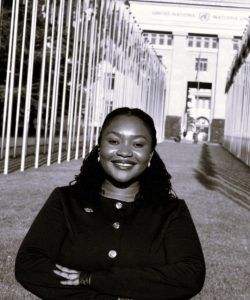
Memory Tapela Banda
Memory Tapela Banda is an optimistic and visionary youth leader who is dedicated to changing the face of leadership, equality and discrimination in Zambia and beyond. She is an education activist, a women’s youth peace and security advocate and a human rights defender. She is the founder of the Safeguarding Alliance of Children and Women’s Rights and the Zambian Disability Matters Organization. She currently working with the Southern Africa Youth Forum as a SADC Youth Parliamentarian. She is the Country Representative and Director of Social Gender Protection at the Africa Union for Persons with Disabilities and the task force lead at Theirworld under the Gender and Education Task Team (AUPA). Memory is an award-winning humanitarian, peace builder and human rights defender.
Participant in: October 2024 Fellowship: Peacebuilding and Women’s Meaningful Participation in Peacebuilding Processes
Safa Al-Humaidi
Safa Al-Humaidi is a humanitarian professional committed to strengthening accountability, resilience, and inclusive systems in conflict-affected contexts. With experience working in complex environments, she is passionate about advancing women’s leadership and contributing to sustainable peace and recovery.
As a participant in the 2024 Women in Conflict Fellowship in Scotland, she continues to engage in dialogue, learning, and collaboration to amplify women’s voices in shaping equitable futures.
Participant in: October 2024 Fellowship: Peacebuilding and Women’s Meaningful Participation in Peacebuilding Processes
Alba Purroy
Alba Purroy, is a Venezuelan social activist and peacebuilder. Her focus is on supporting the strengthening of Venezuelan women at grassroots level to promote their representation where decisions are taken, and their contribution to conflict resolution, reconciliation and reconstruction of social fabric. She is currently a team member of the United States Institute of Peace, Nonviolent Action group as part of the Synergizing Nonviolent Action and Peacebuilding (SNAP) facilitator network in Venezuela. She has created a special seven-part Women Peace and Security curriculum tailored to the Venezuelan context. They conducted a train-the-trainers workshop in April 2023, developing 12 WPS trainings achieving around 240 women in 6 different regions across Venezuela.
Alba has been trained with the International Center for Nonviolent Conflict (ICNC), with the United States Institute of Peace (USIP) and with the Center for Justice and Peacebuilding (CJP) of Mennonite University in Virginia US on issues of Nonviolent Strategic Action, Peacebuilding and Conflict Resolution. More recently, she received a Professional Development Certificate in Peace and Conflict Resolution from Chulalongkorn University in Thailand as a part of Rotary Peace fellowship award. She was awarded last May with the John Lewis Peace fellowship from the United States Institute of Peace.
Participant in: October 2024 Fellowship: Peacebuilding and Women’s Meaningful Participation in Peacebuilding Processes
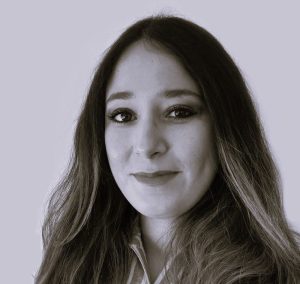
Sahar Ammar
Sahar Ammar is a peacebuilding and mediation practitioner with extensive experience supporting dialogue and political processes in complex conflict settings. She currently serves as a Program Officer at Swisspeace and previously worked as a mediation practitioner at the Centre for Humanitarian Dialogue. Sahar has also collaborated with several international institutions, including DCAF, the Essex Transitional Justice Network, and the International Center for Transitional Justice. Her work includes advising and accompanying Track I mediation and negotiation processes, including those leading to ceasefire agreements and power-sharing settlements. She also designs, facilitates, and advises on multi-track and multi-stakeholder dialogue, mediation, and reconciliation processes. Sahar provides strategic advice to national and local stakeholders engaged in political and peacebuilding processes, as well as to United Nations entities and mechanisms working in conflict and post-conflict contexts on issues related to civil society participation, inclusive approaches, and political analysis. She also delivers capacity-building on peacebuilding, mediation, negotiations, transitional justice, conflict analysis for a wide range of international and national actors working in conflict and post-conflict contexts. Sahar regularly contributes as an expert in courses organized by Swisspeace and the University of Basel, as well as other institutions including The Fletcher School at Tufts University. Sahar has contributed to several research projects and has published widely on issues related to reconciliation, power-sharing settlements, national dialogue and transitional justice. Her professional experience spans multiple conflict contexts, including Syria, Yemen, Libya, Sudan, Iraq, Lebanon, Cameroon, and Afghanistan. Sahar holds a multidisciplinary academic background in international law, mediation, and transitional justice.
Participant in: October 2024 Fellowship: Peacebuilding and Women’s Meaningful Participation in Peacebuilding Processes
Danyah Ghazi
Danyah Ghazi is a skilled individual with over five years of experience as a Project Support Assistant with UNDP Syria. Her work with UNDP includes work on the Context Sensitivity Team (CST), Social and Environmental Safeguards, the Early Recovery and Livelihood Sector, and the Japan Donor Focal Point Team. Danyah’s experience covers a range of areas including administrative support, gender and conflict sensitivity, and early recovery. She has also done translation work with Mashrou Wa Nabqa and Insticitif Partners. Danyah holds a bachelor’s degree in Translation and Interpretation from the University of Damascus.
Danyah’s work experience focuses on conflict and gender sensitive project implementation, early recovery and peacebuilding, and accountability to affected populations.
Participant in: October 2024 Fellowship: Peacebuilding and Women’s Meaningful Participation in Peacebuilding Processes
Fatma Alahmad
Fatma Alahmad is a humanitarian professional and researcher specialising in women’s empowerment, peacebuilding, and conflict resolution in Syria. She currently works with Dar and INSIGHT TRACK Research and Consulting. As a Project Manager and Researcher, she has led numerous initiatives focused on gender dynamics, community leadership, and enhancing women’s participation in decision-making processes. Fatma’s work includes conducting needs assessments, developing strategies for women’s involvement in peacebuilding, and empowering activists through projects like the Agora Project and the Voices of Women Initiative. With extensive experience in conflict zones and a deep commitment to UNSCR 1325, she advocates for gender-responsive governance and sustainable peace. She has worked in various regions of Syria, each under different forms of control, allowing her to navigate complex political and social dynamics in those areas. She holds a Bachelor’s degree in Architecture from Aleppo University and is studying for her Master’s in Post-War/Disaster Reconstruction and Rehabilitation at Ankara Yildirim Bayezid University.
Participant in: October 2024 Fellowship: Peacebuilding and Women’s Meaningful Participation in Peacebuilding Processes
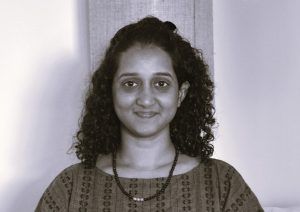
Lihini Warnika Ratwatte
Lihini Ratwatte is an independent researcher and a gender/development practitioner based in Sri Lanka. She is presently the Gender Specialist at the United Nations Development Programme (UNDP) Country office in Sri Lanka. Her work in the development sector ranges from research, policy analysis and advocacy to the practical applications of gender, peace, and security.
Lihini’s research focuses on the intersectional development priorities for conflict-affected women within the broader mandate of the Women, Peace, and Security agenda (UNSCR 1325). Her extensive experience in the development sector allows her to bring an applied lens to this research, and in doing so, she examines how UNSCR 1325 can be used to better support conflict-affected women. While her research is primarily based in Sri Lanka, she also examines the regional and global implications of UNSCR 1325 and its localised implementation.
Lihini has published in several academic blogs and journals and she has presented her research on the intersections of gender and peace at international conferences hosted at the Office for National Unity and Reconciliation (ONUR) in Sri Lanka; the Leiden University (Hague Campus) in the Netherlands; and the University of Lisbon in Portugal. Lihini is presently a ‘Women in Conflict – 1325 Fellow’ at Beyond Borders Scotland (United Kingdom) and a ‘Salzburg Global Fellow’ at the Asia Peace Innovators’ Forum of the Salzburg Global Seminar (Austria) where she engages with peace practitioners, policymakers and academics across Asia and Africa to develop inclusive, future-fit peace solutions.
Lihini holds a Bachelor of Arts (BA) in International Studies, Communications and Gender Studies from Monash University Malaysia (2014); a Master of Arts (MA) in Global Diplomacy from SOAS – University of London, UK (2017), and a Master of Business Administration (MBA) from Cardiff Metropolitan University, UK (2023).
Participant in: October 2024 Fellowship: Peacebuilding and Women’s Meaningful Participation in Peacebuilding Processes
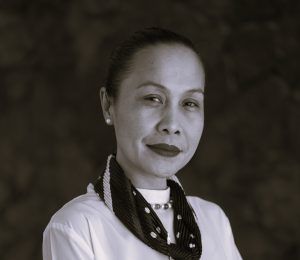
Jamila-Aisha Sanguila
Jamila-Aisha P. Sanguila, MA, is a Women, Peace, and Security (WPS) analyst and peace practitioner with more than 20 years of experience in peacebuilding and interreligious dialogue. Her research focuses on gender, conflict, and community resilience, especially in post-conflict settings in Mindanao, Philippines.
She previously taught Philippine and Mindanao history at Mindanao State University-Main Campus in Marawi City, and now gives invited lectures and training on peace and conflict, Bangsamoro history, gender, and interreligious dialogue. In 2018, she established the Women Empowered to Act (WE Act) for Dialogue and Peace, which promotes women-led peace initiatives in conflict-affected communities in the
Philippines. Under her leadership, WE Act was named a Women, Peace, and Security Accelerator in the Philippines in 2025, promoting psychosocial recovery and women’s economic and civic participation.
As a Salzburg Global and Beyond Borders Scotland Fellow, she promotes women’s participation in peacebuilding and local governance throughout Southeast Asia, including the Philippines. Her work entails capacity building, dialogue facilitation, mediation training, and incorporating mental health into peacebuilding efforts.
Jamila-Aisha writes about women’s rights, gender, mental health, and violent extremism for Diplomatic Courier and is a member of The Expert Network (TEN) at World in 2050. She has a master’s degree in Gender and Peacebuilding from the United Nations-mandated University for Peace in Costa Rica.
Participant in: October 2024 Fellowship: Peacebuilding and Women’s Meaningful Participation in Peacebuilding Processes
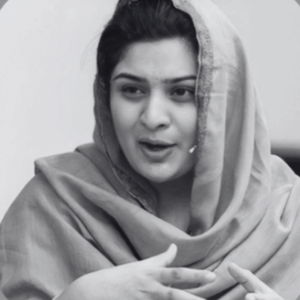
Hadiqa Bashir
Hadiqa Bashir is a 22-year-old activist and feminist from Swat Valley, Pakistan, recognized for her advocacy in girls’ education, human rights, and peacebuilding. She is a survivor of child marriage and has made a significant impact by raising awareness about the struggles of girls and women in conflict-affected regions, particularly in areas once under Taliban control. Hadiqa’s leadership is evident in the historic girls-led peace walk in Swat, which challenged the Taliban’s restrictions on girls’ education, sending a powerful message of resilience. Her efforts have been acknowledged globally, earning her a place as a United Nations SDG Young Leader in 2020.
As the Founder and Executive Director of Girls United for Human Rights (GUHR), Hadiqa’s work focuses on empowering young women in peace and conflict resolution, especially through the “Girls’ Role in Conflict Resolution” campaign. She actively promotes women’s inclusion in peace processes, particularly in regions like Khyber Pakhtunkhwa, where extremism remains a threat. Her work reflects her commitment to ensuring that women’s voices are integral to global peace and security dialogues, pushing for lasting solutions in conflict zones worldwide.
Participant in: October 2024 Fellowship: Peacebuilding and Women’s Meaningful Participation in Peacebuilding Processes
Esther George
Esther George is a committed gender and peacebuilding advocate. She actively engages with local authorities, community leaders, and civil society organisations to promote peacebuilding efforts, with a focus on enhancing women and youth participation in conflict resolution and mediation. She is the Local Government focal point for the Kaduna State Women Mediators Network by Rule of Law and Empowerment Initiative. Her project is focused on Strengthening State and Local Level Peace Architecture for Peacebuilding and Prevention in Kaduna and Katsina State. She holds a Bachelor’s degree from Nasarawa State University and is currently studying for her Masters in International Relations.
She contributes to the development and implementation of community-driven solutions to improve access to justice and protection for marginalised communities. She works on programmatic design and implementation of the Women, Peace, and Security (WPS) agenda in local Communities.
Participant in: October 2024 Fellowship: Peacebuilding and Women’s Meaningful Participation in Peacebuilding Processes
Khin Thet San
Khin Thet San is a peace, justice, and human rights educator with a background in promoting good governance and democracy. Originally from Myanmar, Khin pursued an M.A. in Human Rights and Cultural Diversity at the University of Essex, funded by the Open Society Foundation. Prior to this, she worked extensively with international NGOs, local NGOs, and civil society organisations in Myanmar, focusing on peacebuilding, justice, and human rights initiatives. Her work involved collaborating with grassroots communities to promote conflict resolution, transitional justice, and human rights education in regions affected by violence and oppression. With the support of CARA, she secured a fellowship at SOAS, University of London, and is now pursuing a PhD at Goldsmiths, University of London. Her PHd research is titled Religious Nationalism and the Notion of Human Rights in Myanmar.
In addition to her academic work, Khin volunteers as an educator, teaching Peace and Conflict Studies, Political Science, and International Human Rights Law to young people in Myanmar who have been deprived of education due to military repression. She also provides education on gender, human rights, and women’s leadership to Buddhist nuns, empowering them to take on more active roles in their communities. Her research focuses on human rights violations and the fight for democracy in Myanmar, contributing to global efforts to raise awareness and document abuses under the military regime.
Participant in: October 2024 Fellowship: Peacebuilding and Women’s Meaningful Participation in Peacebuilding Processes
Tara Mohammed Abdalla
As the Director of the Labor and Vocational Training Directorate in Halabja, Kurdistan, Tara Mohammed Abdalla has dedicated her efforts to empowering women and youth in a region heavily impacted by conflict. Recently, she worked on a project with the GIZ organisation, where they successfully employed 26 out of 38 women who completed three distinct vocational training courses. These programs are designed to equip women with essential skills for the job market, supporting their financial independence and contributing to community recovery. Her role also involves managing partnerships with over 50 local businesses and NGOs to align our training programs with local job demands and ensure successful job placements.
In addition to vocational training, she has led initiatives to support women entrepreneurs through grants, mentorship, and business development resources. This experience has given her a deep understanding of the challenges and opportunities for women in conflict zones.
Participant in: October 2024 Fellowship: Peacebuilding and Women’s Meaningful Participation in Peacebuilding Processes
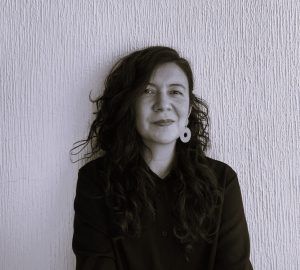
Catalina Gil Pinzón
Catalina Gil Pinzon is an accomplished project leader and program manager with over 15 years of experience in peacebuilding and security fields. Her work spans various areas, including drug and security policies, police reform, youth violence prevention, innovative memory processes with victims of conflict, and disarmament, demobilization, and reintegration of ex-combatants (DDR). Her work emphasizes exploring new narratives and incorporating gender perspectives as a way of driving change towards diversity and inclusion in these sectors. She has collaborated and been part of teams within the Colombian government, international foundations, civil society organizations, and multilateral organizations. Operationally, she excels in managing complex, multi-project portfolios, aligning diverse agendas, and using strategic thinking and creativity to achieveimpactful outcomes. Additionally, she independently leads and promotes initiatives focused on transforming how we understand and approach security through three key areas: the relationship between democracy and security, narrative change, and women’s leadership in the security field. She regularly contributes opinion articles on drug policy, security and gender to various national and international media outlets. She writes frequently for El País and have also been published in El Espectador, Washington Post en Español, and Agenda Pública.
Participant in: October 2024 Fellowship: Peacebuilding and Women’s Meaningful Participation in Peacebuilding Processes
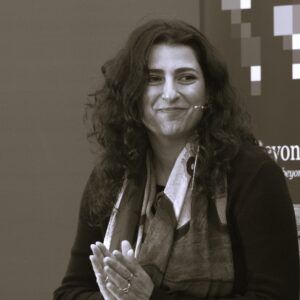
Sonya Armaghanyan
Sonya Armaghanyan is a humanitarian worker, community engagement specialist, and a theatre practitioner. Her work focuses on creating spaces of encounter and humanising ‘the other’ by exploring the world from the point of view of the collective and of cultural richness. She is currently working with the Mental Health and Psychological Support Programme for the UN International Organisation for Migration (IOM) and is based in L’viv, Western Ukraine. In the past five years she has worked across programmes focusing on the areas of peacebuilding, social cohesion, and community-based mental health and psychosocial support.
Sonya specialises in theatre and storytelling and, as part of her work, she uses art-based approaches as a process for community engagement and facilitation of a space where affected communities can share their thoughts and express their feelings in times of crises, regain sense of normalcy, re-establish their sense of belonging, explore their collective identity and strengthen their communal social links. Sonya is the recipient of the Swiss Humanitarian Award 2018 for her research paper “Theatre as Psychosocial Approach in Humanitarian Settings.” She is a Fellow with the Laboratory for Global Performance and Politics at Georgetown University. In 2023, Sonya was nominated for the Gilder/Coigney International Theatre Award.
Participant in: August 2024 Fellowship: The Arts as a Tool for Peacebuilding
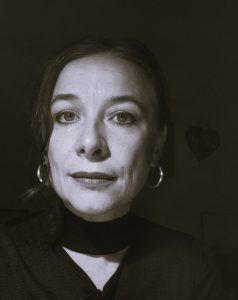
Ksenia Angelova
Ksenia (Xisha) Angelova was born in 1975 into a family of architects in Belarus. She is an icon painter, artist and mosaic artist, and graduated from the Belarusian Academy of Fine Arts in 1991–1996. She continued her studies with three-year courses in icon painting from 2006 to 2009.
She has decorated a number of temples and churches in Belarus and Ukraine. Facade frescoes, mosaic
Since 2020 Xisha dedicates herself to the gallery of portraits of Belarusian political prisoners under the title “The Martyrology of Belarus”. She was inspired by the miracle of the humanity of Belarusians that was revealed during the peaceful protests against the falsification of the presidential election results in the summer and autumn of 2020. The number of people who have gone through and are still going through imprisonment, torture, fines and exile is measured in thousands.
“What hurts the most are those who are no longer with us and those who have suffered for many years in prisons under inhumane conditions.”
Many people in prison associate their chance for freedom with the victory of Ukraine.
Ms. Angelova has created more than 1500 portraits of Belarusian political prisoners. The number of portraits is growing every day. Articles about the author’s conception:
Мартыралог Беларусі: партрэты беларускіх палітвязняў Ксішы Ангелавай
Xisha wants her project to contribute to the understanding and healing of the trauma of Belarusians, and to contribute to the rejection of violence.
Participant in: August 2024 Fellowship: The Arts as a Tool for Peacebuilding
Diksha Poddar
Diksha Poddar holds over 10 years experience working at the praxis of grassroots peacebuilding, gender and development in South Asia. She is currently a Research Scholar at the Centre for South Asian Studies, School of International Studies at Jawaharlal Nehru University, New Delhi, where she is studying the processes of narrativization around youth, peacebuilding and arts in South Asia for her PhD thesis. Diksha is associated with WISCOMP (Women in Security, Conflict Management and Peace), an initiative of the Foundation for Universal Responsibility of His Holiness the Dalai Lama, New Delhi, as a Consultant. At WISCOMP, she engages with their initiatives on women, peace and security in South Asia and youth countering violent extremism where she designs and facilitates workshops and discussions with women and youth in conflict through art. Currently, she is leading an award program on women building peace at the grassroots in South Asia. As a scholar-practitioner, Diksha explores creative solutions to peacebuilding with women and youth at its core and, therefore, uses innovative methodologies to produce creative outputs in the form of online portals, webpages, coffee-table compendiums and multimedia presentations. Diksha has also published widely on issues of women, youth, peace and security.
Participant in: August 2024 Fellowship: The Arts as a Tool for Peacebuilding
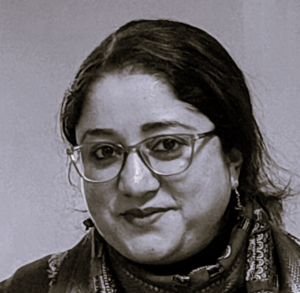
Dr Insha Qayoom Shah
Dr. Insha Qayoom Shah is a researcher, educator, and writer working in the fields of literature, mythology, memory, and gender studies. She holds a PhD in English from the University of Kashmir and her doctoral research, explores how contemporary women writers reinterpret classical myths to challenge patriarchal narratives and recover marginalized female voices. Her broader research interests include women’s writing, myth and memory, cultural narratives of war and conflict, and the relationship between literature, identity, and history.
Insha has teaching experience in English literature and language, where she has taught courses on topics such as women’s writing, the works of Saadat Hasan Manto, and engineering ethics. Her teaching emphasizes critical engagement with texts and encourages students to connect literature with social, ethical, and cultural questions.
She is the co-founder of the Umran Academic Research Association (UARA), an initiative that promotes interdisciplinary research and dialogue among early-career scholars. Inspired by the work of Bruce B. Lawrence, UARA focuses on themes of pluralism, cross-cultural exchange, and the intellectual traditions of the Bhakti-Sufi heritage.
Alongside her academic work, Insha writes poetry and practices painting, reflecting her interest in creative expression as a way of exploring memory, identity, and lived experience across cultural and intellectual borders.
Participant in: August 2024 Fellowship: The Arts as a Tool for Peacebuilding
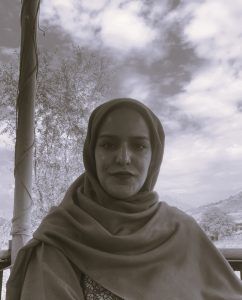
Aeiman Rafiq
Aeiman Rafiq is a Clinical Psychologist working with SAWAB, a non-governmental organization in Kashmir dedicated to community welfare and community mental health. Her work centres on improving access to psychologically informed care within community settings, with particular attention to the ways cultural context and lived experiences shape mental health.
In her clinical role, Aeiman works with a diverse clinical population, including individuals from conflict-affected backgrounds. Her areas of professional interest include trauma and psychosocial trauma, community mental health, and culturally responsive approaches to psychological care. She is especially interested in understanding how collective experiences of conflict influence psychological wellbeing in Kashmir.
Aeiman also holds a diploma in art therapy, which has informed her use of creative and expressive techniques in working with trauma survivors. She has found that art-based approaches can help individuals access and communicate emotional experiences that may be difficult to articulate verbally.
Alongside her clinical work, Aeiman is interested in developing research in the area of trauma, particularly exploring the relationship between dreams and traumatic experiences. Through her practice and academic interests, she aims to contribute to more culturally grounded and trauma-informed mental health work within the region.
Participant in: August 2024 Fellowship: The Arts as a Tool for Peacebuilding
Eman Taweel
Eman Taweel has extensive experience in humanitarian and development sectors. She is currently a Community Engagement Officer for the UN’s International Organisation for Migration (IOM) in Libya. She is also the founder of Nafs Mental Health Awareness Arts Project. Prior to this, she has worked at a range of organisations for development and media across Libya and focussing on Libya, including Amideast Tunisia for their Libya projects, and Moomken For Awareness and Media. She holds a Master’s Degree in International Development from the University of East Anglia and is a Chevening Scholar and MEPI Student Leader Alumni.
Eman works, also, as a consultant in the development field advising on peace-building and community work. Having experienced ongoing conflict and worked in displacement camps, she has a direct insight into the challenges women face in such circumstances, and she draws inspiration from them to amplify their voices on a broader scale.
Participant in: August 2024 Fellowship: The Arts as a Tool for Peacebuilding
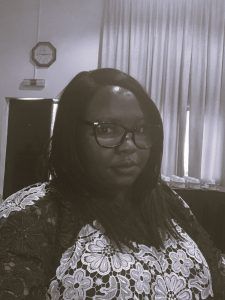
Rabi Adamu Musa
Rabi Adamu Musa is a transformational leader and the Founder/CEO of Mcrissar Foundation for Women and Girls Nigeria, an organization dedicated to empowering women and girls in marginalized communities. With a distinguished career spanning law, development, and governance, Rabi is a passionate advocate for gender justice and social change.
In 2019, Rabi served as a legal advisor to the Governor of Kaduna State, where she provided critical guidance on governance and policy matters. She has also twice aspired to serve in her state parliament, driven by a deep-seated desire to change the narrative for her community and enact policies that address systemic poverty and inequality. Coming from a region plagued by poverty, illiteracy, and the ravaging impacts of crises, Rabi has remained steadfast in her mission to uplift marginalized groups through initiatives that transform lives.
Through the Mcrissar Foundation, Rabi leads innovative programs such as the “Sanitary Pad Bank,” which provides free menstrual products to high schools and underserved communities in northwest Nigeria, addressing period poverty and promoting menstrual hygiene. She also hosts the annual International Women’s Day Conference in Kaduna, creating a vital platform for dialogue, inspiration, and action toward gender equality.
Rabi is a strong advocate for women’s political participation and provides support to victims of gender-based violence. With a background in civil law from the University of Jos , Nigeria and certifications in leadership and governance from renowned institutions in the USA, Canada, and the UK, she combines her expertise with an unwavering passion for driving social progress. In recognition of her contributions to community development, she was awarded the Katherine Flemming International Development Award in 2021 by the Coady Institute, Canada.
Looking to the future, Rabi aspires to create a safe space for young women in society, fostering their growth and development. Born and raised in Kafanchan, Kaduna State, Nigeria, she remains deeply committed to giving back to her community, promoting peaceful coexistence, and uplifting women and girls. Rabi’s dedication to service and empowerment solidifies her legacy as a changemaker and advocate for justice.
Participant in: August 2024 Fellowship: The Arts as a Tool for Peacebuilding
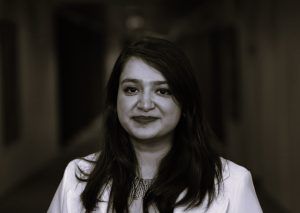
Kashmala Susan Syeda
Kashmala Syeda is a High Court Advocate, documentary producer, and human rights practitioner whose work sits at the intersection of constitutional law, gender justice, and climate advocacy. A graduate of the International Islamic University Islamabad with an LLB (Hons) and LLM, she has been practicing since 2018, representing clients in constitutional, criminal, and human rights matters before district and High Courts. Her legal work focuses on freedom of expression, digital rights, gender based violence, electoral inclusion, and the protection of marginalized communities.
She currently serves as a Legal and Gender Expert with UNDP Pakistan under the PLEDGE Project, supporting the Election Commission of Pakistan in advancing gender mainstreaming and social inclusion frameworks.
As the founder of AAIN Foundation and co-leader of climate storytelling initiatives with Jawad Sharif Films, Kashmala bridges law and narrative. Her documentaries explore climate migration in the Indus Delta, statelessness, minority rights, urban smog, and the lived realities of communities navigating environmental and structural injustice. Projects such as “Moklani – The Last Mohanas,” “Naatari,” “Bhashaili – A Drift,” “The Losing Side,” and “The Colors of Smog” have sparked dialogue in Pakistan and internationally, including screenings and academic discussions in Switzerland and the United Kingdom.
Her advocacy extends beyond courtrooms and film sets. Kashmala serves in leadership roles within the Islamabad Bar Council, including Chairperson of the Protection Against Harassment Committee and Senior Vice Chairperson of the Women Empowerment Committee. She is a life member of the Human Rights Commission of Pakistan and actively mentors young lawyers, promoting rights-based legal practice and ethical advocacy.
Internationally, she has been selected for competitive fellowships and litigation programs focused on freedom of expression and peacebuilding. These engagements have strengthened her commitment to cross-regional collaboration and to using law and storytelling as complementary tools for structural reform.
Kashmala’s work is grounded in the belief that law is not merely a set of rules but a living instrument shaped by power, language, and access. Through litigation, policy reform, and documentary storytelling, she continues to build bridges between justice systems and communities whose voices are too often unheard.”
Participant in: August 2024 Fellowship: The Arts as a Tool for Peacebuilding
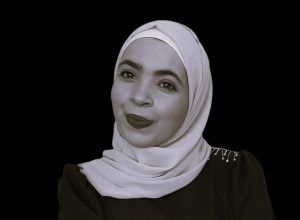
Alaa Alsewid
Alaa Alsewid is the Founder and Director of Social By Design, a UK-based social enterprise empowering refugees and marginalized communities through digital literacy and financial inclusion. A Chevening alumna of the Chevening Scholarship, she holds a Master’s in Media and Public Relations and brings a strong background in communications, storytelling, and campaign strategy.
Alaa designs impact-driven programs that strengthen digital resilience, protect vulnerable communities from online harm, and foster inclusive community development.
Participant in: August 2024 Fellowship: The Arts as a Tool for Peacebuilding
Zain Quaiter
Zain Quaiter grew up surrounded by art, and has used art academically and personally to navigate her identity and experiences of displacement. She is currently the International Programmes Manager for Asia and the Middle East at The King’s Trust International. She recently completed a Masters in Development Studies, where she focussed on two projects, one on memory and collective healing through story-telling, and another on identity and dislocation through painting, using her own body as a canvas. In 2017, she participated in the Arts4Change event in India, where she wrote a song with other fellows about body-image and being a woman.
While in Syria, Zain used art to build community and create a safe space for young people, especially young women. She has also used song to reflect on her experiences and emotions throughout displacement and personal growth, using song-writing as a storytelling tool to regain agency over her memory and story.
Participant in: August 2024 Fellowship: The Arts as a Tool for Peacebuilding
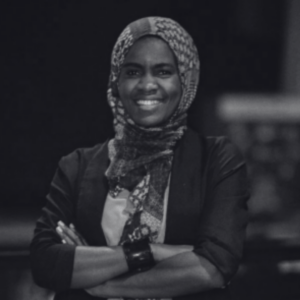
Rashida Namulondo
Rashida Namulondo is the founder of The Sophie Muwanika Institute of art for change, a non-profit organisation that uses theatre for peace building, healing and rehabilitation for victims of trauma. Rashida is also a theatre-practitioner, actress and award-winning performance poet. Over the past eight years, she has dedicated herself to using the arts to promote peace and reconciliation in post conflict communities and communities vulnerable to conflict in Uganda. She is dedicated to building the capacity of communities in using performing arts to advocate for peace, foster collective healing and collective engagement against violent extremism. Examples of her work with the Sophie Muwanika Institute of Art for Change include the ‘Schools Theatre Festival for Peace’ and ‘Our Voices Arts Community Project.’
Participant in: August 2024 Fellowship: The Arts as a Tool for Peacebuilding
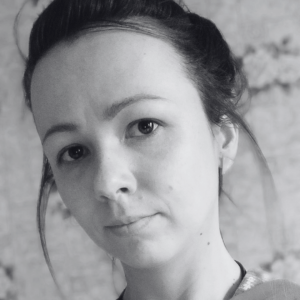
Sofiia Runova
Sofiia Runova is an illustrator, graphic story-teller, and designer from Ukraine. She has a wealth of experience creating graphic novels on topics related to war, conflict, and refugees as well as working in collaboration with journalists and citizens to help them express and share their stories. In 2023,
In 2023 as an Artist and Designer Sofiia participated in the project “To tell OUR story”, organised by “Libereco – Partnership for human rights”, “East SOS” and “Gustav Stresemann Institut in Niedersachsen e.V.”. One of the project results is a graphic novel that tells 16 stories of young adults from Iran, Iraq, Syria, Ukraine and Afghanistan who faced refuge due to war. She illustrated their stories trying to make them as individual as she could, in close cooperation with authors. Main aim of the project was to give them space to tell their stories and to raise awareness around refugees, wars and armed conflicts.
In 2022 Sofiia also participated in “Even in the darkness there is a light” project curated by Pictoric – Ukrainian illustrators club. Project is a collaboration between illustrators and citizens, and tells stories of people who “give their peaceful lives to fight against the war”. In 2020 as an Artist and Designer she worked on a project “From Conflict to Dialogue”, held by “Libereco – Partnership for human rights” and “East SOS”, one of the results of which is a graphic novel “I can!” by Dr. Imke Hansen, that provides knowledge on trauma, stress management, dialogue and conflict management. In 2017 as an Artist and Designer she worked on a graphic novel project ‘Crossroads: Nine stories on war and violence’ by multiple authors, organised by ‘Libereco – Partnership for human rights,’ ‘EUCCI’ and ‘Justice for peace in Donbass.’
Sofiia is also pondering on a topic of Russian aggression in Ukraine in her personal illustrations, in such a way documenting my own experience, as well as illustrating news from the media or stories from people she met.
Participant in: August 2024 Fellowship: The Arts as a Tool for Peacebuilding
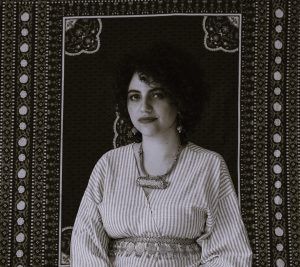
Mariam Al-Dhubhani
Mariam Al-Dhubhani is an award-winning Yemeni-Russian journalist, filmmaker, curator, and educator based in the SWANA region. A 3x TEDx speaker and pioneer in using virtual reality to tell stories from Yemen, she creates work that amplifies marginalized voices and challenges mainstream narratives. Her films have received multiple accolades, including the Most Promising Filmmaker award at the Toronto Arab Film Festival (2019) for In The Middle. She was honoured as a Rising Star at the inaugural QF Alumni Awards by Her Highness Sheikha Moza bint Nasser and named a CineGouna Rising Star at the El Gouna Film Festival, establishing her as a leading voice in Arab and African cinema.
Al-Dhubhani holds a Bachelor’s degree in Journalism and Strategic Communication from Northwestern University and a Postgraduate Diploma in Museum and Gallery Practice from University College London. She has mentored young storytellers in conflict zones, served on juries for international film grants and festivals, and collaborated with UN agencies to train journalists in immersive storytelling. Her work blends human stories with innovative cinematic approaches to explore resilience, identity, and the unseen lives of her communities. She is currently completing her feature debut, showcased at prestigious festivals including Cannes, IDFA, and Venice.
Participant in: August 2024 Fellowship: The Arts as a Tool for Peacebuilding
Ranya Al-Jaberi
Ranya Al-Jaberi is a humanitarian professional with over a decade of experience spanning safeguarding, child protection, gender-based violence (GBV), and the peace and security nexus. She holds a Master of Advanced Studies in Humanitarian Action from the University of Geneva and a bachelor’s degree in arts and education. Since August 2025, she has served as Safeguarding Investigation Manager with Médecins Sans Frontières (MSF) in Geneva.
Before joining MSF, Ranya built extensive field and headquarters experience across UN agencies and international NGOs, including UN Women, the Safeguarding Resource and Support Hub, IOM, UNICEF, and the Danish Refugee Council. Her work has focused on strengthening safeguarding systems, advancing protection frameworks, and addressing gender-based violence in complex humanitarian settings.
Ranya’s expertise sits at the intersection of protection and peace and security. She has contributed to initiatives that promote accountability, survivor-centred approaches, and institutional reform as foundational elements for sustainable peace. Her professional practice integrates safeguarding, protection from sexual exploitation and abuse and Harassment (PSEAH), child protection, and gender-responsive programming within broader peacebuilding and security agendas. She brings a strong commitment to ethical leadership, risk mitigation, and building safe, accountable organizations in fragile and conflict-affected contexts.
Participant in: March 2024 Fellowship: Climate Change, Gender, and Conflict
Sofiia Shevchuk
Sofiia Shevchuk is a founder of an educational and consultancy platform VONA, dedicated to the topics of climate, gender and security; she also serves as an independent researcher, trainer, facilitator and a podcast host (e.g. #VONATalks, WIIS Brussels Voices, etc.). Through building connections, in-depth research, and facilitation of discussions Shevchuk aims to contribute to a more equal, climate-just, and peaceful world. Prior to becoming an independent consultant Shevchuk worked as a researcher with the European Parliament, NATO Parliamentary Assembly and the German Marshall Fund. She also studied at the College of Europe, Bruges; and University of Ghent.
Participant in: March 2024 Fellowship: Climate Change, Gender, and Conflict
Arij Soussi
Arij Soussi is a medical doctor and civil society activist from Tunisia. She focuses on conflict resolution and advocating for the rights of minorities and women. She shaped her peacebuilding and advocacy skills through a range of training programs like Young Mediterranean Voices, where she not only developed her debate skills but also served as a debate trainer for two years. In 2020, she got selected to participate in the MEPI student leaders program at Georgetown University, an opportunity that allowed her to organise the Living Library, an event that enables minorities and women to bravely voice their experiences and speak up against discrimination. She also participated in the Generation Change Exchange Program with His Holiness the Dalai Lama in 2022 and the Strategic Project Design and Implementation Program in 2023, organised by the United States Institute of Peace. Her concern for climate change grew bigger when she noticed that it was fueling political conflict and widening the gap to achieving gender equality in Tunisia and the MENA region. Through her engagement with Opinion Makers, a program organised by the Munathara Initiative, she took part in live TV debates and radio talks where she debated topics related to climate justice and women’s rights in Tunisia. She is also working with Dare organisation on “Golden Words,” a project that aims to empower Tunisian women and girls and creates a safe space for them to share their thoughts, concerns, and recommendations regarding the challenges that they encounter, particularly amidst the climate crisis.
Participant in: March 2024 Fellowship: Climate Change, Gender, and Conflict
Ola Badran
Ola Badran is a humanitarian and development professional specializing in gender equality, protection, disability inclusion, and conflict‑sensitive programming. She has built a diverse portfolio across different contexts, working with the UN, international partners, and the private sector to strengthen inclusive, safe, and equitable programming in complex and high‑risk environments.
In her current role as Programme Policy Officer with the UN in Syria, Ola leads efforts to mainstream protection and inclusion across operations and programme design. Her work spans technical advisory, the development of tools and guidance, strengthening SADD and monitoring frameworks, and managing GBV-related cases through community feedback mechanisms.
In Pakistan, she led the gender and inclusion portfolio of a Green Climate Fund project, conducting in‑depth field research and authoring key products including a Gender Analysis, a Guidance Note on Gender‑Responsive and Inclusive DRR, and an SBCC Strategy for last‑mile early warning access. She has collaborated closely with different stakeholders to embed gender and protection priorities within DRR, social protection, food systems, and anticipatory action. Previously she worked extensively on conflict sensitivity, risk analysis, and adaptive programming. Ola brings a strong commitment to equity, dignity, and meaningful participation in all aspects of her work.
Ola holds a Master’s degree in International Cooperation, Finance, and Development from Unitelma Sapienza, Italy, where her thesis focused on humanitarian policy advocacy in sanctioned environments. She also earned an MBA from the Higher Institute of Business Administration in Damascus and a Bachelor’s degree in Pharmacy and Pharmaceutical Industries from Damascus University.
Participant in: March 2024 Fellowship: Climate Change, Gender, and Conflict
Tasneem SiedAhmed
Tasneem SiedAhmed, a dedicated individual with a multifaceted career, has ventured across diverse roles encompassing research, advocacy, and humanitarian efforts aimed at addressing critical issues within Sudan. Currently she works in a research project aimed to study the Environmental Impacts of Sudan War while simultaneously serving as a Loss and Damage Negotiator in Sudan, broadening her understanding of international climate diplomacy. Her last role in Sudan before the conflict was as a Project Researcher at the Darfur Land Project for SALAAMEDIA Peace and Development NGO. Here, Tasneem spearheaded stakeholder mapping, conducted thorough desk reviews on land issues in Darfur, and designed advocacy campaigns targeting housing and land-related concerns in the region with focusing on its gender aspects. Her diverse journey encompassed pivotal roles with esteemed organisations like MSF, where she helped manage complex emergency response projects, monitored humanitarian contexts, reported on key developments, and actively engaged in human rights monitoring efforts. Additionally, Tasneem’s involvement in various grassroots initiatives, COVID-19 response programs, and community-driven campaigns underscores her steadfast commitment to social welfare, human rights advocacy, and community .
Participant in: March 2024 Fellowship: Climate Change, Gender, and Conflict
Ayessa Tin
Ayessa Tin is a Women, Peace and Security (WPS) practitioner based in the Bangsamoro Autonomous Region in Muslim Mindanao (BARMM), Philippines. She currently serves as Programme Analyst for WPS and Humanitarian Action at UN Women Philippines, where she supports both normative and programmatic work to advance the WPS agenda. Her work contributes to strengthening policy frameworks, institutional mechanisms, and accountability processes that promote the leadership, participation, and protection of Bangsamoro women and girls in peacebuilding, governance, and post-conflict recovery. She provides technical support on gender-responsive policy development, mediation initiatives, and civil society engagement.
Ayessa has over 15 years of experience across government and international development. She worked for six years within the Philippine local legislative system, contributing to policy development, stakeholder consultations, and the drafting of local ordinances. She also supported the implementation of the BARMM Normalization Program, part of the broader Bangsamoro peace process, through her work with the Office of the Presidential Adviser on Peace, Reconciliation and Unity.
Ayessa is a Salzburg Global Fellow, a Beyond Borders Scotland Fellow, and an alumna of the Australia Awards In-Country Scholarship Program. She holds a Master’s degree in Public Administration major in Public Policy and a Bachelor’s degree in Political Science. In 2026, she will begin a Master’s program in Peacebuilding and Conflict Resolution at the University of Bradford in England as a Rotary Peace Fellow.
Participant in: March 2024 Fellowship: Climate Change, Gender, and Conflict
Emily Andrea Quispe Ponce de León
Emily Quispe is a forestry engineering professional with experience in project management, monitoring and evaluation, and capacity building for climate change adaptation. She currently works as a Technical and Financial Officer at Peru’s National Environmental Fund, Profonanpe, where she supervises the implementation of subgrants focused on resilient livelihoods and sustainable ecosystem management, bridging international funding requirements with the capacities of local organizations.
Throughout her career, she has monitored projects, provided technical assistance to various organizations, and contributed to strengthening environmental governance by promoting coordination among local actors, organizations, and public institutions. Her experience integrates technical, financial, and social approaches, with an emphasis on implementing initiatives aligned with national climate policies.
She has complemented her professional profile with active participation in volunteer work and youth networks. She has served as a facilitator in climate governance and gender programs, and as a volunteer in conservation and environmental monitoring initiatives in the Amazon and the Andes. She has also participated in international spaces such as COP25, strengthening her commitment to global climate action.
Committed to sustainable development, she focuses her work on promoting local solutions that enhance community resilience to climate change.
Participant in: March 2024 Fellowship: Climate Change, Gender, and Conflict
Urooj
Urooj belongs to Gilgit-Baltistan, often described as a region at the crossroads of South Asia and Central Asia since it is located between the borders of India, Pakistan, China, and Afghanistan. Spanning across almost 73,000 square km in the extreme north of Pakistan, Gilgit-Baltistan is home to the Hindukush, the Himalayas, and the Karakoram mountain ranges, and is one of the most vulnerable regions on the planet, both in terms of the effects of climate change and its political status. Urooj is currently working in the climate space as an environmental, social and governance (ESG) consultant for a hospitality and property management company. She has a MSc in Social and Cultural Anthropology from University College London, where she wrote her dissertation titled “People Changing Climate Changing People: Perceptions of Climate Change, its Impacts, and Indigenous Responses in Gilgit-Baltistan, Pakistan”. She also holds an MA in Islamic Studies and Humanities from the Institute of Ismaili Studies London. She is interested in climate advocacy, climate policy and climate justice in relation to indigenous and mountain communities and displacements. She has experience in social research and evaluation, specialising in climate change and climate action research, demonstrating a commitment to addressing environmental and social challenges through community service.
Participant in: March 2024 Fellowship: Climate Change, Gender, and Conflict
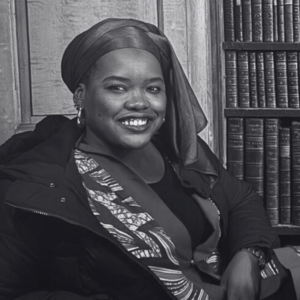
Yakaka Mandara
Yakaka Mandara holds a wealth of experience in conflict resolution, peacebuilding, and community empowerment. As the Project Manager for the Reconciliation and Reintegration Unit at UNDP, she has played a pivotal role in leading and overseeing a multifaceted portfolio dedicated to promoting peacebuilding, reconciliation, and the reintegration of communities affected by conflict and displacement. Her dedication to promoting peace, fostering social harmony, gender equality and empowering vulnerable populations has been a consistent thread throughout her career. With a proven track record in reconciliation, reintegration, protection, and gender equality, Mandara actively contributed to positive change in conflict-affected regions. She recognizes the nuances and sensitivities involved in reintegration processes, honing her ability to navigate cultural differences and historical traumas to build bridges and foster trust between conflicted parties. She led a team in implementing various activities which includes but not limited to livelihood support, social cohesion activities, mental health and psychosocial support. Understanding the significance of community-based initiatives, Mandara actively engaged with local communities and key stakeholders, fostering ownership and sustainability. As a team leader, she prioritised mentorship and capacity building, empowering multidisciplinary teams to reach their full potential. She encouraged Government partners and implemented a gender lens when conducting needs assessment and providing support in local communities. Mandara’s previous roles include Acting Head of the Unit for the Reintegration and Social Cohesion Unit (UNDP), Restoring Family Links Assistant (ICRC), and Community Engagement Analyst (UNDP).
Participant in: March 2024 Fellowship: Climate Change, Gender, and Conflict
Prativa Khanal
Prativa Khanal is a human rights lawyer possessing a master’s degree in law and certification as a Peace and Conflict Consultant from the Academy for Conflict Transformation/Forum Civil Peace Service in Germany. She has amassed extensive experience collaborating with civil society organisations, donors, government entities, UN agencies, and victims of human rights violations across international, regional, national, and grassroots levels. Khanal’s work has spanned diverse conflict, fragile, and humanitarian settings in the Asia-Pacific, Sub-Saharan Africa, Eastern Europe, and the South Caucasus region. At present, Khanal is working at the Max Planck Foundation for International Peace and the Rule of Law in Germany under the Somalia project to advance gender equality in the constitutional review and law-making process. Her previous roles include collaborations with esteemed international organisations dedicated to women’s rights and women, peace, and security, such as the Global Network of Women Peacebuilders (GNWP) in New York. Khanal has also served as an International Consultant – Women, Peace, and Security for UN Women in Bangladesh and Somalia. This diverse background has provided Khanal with a deep understanding and practical experience in addressing women, peace, and security issues, including climate change, in countries like Bangladesh, Georgia, Indonesia, Nepal, the Philippines, and Somalia.
Participant in: March 2024 Fellowship: Climate Change, Gender, and Conflict
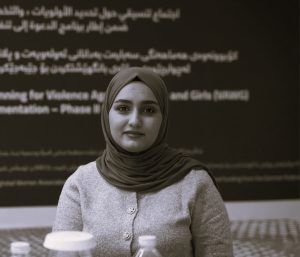
Noor Esam Al-Khateeb
Noor Esam Al-Khateeb is a humanitarian and women’s rights advocate with over nine years of experience working with international organizations, including the International Rescue Committee, Norwegian Refugee Council, and Danish Refugee Council in Iraq. She currently serves as Senior Manager for Women’s Protection and Empowerment (WPE), where she leads partnerships, ensures program quality, and supports local organizations in delivering survivor-centered services for women and girls.
Throughout her career, Noor has worked closely with internally displaced persons, refugees, returnees, and vulnerable host communities. She specializes in gender-based violence prevention and response, Women, Peace and Security (WPS), and gender integration in humanitarian programming. Her work combines technical expertise with strategic leadership, including grant management, donor reporting, capacity building, and multi-stakeholder coordination. She is a certified trainer in case management, psychosocial support, Gender in Humanitarian Action (GiHA), and clinical care for survivors of violence.
Noor is an alumna of the 2024 Women in Conflict 1325 Fellowship (UK), the 2023 Swedish Institute Leader Lab, and the 2022 Cross Culture Programme in Germany, experiences that strengthened her leadership, advocacy, and global engagement.
Noor is passionate about advancing gender equality, strengthening local partnerships, and promoting institutional change that creates safer, more inclusive environments for women and girls.
Participant in: March 2024 Fellowship: Climate Change, Gender, and Conflict
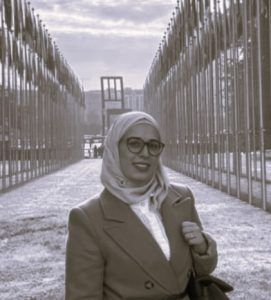
Hind Abdulrahman
Hind Abdulrahman has over nine years of professional experience with international and national organizations in Iraq, specializing in post-conflict recovery, internal displacement, reintegration, and prevention of violent extremism programming. She currently serves as a National Partnership Officer with the International Organization for Migration (IOM), where she leads localization and partnership strengthening initiatives, including civil society capacity development, compliance oversight, and institutional framework alignment.
Hind has extensive experience managing partnerships in fragile and conflict-affected contexts, integrating conflict sensitivity into programming, and supporting civil society actors working with vulnerable and marginalized populations. Her expertise spans programme coordination, grant and financial management, multi-stakeholder engagement, and adapting interventions to complex operational environments.
Participant in: March 2024 Fellowship: Climate Change, Gender, and Conflict
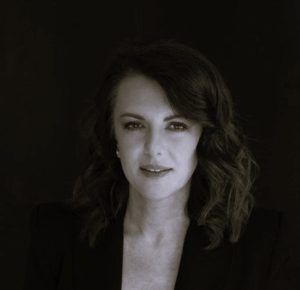
Nona Mamulashvili
Nona Mamulashvili is a geopolitical analyst and former Member of Parliament from Georgia specializing in institutional resilience, security architecture, and the governance implications of emerging technologies.
Her professional background spans government, diplomacy, and multinational leadership roles across the Caucasus, Central Asia, and Eastern Europe. As a Member of Parliament, she served on the Foreign Affairs Committee and worked on regional security, democratic governance, and international policy alignment.
Nona’s research and writing focus on how small democracies adapt to geopolitical pressure, technological disruption, and structural vulnerability. Her work has been published by the Harvard Kennedy School’s Carr Center, Emerging Europe, the Middle East Institute, and The Washington Post.
Participant in: March 2024 Fellowship: Climate Change, Gender, and Conflict
Justine Maravu
Justine Maravu is currently Transcend Oceania’s Acting Project Manager/Operations primarily responsible for the Bread for the World funded regional project on Engaging Men and Boys for the Prevention of Violence Against Women and Girls. Her role expands to other projects on climate change and conflict, Trauma Awareness and Healing due to her expertise and skills in Peacebuilding. Have worked in the NGO sector for more than a decade. She has a deep interest in Community Peacebuilding and Development which led her to complete a Graduate Certificate in Peacebuilding and Leadership from Eastern Mennonite University, Virginia USA. Currently she is also a Programme Associate for the Pacific Women Mediators Network.
Participant in: March 2024 Fellowship: Climate Change, Gender, and Conflict
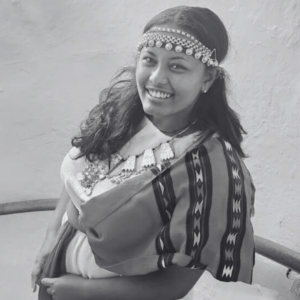
Mekides Berhanu Alemu
Growing up in Addis Ababa, Mekides Berhanu Alemu witnessed the transformative power of peacemaking firsthand through her grandfather, a community-respected mediator. His unwavering dedication to resolving conflict, from marital woes to social clashes, instilled in Alemu a deep aversion to discord and a burning desire for peace. This passion led her on an unconventional path. While five years in biomedical engineering weren’t her ultimate calling, the skills and knowledge she gained became a robust foundation for her true passion: contributing to peacebuilding. Fueled by an MBA that equipped her to tackle complex issues like mass migration and conflict, Alemu found her calling at a local civil society organisation, an organisation dedicated to human rights and good governance. There, she honed her skills and delved deeper into practical peacebuilding, spearheading in peace projects and demonstrating her exceptional talent for conflict resolution. This invaluable experience ultimately led to her prestigious appointment as a Young Women Mediation Ambassador for the Horn of Africa at IPHRD-Africa, where she now plays a crucial role in empowering young women and fostering lasting peace in a region. Today, Alemu channels her unwavering dedication through a local civil society organisation, fostering meaningful youth and women’s participation in peacebuilding. A vocal advocate for their inclusion in peace processes, she serves as a beacon of hope, a testament to the transformative power of unwavering dedication and the potential of peacemaking to shape a brighter future.
Participant in: March 2024 Fellowship: Climate Change, Gender, and Conflict
Minagano Kape Mukhtar
Minagano Kape is a South Sudanese peace builder, activist, and published poet with about a decade of experience in the fields of peace building, peace implementation monitoring, Women Peace and Security, program management, and support to dialogue processes. She has worked with civil society organisations, served in peace agreement implementation Boards andInternational Organizations. Kape currently works as a Peace and Political Affairs Officer at the Swiss Cooperation Office, in South Sudan.
Participant in: January 2024 Fellowship: Peacebuilding and Women’s Meaningful Participation in Peacebuilding Processes
Reham Mourshed
Reham Mourshed is a journalist, and communication specialist with over 7 years of experience in media, communication, graphic design. Her expertise is primarily built upon designing communication and media strategies and plans, managing social media platforms, managing websites, creating content (media reports, stories, and articles), graphic designing, taking and editing photos and videos, on the other hand, she has many published articles and a big interest in gender equality.
Participant in: January 2024 Fellowship: Peacebuilding and Women’s Meaningful Participation in Peacebuilding Processes
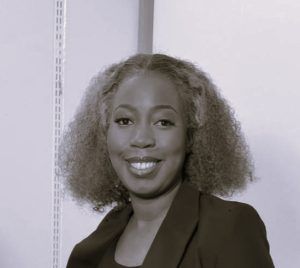
Trish Mutakura
Trish Mutakura is a Project Manager at Green Governance Africa, where she works on initiatives that address climate change and promote sustainable development. She has extensive experience working with young people, particularly young women who are disproportionately affected by climate change.
Through her work, Trish focuses on building the capacity of communities and youth to respond to climate-related challenges. She has supported young women and youth groups in developing Disaster Risk Reduction (DRR) plans and establishing climate-resilient economic activities that strengthen livelihoods while promoting environmental sustainability.
Trish is passionate about empowering youth to become active agents of change in climate action. Her work centres on community resilience, youth participation, and inclusive approaches that ensure vulnerable groups are equipped with the knowledge and tools needed to adapt to the impacts of climate change.
Participant in: January 2024 Fellowship: Peacebuilding and Women’s Meaningful Participation in Peacebuilding Processes
Soneni Gwizi
Ms. Soneni Gwizi is a Zimbabwean Physical Disabled Woman Advocate, IVLP Alumni, ADD Ambassador for Asia & Africa, a Disability + Women advocate, Speaker, Influencer, Feminist, Disability Mentor, holds multiple Media Awards on – various Disability Advocacy, Broadcasting & Human Rights Defender Champion & a Rotarian. She is passionately known as Flawsome. Ms. Gwizi was the first Woman with a Physical Disability to be TV Presenter for a Zimbabwe’s National TV Station – ZbcTV & Radio Presenter. Her belief is – Women with disabilities do normal things just like You! Her speaking experiences include the Zimbabwe International Trade, Disability Summit Zim 2018, the Hope & Salvation Ability Conference, Zimbabwe Women in Health, and the World Bank Amplifying the Voice & Spotlighting of Women & Girls with Disabilities in COVID-19 Response. In 2019, Gwizi was nominated for the Her Abilities Global Award, an international award dedicated to women with disabilities from across the continent who have exceptionally excelled in their line of work regardless of any human made barriers they face within.
Participant in: January 2024 Fellowship: Peacebuilding and Women’s Meaningful Participation in Peacebuilding Processes
Reham Al-Aghbari
Reham Al-Aghbari is a proud DAAD scholar with a master’s degree in Public Health. Currently, Reham is an External Projects Program Coordinator at Saint Andrew’s Refugee Services (StARS), Egypt. She works in developing the institutional capacity of refugee-led organisations in Egypt to derive quality services to the refugee community. Prior to working at StARS, Al-Aghbari worked as a program coordinator at Generations for Peace in Jordan. Al-Aghbari was inspired to know the relationship between health and conflict. She learned how to identify conflict in a community and how the quality of relationships (building acceptance, inclusion, and respect) plays a significant role in conflict transformation. Reham had the experience of implementing peace-building activities and vehicles (Sport for Peace, Art for Peace, and Advocacy for Peace). In her free time, Al-Aghbari can be found playing football, hiking, and crafting.
Participant in: January 2024 Fellowship: Peacebuilding and Women’s Meaningful Participation in Peacebuilding Processes
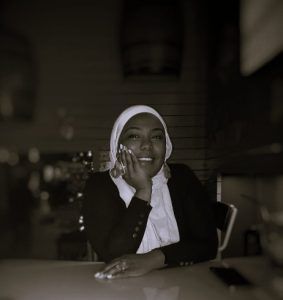
Thuria Ibrahim
Thuria Ibrahim holds a Master’s degree in Human Rights and Development from the University of Jordan. Her academic background, combined with over twelve years of professional experience, has equipped her with a deep and nuanced understanding of development challenges and opportunities across the region. Throughout her career, she has worked across civic engagement, peacebuilding, sexual and reproductive health, economic empowerment, and youth leadership, contributing to initiatives that strengthen community resilience and promote equitable access to opportunities.
She currently serves as Project Manager for Youth Employment at INJAZ, where she leads national programs aimed at enhancing young people’s readiness for the labor market. In this role, Thuria designs and manages employment pathways, builds strategic partnerships, and fosters collaboration across public, private, and civil society sectors. Her work focuses on developing innovative, practical, and inclusive solutions that support young people in successfully transitioning into the workforce.
Beyond her national work, Thuria is an active member of the International AIDS Society and serves on the Grant Review Committee of the Black Feminist Fund, where she contributes to global efforts advancing public health, gender justice, and community-led development. Her professional journey reflects a strong commitment to collaboration, evidence-based practice, and rights-based approaches, with a particular focus on advancing justice, equity, and sustainable development across diverse communities.
Participant in: January 2024 Fellowship: Peacebuilding and Women’s Meaningful Participation in Peacebuilding Processes
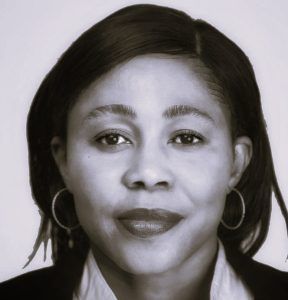
Ndachem Abubakar
Ndachem Abubakar is a distinguished Conflict, Peace, and Security Specialist with over 12 years of experience in stabilization, reintegration, peacebuilding, and recovery across Sub-Saharan Africa. Currently serving as a Programme Specialist with UNDP Ethiopia, she provides strategic policy advisory to the National Rehabilitation Commission (NRC) on the DDR process following the Pretoria Peace Agreement. Her work is pivotal in navigating the transition from conflict to stability in the Tigray, Afar, Amhara, and Oromia regions.
Ndachem excels at integrating gender-responsive frameworks into high-stakes implementation. Her career is defined by her critical community engagement, reconciliation and reintegration efforts in Northeast Nigeria, between 2021 and 2024, where she coordinated the reintegration of former Boko Haram associates, leveraging Transitional Justice and alternative dispute resolution to mend the social fabric of conflict-affected communities. Her leadership was instrumental in implementing EU, PBF, RSF-RR, ECHO funded projects, such as the S2R, SD3R initiatives, & the Borno Model in Northeast Nigeria which focused on reducing stigmatization, reintegration of women affected by Boko haram conflict in Nigeria, promoting community healing, and strengthening the bond between citizens and the state.
Ndachem’s global profile is supported by specialized training from premier international institutions:
Certified in Security Sector Governance (DCAF Geneva) & the United Nations Training School in Dublin, Ireland, WPS 1325 (Scotland, UK), Alumna of the Kofi Annan International Peacekeeping Training Centre (Ghana) DDR, Specialized Reintegration Spain, and the Geneva Centre for Security Policy (Switzerland). She holds an M.A. in Transitional Justice (In-View), a M.A. Conflict, Peace & Security and a degree in Public Administration from the University of Maiduguri.
Ndachem excels at the intersection of Climate Security and Environmental Peacebuilding. Recognizing that resource scarcity often fuels instability, she integrates environmental resilience into her peacebuilding frameworks. As a woman leader in a traditionally male-dominated field, she is a fierce advocate for the UNSCR 1325 mandate, ensuring that women are not merely seen as victims of conflict but as central architects of the peace process.
Participant in: January 2024 Fellowship: Peacebuilding and Women’s Meaningful Participation in Peacebuilding Processes
Shrishti Rana
Shrishti Rana is a scholar in International Relations and peace studies. She has written a book titled Nepal Votes for Peace, jointly with Nepal’s Chief Election Commissioner, published by the Cambridge University Press in 2013. The book focuses on the peacebuilding process in Nepal focusing on how its post-election process institutionalised socially inclusive democracy in Nepal. Rana has written for several international publications based in Australia, Canada, Denmark India, and the UK. She also has nearly fifteen years of experience in leadership positions in several international organisations.
Participant in: January 2024 Fellowship: Peacebuilding and Women’s Meaningful Participation in Peacebuilding Processes
Maria Elisa Pinto-Garcia
María Elisa is a social entrepreneur, facilitator, and artist with 17 years of experience working at the intersection of peacebuilding, creativity, and trauma-informed practice. She has designed and facilitated participatory processes that foster healing, dialogue, memory, and reconciliation across diverse contexts, including conflict-affected communities, ex-combatants, veterans, and other social groups.
She served for over eight years as Executive Director of Fundación Prolongar and later as Operations Lead of the international collective Reimagine Peace, where she continues to contribute as an active facilitator within a global community of practitioners.
She has led more than 20 arts-based initiatives—including national memory reports, documentaries, podcasts, traveling museums, and community murals—reaching over 15,000 people. Her work emphasizes creative, embodied, and collective methodologies to address trauma, strengthen relationships, and imagine alternative futures. In parallel, she has facilitated healing, dialogue, and capacity-building spaces with more than 2,000 participants.
Maria Elisa holds a Master’s degree in Peace and Conflict Studies from Tokyo University of Foreign Studies as a scholar of the Japan International Cooperation Agency (JICA). She has experience in teaching and research and has authored more than ten publications related to peacebuilding, memory, and social transformation.
She is also a singer and composer, and a mother through adoption—dimensions of her life that deeply inform her approach to care, creativity, leadership, and collective work.
Participant in: August 2023 Fellowship: The Arts as a Tool for Peacebuilding
Anushree Rai
Anushree Rai has 5+ years of experience working in the domain of policy formulation and analysis for multi sectoral development strategies, with a focus on education and gender equality policies. While working in the policy sphere, she also successfully engaged in government liaison, stakeholder management, project coordination, and research. Along with an elaborate experience as an Education Policy Analyst, Gender Researcher and Political Analyst, Rai has successfully conducted Monitoring and Evaluation (M&E) for international agencies. Her experience as a policy analyst and strategist was executed from the perspective of the government, academia and private organisations.
Participant in: January 2024 Fellowship: Peacebuilding and Women’s Meaningful Participation in Peacebuilding Processes
Zainab Almashref
From driving innovation and youth leadership to empowering communities and promoting anti-corruption initiatives, Zainab Almshref is a project management officer with the United Nations development Programme of Iraq for 4 Years with a passion for creating positive change in Iraq and Beyond. She holds a bachelor’s in Automated Engineering and she is currently an MBA candidate.
Participant in: January 2024 Fellowship: Peacebuilding and Women’s Meaningful Participation in Peacebuilding Processes
Shno Qane Qadar Salihi
Shno Qane Qadar Salihi is a 36-year-old individual hailing from Kirkuk Governorate, Iraq. She holds a Bachelor’s degree in Law from Kirkuk University and is proficient in Arabic, Kurdish and English Since 2015 Salihi has been actively contributing to society through various roles within Civil Society Organizations (CSOs). Her journey began with Handicap International, where she served as a Psychosocial Support Worker and later as a Physical Rehabilitation Project Officer, aiding individuals with disabilities in achieving their goals. Subsequently, Salihi joined Women for Women International (WFWI) as a GBV and Advocacy Trainer, focusing on empowering women economically and socially. Currently, Salihi is the Project Manager for Peace and Freedom Organization (PFO) under the JISRA project, aiming to promote religious freedom and belief, integral to human rights. Engaging in numerous human rights and gender equality conferences, she holds certificates in peace-building and human rights. Notably, she contributed to internal policies on gender equality for PFO and co-authored research shedding light on the challenges faced by women in Iraq, emphasising the need for equality, especially in the face of violence and limited rights. In essence, Salihi is dedicated to advancing human rights, gender equality, and social justice.
Participant in: January 2024 Fellowship: Peacebuilding and Women’s Meaningful Participation in Peacebuilding Processes
Badrunissa Bhat
Badrunissa Bhat is a research scholar and Sufi artist affiliated with the Department of English and the Sheikh-ul-Alam Centre for Multidisciplinary Studies at the University of Kashmir. Her work spans mysticism, literary studies, and visual aesthetics, with a particular emphasis on the metaphysics of love and the spiritual traditions that shape Kashmir’s cultural consciousness. Grounded in the region’s rich literary and artistic heritage, she has cultivated a sustained engagement with poetry, embodiment, and contemplative experience.
Her doctoral research examines the transformative potential of Sufi literature, positioning metaphysical thought as a framework for ethical inquiry, spiritual reflection, and modes of conflict transformation. As a co-translator of Sacred Knots, a multilingual volume of Shaikh-ul-Aalam’s shruks, she has contributed to the preservation and global transmission of Kashmiri mystical heritage. She has presented her work at national academic conferences and has authored several research papers and short stories, some of which have been published.
As a visual artist, she extends her scholarly concerns into a contemplative aesthetic through paintings marked by luminosity, symbolic intricacy, and meditative sensibilities. Her artwork—exhibited in notable galleries—has been recognized for fostering introspection and cross-cultural dialogue. She also leads art-and-spirituality workshops in conflict-affected communities in Kashmir, using creative expression as a method of dialogue, healing, and peace-building.
Participant in: August 2023 Fellowship: The Arts as a Tool for Peacebuilding
Anjali Krishnadas
Anjali Krishnadas is a Mohiniyattam practitioner, cultural researcher, and co-founder of Thudippu Dance Foundation based in Kochi, Kerala. Her work lies at the intersection of performance, pedagogy, and social inclusion, with a mission to build an accessible and inclusive space for the arts. Since 2019, Thudippu has emerged as a hub for education, performance, and community engagement, impacting over 200 students and reaching diverse communities through its cultural initiatives.
Anjali holds a diverse academic background, beginning with a Bachelor’s in Commerce from Mahatma Gandhi University (2011–2014), followed by a Bachelor’s in Performing Arts specializing in Mohiniyattam from Nalanda Nritya Kala Mahavidyalaya, Mumbai University (2015–2020). She furthered her artistic specialization with a Post Diploma in Kathak from the Nalanda Dance Research Centre (2021–2022) and recently completed a Master’s in Folklore and Cultural Studies from IGNOU University (2024–2025).
Participant in: August 2023 Fellowship: The Arts as a Tool for Peacebuilding
Mrinalini Majumdar
Mrinalini Majumdar is a practicing lawyer at the Calcutta High Court, the oldest High Court in India. She specialises in criminal and constitutional law, with focus on Human Rights. She has also been an empanelled counsel for the Union of India. An alumnus of Symbiosis Law School, she provides pro-bono legal advice to the Human Rights Law Network, a non-profit organisation founded to protect the fundamental human rights and civil liberties of India’s most marginalised and vulnerable communities. She has also developed ‘The Legal Awareness Program’, a weekly live telecast on DD Bangla, India’s state-owned bengali language television channel. An active participant of the #MeToo global movement, she works in litigation involving sex crimes & gender violence. She is involved in child counselling and trial preparation for child sexual abuse cases. She has also submitted the ‘Safe School Policy: Guidelines for Protection of Children from Sexual Abuse in Schools” for mandatory implementation across all schools in West Bengal, India under the Protection of Children Sexual Offences Act 2012 on being appointed as Amicus Curie. She has represented India in the prestigious International Visitors Leadership Program, USA working on Investigating and Prosecuting Human Rights Violations.
Her bar robe aside, Mrinalini is a trained Bharatnatyam dancer, specialising in Navanritya having performed nationally and internationally. She has a keen interest in literature, culture & politics. She is passionate about issues related to women empowerment and community building, all while striking a balance between the worlds of the Law and the Arts.
Participant in: August 2023 Fellowship: The Arts as a Tool for Peacebuilding
Arundhati Samudra
Arundhati Samudra is a practitioner whose work arises from the intersection of personal evolution, creative expression, and collective transformation. Her practice is rooted in the belief that the answers to justice, well‑being, and social equity emerge from within us, and that embodying those answers in community opens the way to healing, agency, and meaningful change.
Through her lived journey — from frontline social justice work to inner alchemy and creative embodiment — she has developed an approach that integrates theatre, somatic healing, trauma‑informed therapy, and feminine wisdom traditions into spaces that hold both deep personal inquiry and bold collective engagement. She is the Founder of Kalaa Dhari: The Art of the Inner Revolution, a platform for facilitating transformation through creative agency, presence, and compassion.
Participant in: August 2023 Fellowship: The Arts as a Tool for Peacebuilding
Zahra Al Hilaly
Zahra Al Hilaly (she/her) is an Australian lawyer, journalist, and policy practitioner with eight years of experience working at the intersection of human rights, climate justice, and gender equality. With a strong commitment to amplifying the voices of marginalised communities, Zahra works across grassroots movements and global policy spaces to influence systems-level change.
Zahra has held leadership roles across prominent intergovernmental and advocacy organisations, including serving as CEO of Oaktree, where she led international development programs supporting young people across the Asia-Pacific. Zahra has also worked as an international consultant for UN Women and Restless Development, contributed to the Youth Negotiators Academy’s global climate training programs, and is currently a member of UN Women’s Leaders Network. She has led advocacy campaigns focused on equity, gender, and child rights, and regularly advises international organisations on climate diplomacy and multilateral processes, including the UNFCCC and the Commission on the Status of Women.
As a Palestinian and Iraqi woman, Zahra believes storytelling is a key to connecting people from all lived experiences and backgrounds. Her leadership has been recognized with honors, including the 2024 Forbes 30 Under 30, Western Australia Young Person of the Year, and the Australian Women in Excellence recipient, among many others. Zahra holds a Bachelor of Law, a Bachelor of Communications (Journalism), and a Graduate Diploma of Legal Practice.
Participant in: August 2023 Fellowship: The Arts as a Tool for Peacebuilding
Sonal Dhanani
Sonal Dhanani is a Pakistani peacebuilder, feminist leader, and global human rights advocate working at the intersection of Women, Peace and Security (WPS), digital safety, mental health, and climate justice. An alumna of the Beyond Borders Scotland Women in Conflict 1325 Fellowship, she advances UNSCR 1325 principles by strengthening women’s leadership in fragile and conflict-affected contexts across South Asia.
Sonal is the Founder of Parindey Wellbeing and Development Foundation, a social impact organization that integrates trauma-informed peacebuilding, youth civic engagement, and gender-transformative programming. Through regional fellowships, cross-border artistic collaborations, and community-based dialogue platforms, she has supported emerging women leaders to counter violent extremism, challenge digital hate, and build locally rooted peace initiatives.
In 2025, Sonal received the Geneva Human Rights Recognition Award (Individual Award for Defending Freedom of Expression Online), honouring her advocacy against digital violence and her work protecting women’s voices in online civic spaces. Her global engagements include the Rotary Peace Fellowship, Harvard’s Public Narrative Executive Leadership program, and partnerships across Europe and Asia focused on equitable futures and community-led resilience.
Grounded in personal loss due to terrorism, Sonal brings both policy expertise and lived experience to her leadership. She champions feminist, healing-centred approaches that connect grassroots realities with global advocacy spaces strengthening a transnational network of women shaping sustainable peace.
Participant in: August 2023 Fellowship: The Arts as a Tool for Peacebuilding
Shoushan Keshishian
Shoushan Keshishian is the Founding CEO of Hub Artsakh NGO that supports refugees in Armenia. Originally hailing from Beirut, Lebanon, Shoushan lived and studied in the U.S., France, and the U.K before relocating to Armenia in 2020. She has an M.A. in Post-war Recovery Studies from the University of York.
As the organization’s CEO, she played a pivotal role in developing and implementing comprehensive programs tailored to the grassroots needs of the refugee community. Now based in Yerevan, Shoushan continues to run Hub Artsakh driven by a vision of fostering positive change and making a lasting impact on the lives of those affected by conflict.
Shoushan is also interested in circular economy, cultural heritage preservation, and community-building.
Participant in: August 2023 Fellowship: The Arts as a Tool for Peacebuilding
Hasini Haputhanthri
Best known as a development professional and arts manager, Hasini Haputhanthri collaborates with a global network of researchers and practitioners on peacebuilding, education, arts and heritage management. Her current focus is on reinventing museums as sites of inclusion, innovative pedagogy and civic engagement. Her publications include Archive of Memory: Reflections of 70 years of Independence, Cultural Fluency: A Transformative Agenda for Caring Communities, Museums, Memory and Identity Politics in Sri Lanka, and Shared Sanctity: Art and Architecture of Religious Confluence.
Initially trained as a sociologist at Delhi University India and Lund University Sweden, Hasini later specialised in Oral History and Museum Anthropology at Columbia University New York. She has worked with several international and local organisations on peacebuilding in Sri Lanka for the past 15 years, most notably with Deutsche Gesellschaft für Internationale Zusammenarbeit (GIZ) where she led the culture and conflict programme for 10 years. She has worked on cultural and educational policy issues as well as working with over 100 artists and art organisations in Sri Lanka. Her recent cross border collaboration ‘World Art and Memory Museum’ brings together curators and cultural activists from 7 different countries. She speaks regularly on social inclusion, culture and heritage management issues on a variety of international platforms.
Participant in: August 2023 Fellowship: The Arts as a Tool for Peacebuilding
Vasuki Jeyasankar
Kamala Vasuki (Jeyasankar), born in 1966, in the North and living in the East of Sri Lanka, both the districts affected by the 3 decades of internal armed conflicts. Her own art practices started as a reflection of a young woman living in war. Her acquaintance with the theatre groups and women’s rights movements rooted her works conceptually on feminisms and expand her expressions through different mediums including theatre and songs. Her individual artworks comprise of paintings on the power of women and nature, cartoons to question the dual stands and the creation of divides and hatred based on gender, religion, ethnicity, caste and class and installations on common experiences of conflicts that connects women beyond their identities. Also she initiated collective art practices with women to raise collective voices and to express their experiences and memories. She believes in holding community art exhibitions and encourage the people to view and engage in discussions. She has been an integral part of women’s activist spaces for peace, non-violence and justice. She has mentored almost two generations of visual artists and others who are interested in all forms of artistic and literary work for social change and peace. She founded and sustaining many groups along with her friends including ‘Artists for non-violent living’, ‘Third eye’, a group of activists engaged in preserving local knowledge and skill ‘Padinikal’ an all women cultural group that was affiliated to the Suriya women’s Development Centre and Samathai the only all women parai drumming group in the island – the drum that is traditionally relegated to be played only by oppressed caste men and Samathai reclaims the traditional percussion art from a caste and gender perspective. She holds Master’s degree in Human Rights and Democratization from University of Sydney.
Participant in: August 2023 Fellowship: The Arts as a Tool for Peacebuilding
Ola Al Mamlouk
Ola Al Mamlouk is a Syrian artist, facilitator, and community advocate with extensive experience using drama and Theatre of the Oppressed to promote peacebuilding, resilience, and social cohesion in conflict-affected communities. Originally from Damascus, Syria, she has worked directly with children at risk, survivors of violence, and marginalized groups, facilitating participatory theatre and arts workshops to explore identity, address trauma, and foster dialogue in safe, inclusive spaces.
Ola has led national and international projects focusing on youth, LGBTQ+ communities, people with disabilities, and displaced persons. Her work blends creative expression, advocacy, and community engagement, empowering participants to share their stories, build agency, and develop constructive solutions to social challenges. She has also designed and coordinated programmes, managing logistics, safeguarding, and partnerships to ensure accessible and impactful experiences.
Her practice emphasizes empathy, cultural sensitivity, and collaboration, bridging the personal and political through creative methods. In Ireland, Ola has continued her work with marginalized and displaced communities, supporting integration and social inclusion through drama, arts, and dialogue. Committed to human rights and social justice, she uses the arts as a tool for healing, empowerment, and sustainable peace, demonstrating how creativity can transform lives in contexts affected by conflict and violence.
Participant in: August 2023 Fellowship: The Arts as a Tool for Peacebuilding
Lucy Nychai
Lucy Nychai (Liudmyla Nychai) is a Ukrainian art practitioner, researcher, and curator of art mobility programmes. She is the co-founder and project coordinator of the NGO “Congress of Cultural Activists.” Since 2017, she has been curating international programmes for NVAIR, an international residency for emerging artists. She serves as the National Facilitator for the Active Citizens programme with the British Council in Ukraine and is an associate artist at D6: Culture in Transit in Newcastle, UK, from 2023 to 2026.
From 2019 to 2021, she worked as a facilitator and researcher in the so-called ‘grey zone’ on the project “Support for the Development of Marketing Strategies and City Branding for 20 Target Communities in the Donetsk and Luhansk Regions,” commissioned by the UN Peacebuilding and Reconstruction Programme in Ukraine.
In 2022-2024, she curated an art residency programme and exhibitions for (Re)Grounding, a partnership between the Kyiv-based organisation IZOLYATSIA, D6: Culture in Transit, and D6:EU. This project began as part of the UK/Ukraine Season of Culture, jointly devised by the British Council and the Ukrainian Institute, focusing on climate and social justice in post-industrial areas and communities in Ukraine, the North-East of England, and Cyprus.
Previously, she spent 12 years as an art lecturer, holding a Master’s degree in Fine Arts and Art Education. She was also the co-founder and curator of the private gallery “Art Space 365” in Kyiv.
For the last few years, due the war, she’s been living in the UK, and works between Ukraine, EU and UK with an international projects.
Participant in: August 2023 Fellowship: The Arts as a Tool for Peacebuilding
Marta Trotsiuk
Marta Trotsiuk is the founder of Gallery 101 and the president of Ukrainian Gallerists Association. She is also an art curator which focuses on Ukrainian contemporary art. Since the full-scale war started she was actively involved in cultural diplomacy and cultural resistance projects. Some of the main initiatives related to the topic of the arts as a tool for peacebuilding are:
- Creation and moderation of a “Culture Against Aggression” group of more than 1600 cultural representatives. Community which works on the strategy and fast reaction of cultural resistance.
- Curation “Lviv Meets” program for adaptation of IDPs in the first months of the full-scale war.
- Charity art auctions to collect funds to support Museum Crisis Center
- International cultural exchange programs with Taiwan, Croatia and Poland to communicate and collaborate on art level.
- An author and a host of podcast “Culture Against Aggression” which has an aim to document Ukraine culture in times of war for future research and analysis. Also to raise important questions and find the best solution for peacebuilding and Ukrainian integration into the world’s culture.
- Many interviews, public speaking and conferences on the topics of the role of art and culture in the war.”
Participant in: August 2023 Fellowship: The Arts as a Tool for Peacebuilding
Thana Faroq
Thana Faroq is a Yemeni photographer, writer, and lecturer at the Royal Academy of Art in the Netherlands. She works with photography, texts, sound, and the physicality of the image itself as a way to respond to the changes that have been shaping and defining her life and sense of belonging both in Yemen and the Netherlands Thana’s positioning as a photographer is informed by her reflections on her subject matter, tuning in to other people’s lived experiences with which she continually grows familiar. She also increasingly seeks her own story in the frame. Her work mirrors her life and provides a visual echo of her voice as she gracefully negotiates themes of memory, migration, and intergenerational trauma. Thana has a unique approach to working with her subjects in that she regularly returns to them to continue sharing their journey. Many of these migrant, stateless individuals were with Thana during her transitional period. Amongst her honors, Thana was a recipient of the 2018 inaugural Open Society Foundation Fellowship and the 2019 Arab Documentary Fund supported by the Prince Claus Fund and Magnum Foundation. In 2020 She was selected by the British Journal of photography as “Ones to watch” Thana also the recipient winner of FotoWien photo book award 2022. Thana received her BA in Government and International Relations from Clark University, and MA Photography and Society at The Royal Academy of Art.
Participant in: August 2023 Fellowship: The Arts as a Tool for Peacebuilding
Nuha Damag
Nuha Damag is the Head of Strategy and Project Management for Gender Equality at AWAM Foundation for Development and Culture, with a master’s degree in finance and a bachelor’s degree in International Business Management. She is a passionate advocate for human rights and has dedicated the past 12 years of her life advocating for peace, democracy and gender quality in the MENA region, specifically Yemen, and worked with various organizations to promote gender equality and political inclusion, prevent violence against women, and establish sustainable peace. Since 2010, she has volunteered and worked with AWAM and other civil society organizations, whether on a full-time or part-time basis, on causes concerning democracy, good governance, peacebuilding and human rights in general, especially causes concerning the strengthening and attainment of youth and women’s rights in areas of armed conflict in Yemen. Nuha was fortunate to be part of AWAMs team and engage in initiatives and projects with organizations such as UN Women, Oxfam, Friedrich Ebert and many others. Nuha is a firm believer that peace and gender equality are not mutually exclusive. Women’s issues have major ramifications in the political, economic and social spheres, causing a wide range of adversities. Accordingly, she is determined to use her influence to guarantee that women around the world are treated with dignity and given the opportunity to realize their fullest potential and have their efforts benefit their societies.
Participant in: March 2023 Fellowship: Climate Change, Gender, and Conflict
Nour Barakeh
Through her scientific study, artistic work, and academic training in public policy, Nour Barakeh strives to understand society from different viewpoints and to communicate complex topics. Her M.A. in Public Administration from Central European University emphasized the Sustainable Developments Goals (SDGs) and environmental policies to mitigate climate change. Developing migration policies and combating human trafficking are also in scope.
With experience ranging from dance and theater to social work and journalism, she aims to support the establishment of sustainable educational projects focused on empowering people through raising awareness, and to counsel governments, NGOs and corporations on policies with a specific focus on the Sustainable Developments Goals. As a Global Citizen, she believes in proactively pursuing the necessary goal of peace.
She previously studied at the Higher Institute of Dramatic Arts in Damascus and graduated from the Faculty of Pharmacy at Damascus University. As a sought-after speaker on the SDGs, refugee, and migration issues, she has spoken on numerous high-profile panels highlighting young, female voices such as at European Forum Alpbach alongside former UN SG Ban Ki-moon and former Austrian President Heinz Fischer as well as at a UN High Level Political Forum on Sustainable Development among others. Nour Barakeh is also an Agents of Change Youth Fellow at Wilson Center.
Participant in: March 2023 Fellowship: Climate Change, Gender, and Conflict
Hala Alhaffar
Hala Alhaffar has completed a MSc degree in Global sustainable development at the University of Warwick. She had a joint scholarship (Chevening and Said Foundation) to study master’s degree in the UK (2021-2022). Additionally, she has over eight years of volunteering and social work experience in the environment and humanitarian fields. She established a social enterprise in 2019 (Green Treasure), which aims to increase environmental awareness through applying sorting and recycling waste projects in Syria and developing environmental workshops and training about climate change and recycling.
Participant in: March 2023 Fellowship: Climate Change, Gender, and Conflict
Samia Faisal
Samia Faisal is a young Energy Socioeconomic analyst and researcher in the development and human rights field from Sudan. Now, she is doing a master’s degree in Economics and policy of Energy and the Environment at University College London (UCL). Samia obtained her B.Eng. in Nuclear Engineering in 2016; after graduation, she served at the Sudan Atomic Energy Commission (SAEC) for two years. Since 2017, Samia has been working as a Development Officer at the Sudanese Women in Science Organization (SWSO), where she is advocating the participation of Sudanese females by raising public awareness about women’s rights, building women’s leadership capacity, and strengthening women’s economic development. In 2020, she joined the Regional Center for Renewable Energy and Energy Efficiency as a part of the Arab Program for Sustainable Energy Youth, where she worked under the Arab League flagship in Cairo, Egypt to support its members in developing their energy transition strategies. Ms. Faisal is an alumnus of the Mandela Washington Fellowship 2021, where she studied Public Management at the University of California Davis (UC Davis). Samia also served as a communication governance consultant for the Sudanese transitional government in 2021, where she supported governors’ communication offices with their strategies and development.
Participant in: March 2023 Fellowship: Climate Change, Gender, and Conflict
Walaa Ahmed
Walaa Ahmed is the Former Minister of Youth and Sports, Sudan’s Transitional Government. She was selected at the age of 33 as the youngest female minister in the history of Sudan, the first woman to hold the position of the minister of youth and sports and the youngest minister in the transitional council of ministers. Former Chairperson of the East and Central African Regional Advisory Board for the Mandela Washington Fellowship for young African Leaders. Walaa served in Public Sector, she was the first female mechanical engineer in Sudan’s Sugar Company’s workshop since its establishment, she also worked at Sudanese Standards and Metrology Organization. In addition to that she worked at Private Sector as Process Integration Specialist at DAL Group, Sudan’s Largest Conglomerate, the Civil Society, and as a Lecturer at Sudan University for Science and Technology. Walaa founded and led several initiatives in Sudan and across the African content, she was part of the peaceful revolution that overthrown the 30 years of dictatorship in Sudan. Walaa was selected among the 100 most influential young Africans in 2020 by Africa Youth Award and among the 100 most influential African women by Avance Media. Walaa is a mechanical Engineer with a MSc and DIC in Advanced Mechanical Engineering, Imperial College London.
Participant in: March 2023 Fellowship: Climate Change, Gender, and Conflict
Shatha Alowda
Shatha Alowda (Arabic – شذا العودة), was born and raised in Palestine, and currently works as Assistant Program Officer-Mercy Corps Global/ Middle East Programs’ Team, based in Washington, DC. She has 4+ years of working experience in managing and implementing developmental and humanitarian programs in Palestine. Shatha holds a graduate degree in Gender and Development Studies, and has worked on programs relevant to gender justice, documentation of human rights violations, psychosocial support for women and children, women socio-economic and political empowerment, and strengthening women-led cooperatives in Palestine. Shatha has also taken part in co-authoring and developing different publications; one of which is a research study that focused on assessing Palestinian women’s ownership of and access to land and productive resources. As part of her active engagement with the Palestinian civil society, she has taken a leading role in organizing and implementing advocacy campaigns calling for ending all forms of violence against women and girls. Shatha is passionate about addressing and transforming unjust social structures restricting women’s empowerment. In her free time, Shatha enjoys the outdoors by going on hiking trips, exploring the world of photography, and reading.
Participant in: March 2023 Fellowship: Climate Change, Gender, and Conflict
Hanadi Abu Taqa
Hanadi Abu Taqa is a Palestinian Humanitarian worker who has served for more than 19 years for UN agencies (UNDP, UNICEF, UNRWA) and INGOs (PUI, Save the children). Since 2018 she performs the role of Chief of Area Office for the North area of West Bank, being the first female staff appointed for this position in UNRWA history. Born in Nablus in northwest Bank she studied in Jordanian University with BA in School Counselling and mental health in 1994 and MSc in Political planning and development from Al-Najah University in Nablus in 2009.Hanadi has a long experience working with adolescents and women. She focuses on Gender perspective, making sure that gender needs are considered in emergency response plans and interventions during emergencies. Advocating for the women and children rights by highlighting issues related to their needs and making sure their voices are heard at a national and international level. Her current role involves coordinating and leading the assessments in any emergency situations in WB in the aftermath of military operations, to ensure identifications of needs for vulnerable and affected communities and work with relevant parties to respond and fill in the gaps.
Hanadi has strong interest in women empowerment and has managed women empowerment projects in the north to support the most vulnerable women and increase awareness around their rights and resources. Hanadi coordinates the running of UNRWA operations in the North of WB, an extremely tense area due to the frequent actions of the army and settlers, which endanger the refugee population. Hanadi has demonstrated a great ability to respond to humanitarian crisis, engaging the affected refugee communities and coordinating with humanitarian and civilian actors in the area. Hanadi has extensive experience in the humanitarian field of peace building, previous experience in GBV and child protection in humanitarian context. Hanadi has outstanding communication, coordination, and teamwork skills
Participant in: March 2023 Fellowship: Climate Change, Gender, and Conflict
Fiz Hassan
Fiz Hassan is a graduate student in Architecture at the University of Illinois at Urbana Champaign (UIUC), with a background in structural engineering. She is passionate about urban community development in light of sustainable interventions and environmental justice implementation. Fiz has been a Fulbright Scholar’ 16, EDF Climate Corps Fellow’ 22, UIC SISE Fellow’ 21 and worked on climate action planning & energy simulation projects throughout different fronts. Presently she is leading the university Design Team for the US Department of Energy hosted Solar Decathlon competition as a Project Manager, overseeing a group of approximately 35 members.
Participant in: March 2023 Fellowship: Climate Change, Gender, and Conflict
Durga Mohanakrishnan
Durga Mohanakrishnan is a Rotary Peace Fellow pursuing her Master’s in Peace Studies at the International Christian University in Tokyo, and a German Chancellor Fellow. With nearly eight years of professional experience across peace and conflict, humanitarian action, disaster management, and the development sector, her work bridges research and field-based practice.
Her experience spans India, Germany, Sri Lanka, and Japan, where she has worked at the intersection of crisis response, governance strengthening, and human security. In India, she led multi-district disaster rehabilitation initiatives following major floods, coordinating large-scale recovery efforts in collaboration with district administrations, community institutions, and civil society actors. In Germany, she conducted comparative research on disaster governance and risk communication during the Western Germany floods, engaging with organizations such as Diakonie Katastrophenhilfe and the German Committee for Disaster Reduction (DKKV) to analyse institutional coordination and resilience systems. In Sri Lanka, she worked in post-conflict and economically fragile contexts, supporting inclusive and conflict-sensitive community engagement processes that reinforced social cohesion and institutional trust.
Her academic and professional focus includes international law, forced migration and refugee studies, humanitarian action, and human security. Across her work, she is particularly interested in how institutional capacity, crisis governance, and community resilience intersect to shape sustainable peace in fragile environments.
Participant in: March 2023 Fellowship: Climate Change, Gender, and Conflict
Disha Joshi
Disha Sandeep Joshi is a development practitioner, policy researcher, and social sector professional working at the intersection of sustainability, governance, and community-led development. She is a Director at the Sankala Foundation, a New Delhi–based nonprofit focused on research, policy advocacy, and collaborative initiatives in areas such as water resource management, environmental conservation, public health, and inclusive development.
Over the past several years, her work has evolved from grassroots field research to designing and managing interdisciplinary policy and development initiatives. She has been involved in studies and projects addressing watershed management, climate resilience, rural livelihoods, and sustainable resource use, contributing to research that integrates field insights with policy analysis. Her work includes participation in studies related to the Uttarakhand Forest Resource Management Project supported by international cooperation frameworks.
Disha’s professional interests lie in bridging research with practical implementation. She has worked on projects and convenings that bring together government institutions, industry leaders, civil society organizations, and academic partners to address complex development challenges. Her work also involves curating policy dialogues, conferences, and publications that translate research into actionable strategies for sustainable development.
Through her engagement with multidisciplinary initiatives, she focuses on promoting evidence-based policy approaches and strengthening institutional collaboration to address issues such as climate resilience, water management, sustainable livelihoods, and inclusive growth.
Participant in: March 2023 Fellowship: Climate Change, Gender, and Conflict
Fatema Jafari
Fatema Jafari is a women’s rights advocate, public leader, and social development professional with over a decade of experience in governance, human rights, and community empowerment. She served for more than ten years as a councilwoman of the Herat Provincial Council in Afghanistan, where she was an active member of several committees focused on women’s rights, human rights, and social affairs. As an elected female representative, she monitored government performance and advocated for the protection of women and minority groups.
For three years, Fatema chaired the Family Support Committee, where she facilitated the establishment of an umbrella network of approximately 80 women’s organizations to strengthen coordination and collective advocacy.
Fatema has been awarded prestigious international fellowships, including the International Visitor Leadership Program (USA, 2012), the Reagan-Fascell Fellowship at the National Endowment for Democracy, and the Maurice R. Greenberg World Fellowship at Yale University (2016). She is the author of *Women’s Political Participation in Afghanistan*. In 2022, she completed a Master’s degree in Peace, Conflict and Development at the University of Bradford (UK) as a peace fellow.
Currently based in the Netherlands, Fatema works as a Program Support Officer at Doctors of the World in Amsterdam, continuing her commitment to human rights, inclusion, and social justice.
Participant in: March 2023 Fellowship: Climate Change, Gender, and Conflict
Tamanna Hoq Riti
Tamanna Hoq Riti is a human rights and development activist whose work focuses on human rights advocacy, research, skill and knowledge development, networking, and stakeholder mobilisation. She has been working for a national human rights and legal aid organisation in Bangladesh since 2012. She is the Gender Focal point of her organisation which has enabled her to contribute to developing a gender-sensitive work environment. Her work responsibilities are to respond immediately to instances of human rights violations through mobilisation of the media and other stakeholders and advocating with the relevant authorities to uphold their human rights obligations. Additionally, she disseminates knowledge and information on gender equality, women’s rights, and current national and international human rights norms through developing knowledge materials and undertaking capacity building initiatives.
Ms. Tamanna has authored and published books and articles on a variety of contemporary human rights, gender, and social justice issues, including the UN Human Rights Mechanism, Bangladesh’s National Human Rights Commission, the Universal Periodic Review of the UN Human Rights Council, and other contemporary issues. She graduated from the University of Dhaka with a Bachelor’s and a Master’s degree in International Relations. She also participated in the International Training Programme on Sustainable Development and Human Rights law, organised by the Department of Law, University of Antwerp, Belgium. Ms. Tamanna wants to contribute to the establishment of a just, inclusive, and equitable society where human rights, gender equality, equity, non-discrimination, secularism, the rule of law, social justice, and democracy are respected and protected.
Participant in: November/December 2022 Fellowship: Peacebuilding and Women’s Meaningful Participation in Peacebuilding Processes
Noor Al-Naser
Noor Al-Naser is an Iraqi Programme Management Officer at the United Nations Office of Counter Terrorism – Parliamentary Engagement Programme in Doha, Qatar. Her role is to support the UNOCT programme in developing concept notes in support of national’s parliaments in the areas of counter-terrorism and the prevention of violent extremism. Prior to this, she was an Operations Analyst working with the United Nations Mine Action Service (UNMAS) in Iraq to support the management of explosive hazards clearance projects focusing on coordinating national mine action authorities’ clearance priorities and coordinating with the Iraqi Security Forces and mine action implementing partners in post-ISIS liberated areas. Noor is a Chevening and Geneva Centre for Security Policy Alumni and an advocate for the Women’s Peace and Security 1325 agenda.
Noor has an MA in Terrorism, Intelligence and Security studies from the University of Salford UK, and a BSc. in Biomedical Engineering, from the University of Baghdad.
Participant in: November/December 2022 Fellowship: Peacebuilding and Women’s Meaningful Participation in Peacebuilding Processes
Nivar Mohamad
Nivar Mohamad is a twenty-six-year-old woman who has recently emerged into the world of politics and diplomacy starting her career in the Presidency of the Kurdistan Region two years ago. She is a women’s rights activist and a believer of gender equality having to be implemented throughout the public organizations in the region. She works as the administrative assistant to the Chief of Staff to the president having multiple responsibilities such as official letter writings, minute taking in officials’ meetings, protocol work, research writings, holding seminars and workshops with other departments, also selected as the master of ceremony for most events in the presidency.
Born and raised in the Kurdistan Region of Iraq, a region that has been through countless conflicts, Nivar was born into a family of generations of Peshmarga’s and politicians, in which they were refugees for two decades before she was brought into the world. Not only is Kurdistan a part of a country that is never at ease, but the region itself has been under threat by the many regimes and dictators that have ruled the country, trying to pragmatically destroy the culture, the nationalism, the languages and most importantly the will of the public of Kurdistan. This has been of interest to Nivar since her childhood where she would speak up in public events for all the atrocities committed against the Kurdish people at the time by the dictator Saddam Hussein.
Nivar has been an advocate for peace, conflict resolution, gender equality and women’s rights throughout her childhood and adulthood. Now she wants to take it a step further and implement these ideologies by mainstreaming a gender unit in the highest level of decision-making institution in the region, the Presidency, by leading more women in decision-making positions which would result in peace-building and preventing conflicts from happening in the future.
Participant in: November/December 2022 Fellowship: Peacebuilding and Women’s Meaningful Participation in Peacebuilding Processes
Wlla Hasan
Wlla Hasan is keen to develop intercultural comparisons of how the concepts of leadership and advocacy in Social Work and Care can be understood, implanted and improved accordingly, by learning new methodological, leadership and advocacy skills. She graduated from the World Islamic Science University and earned her Bachelor’s Degree in Business Administration in 2013. Currently, she is a Master’s student in Social work/ Migration and refugees, at the German Jordanian University.
With nearly eight years of professional experience in the private and non-profit sectors, Wlla has been working with the Arab Women Organization of Jordan for five years, as a Projects Coordinator. Through her work she has cultivated her managerial, donor relations, and programmatic implementation skills in strengthening women’s rights and democracy and governance. She manages two women’s centres and 25 staff, providing GBV services for Syrian refugees and vulnerable Jordanians in order to implement Resolution 1325, Women Peace & Security, in addition to the Jordanian National Action Plan (JONAP) for the Implementation of UN Security Council resolution 1325. The services are: case management, group counselling, livelihoods, vocational training, awareness raising sessions on women and human rights, life skills and informal education. Utilizing her BA in Business Administration, Wlla has overseen all finance, operations, and implementation for seven projects so far, in partnership with the Government of Spain. She has strengthened relationships between grassroots organizations and the international community. Wlla has presented at three conferences in Spain and one international conference in Russia and participated in a democracy training in Germany.
Wlla has been a member of the research team for a study on Early and Child Marriage in Jordan in 2019. Currently she is a member and the administrator of the research team for a study, under the title: Exploring the experience of displaced single Syrian head of household women (SSHHW), Living in Irbid & Mafraq governorates, from a social work perspective. While donors in Jordan have prioritized funds towards humanitarian needs, Wlla has worked steadfastly to advocate for human rights and peace for all of those residing in Jordan, including citizens and persons displaced by conflicts.
Participant in: November/December 2022 Fellowship: Peacebuilding and Women’s Meaningful Participation in Peacebuilding Processes
Jane Waithitu
Jayne Waithitu is a court accredited mediator, mediation coach and trainer, Trainer of Trainers, peace builder, election observer and conflict resolution expert.
Jayne is the founder the Peace Warriors Organization (PWO), a peace building non-governmental organization in Kenya with community-based and well trained in Mediation actors. Jayne has been an international mediation coach for Interaction Management Associates (IMA) and currently Director of Education and training at Transformative Interaction Solutions (TIS). Jayne is a member and mentor of Global Give Back Circle, an organization that aims to empower young men and women in high-conflict areas through a long-distance mentoring program. A member of Rotary Peace Foundation in Kenya, Jayne was selected as a 2021 Rotary Peace fellow. Jayne has also actively contributed to the U.N. system-wide community engagements dialogues with local peace builders online since 2018. As a court accredited mediator with high court of Kenya, Jayne is serving in 7 law courts in 5 counties. As a member of FemWise- Africa which is Network of African Women in Conflict Prevention and Mediation and part of Global Women Mediators, Jayne is observing Presidential elections in Africa under African Union (AU).
Participant in: November/December 2022 Fellowship: Peacebuilding and Women’s Meaningful Participation in Peacebuilding Processes
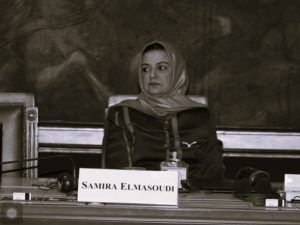
Samira Elmasoudi
Samira Elmasoudi is a distinguished freelance consultant and human rights activist with over 15 years of experience specializing in gender, civil society, and international development. A prominent leader in the Libyan landscape, she served as the President of the Libyan Women’s Union in Tripoli (2012–2014) and currently heads a development organization dedicated to supporting youth and women. Her extensive professional background includes managing donor-funded initiatives, particularly those under the European Union, focusing on migration, peacebuilding, governance, and the restoration of the Rule of Law. In Libya, she has been instrumental in numerous human rights projects addressing transitional justice, disarmament, and the prevention of violence against vulnerable groups, notably submitting the annual Universal Periodic Review (UPR) on women’s rights to the Human Rights Council in Geneva.
Samira’s academic foundation is a B.A. in Mathematics from the Higher Institute of Applied Sciences in Tripoli (1985). She is an internationally certified trainer in women’s economic empowerment and leadership, with credentials from CEDPA (USA and Indonesia) and BBC Media Action. As a recognized subject matter expert, she has addressed high-level international forums, including NATO in Naples and the EU Community of Practice on Peace Mediation in Brussels. Her research contributions include consultancy work for the “Supporting Arab Women at the Table” (SAWT) project and studies on community policing with the Danish Demining Group and DCAF.
A respected voice in global media, Samira has been featured on France 24 and Monte Carlo Doualiya (MCD) and was honoured as one of 12 influential Mediterranean women in the Swiss-published book Féminismes Dans les pays Arabes. Her work remains centred on advancing women’s participation in peacebuilding and advocating for gender equality across the Mediterranean region.
Participant in: November/December 2022 Fellowship: Peacebuilding and Women’s Meaningful Participation in Peacebuilding Processes
Souad Kadi
Souad Kadi has six years of experience in the non-profit sector, managing educational and skills development projects. She earned her Masters in Entrepreneurship and Innovation at the University of Sussex. Her passion led her to open up on various aspects of social work. She is the founder of E.Tawjih, a virtual training platform for young Moroccan students on educational and career orientation. For 4 years, she was the Training Manager at Amal Women’s Centre (NGO) in Marrakech, Morocco, managing a professional and personal training in culinary arts and supported the job placement of +200 women. In addition, she is a US exchange alumni, who was placed with the American Association of University Women as well as a Cross Culture programme (Ifa) fellow and winner of the Alumni engagement fund (AEIF) which supported a permaculture training camp for primary students in Sidi Ifni, Morocco. Prior to that, she worked for the non-profit Dar Si Hmad, where she was leading women’s capacity building training and managing an environmental education program.
Currently, Souad is a Project Support Officer at the Institute for Employment studies in Brighton. She is an ambitious young woman who is passionate about youth education, women’s empowerment and cultural diversity. She loves painting, graphic design and discovering historical spaces.
Participant in: November/December 2022 Fellowship: Peacebuilding and Women’s Meaningful Participation in Peacebuilding Processes
Anum Aftab
Anum Aftab is a Programme Coordinator – Women, Peace and Security at UN Women Pakistan. She has around 7 years of experience working in Pakistan, Kenya and the USA. Her area of expertise includes preventing violent extremism and peacebuilding in Pakistan, focusing on youth and women. Academically, Anum completed her Master of Arts (M.A.) from The George Washington University, USA with a specialization in Conflict Resolution, and BSc. in Economics and Political Science from Lahore University of Management Sciences (LUMS), Pakistan.
Participant in: November/December 2022 Fellowship: Peacebuilding and Women’s Meaningful Participation in Peacebuilding Processes
Dr. Farah Naz
Dr. Farah Naz is serving as Assistant Professor at the Department of Government and Public Policy, National University of Sciences and Technology, Pakistan. She also serves as Gender Focal Person both for the UN-Women and the UN Peacekeeping Department at the Center for International Peace and Security, NUST. She is one of the trainers at the UN Peacekeeping Department. Her role is to sensitize both the Pakistani and allied Forces on ‘Women, Peace and Security’ and ‘Respect for Diversity’. She helps and assists the UN HQ with Gender-Based Training Manuals. Both courses are vital for the successful implementation of the UN Mission in conflict. She is also a member of the Expert Advisory Group on national and international security issues, IPRI. Review research articles and grants for the International Peace Research Association Foundation. Before joining NUST in November 2019, she served as Academic Staff and Sessional Lecturer at the University of Sydney, Macquarie University and Australian Catholic University, Australia.
Dr Naz has over ten years’ experience of working with governmental and academic organizations in Australia and Pakistan. She holds an excellent record of journal publications. Her research focus has consistently been on identifying the role of religion in peace, gender and politics at domestic and international levels and has been published in some leading journals of political sciences. Dr Naz has published two books: 1) Living under Hybrid War in 2022 and 2) COVID-19 challenges for Pakistan’ in 2020. She has also been very successful in disseminating research findings beyond academia through Op-Eds. Dr Naz received her PhD in Government and International Relations from the University of Sydney in Australia and an M-Phil in International Relations from National Defence University, Pakistan.
Participant in: November/December 2022 Fellowship: Peacebuilding and Women’s Meaningful Participation in Peacebuilding Processes
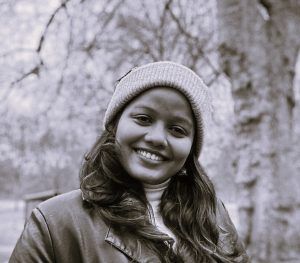
Shenali Perera
Shenali Perera is a Sri Lankan social activist, applied psychologist, and researcher whose work focuses on social justice, postcoloniality, racism, and the role of religion in transformative political processes. She has extensive experience working with marginalized and conflict-affected communities in Sri Lanka.
Shenali is currently pursuing a Research Master’s degree in Theology and Religious Studies at KU Leuven, Belgium, specializing in Systematic Theology. Her research examines themes of memory, justice, and reconciliation, with particular attention to the role of the Sri Lankan Catholic Church as a custodian of collective memory in post-war contexts. Bridging theology, political thought, and lived experiences of conflict, her work reflects a strong commitment to interdisciplinary scholarship and transformative justice.
She holds an MSc in Applied Psychology from Coventry University, an MPhil in Intercultural Theology and Inter-Religious Studies from Trinity College Dublin, a BCom in Entrepreneurship from the University of Kelaniya, and a Higher National Diploma in Family Counselling from the Sri Lanka Foundation Institute.
Beyond academia, Shenali has held leadership roles in initiatives advancing democratic engagement and social inclusion. As Project Manager at Hashtag Generation, she led a regional social media hate speech monitoring program in partnership with the Network for Peace and USAID. She also served as Director of the Coalition for Inclusive Impact. Shenali is also an alumna of the Mediation and Negotiation Fellowship at the Clingendael Institute in The Hague. Her work is grounded in the conviction that justice is what love looks like in public.
Participant in: November/December 2022 Fellowship: Peacebuilding and Women’s Meaningful Participation in Peacebuilding Processes
Jihan Hisso
Jihan Hisso is Kurdish Syrian, a highly motivated humanitarian professional, passionate about promoting community well-being through gender empowerment, mental health, self-care, and preventing violence against women and children. Over the last eight years, she has demonstrated the ability to work safely and successfully in crisis/emergencies, mainly in Iraq and partly in Syria, in mid-level management positions in programmes concerning child protection and women protection mostly. Jihan started her humanitarian career with a local NGO in Iraq. Then she moved to the Norwegian Refugee Council (NRC) where she found her passion working as a Women’s Protection Professional. After that, she worked with the International Rescue Committee (IRC) for four years, managing the portfolio of their Woman Protection department in Iraq.
Currently, Jihan is supporting “Shar for Development,” a local Syrian organization, as a Gender and Protection Advisor, where she contributes to ensuring their approaches are gender mainstreamed. She has a robust technical capacity in advocacy, training, and empowerment. Jihan has an MSc in International Humanitarian Affairs from the University of York and is currently doing her MA in International Development Management at Bradford University, which she is highly enjoying, as part of the university’s Peace and Development department.
Participant in:
November/December 2022 Fellowship: Peacebuilding and Women’s Meaningful Participation in Peacebuilding Processes
March 2023 Fellowship: Climate Change, Gender, and Conflict
Alaa Assani
Alaa Assani is a Gender Housing, Lands and Property rights (HLP) Expert with a focus on women’s IDPs and refugees in conflict-affected areas through her work with GIZ for four years combined with her theoretical experience in her MSc on the Gendered Impact of conflict on women in relation to their HLP rights, where she wrote many assignments in this field. Alaa has established and managed an HLP Women Working group to address women’s HLP challenges.
Currently, Alaa is working as the Resourcing the Feminist Movement Manager at Women International League for Peace and Freedom (WILPF) in the MENA region with a focus on Syria. Alaa is a feminist dedicated to applying intersectional, bottom-up and participatory holistic resourcing approaches in her work to make a change for women and advance feminist peace in Syria and MENA region by supporting women-led organisations and newly emerged grassroots groups by supporting their local feminist agendas and advocacy opportunities.
Besides her professional and academic experience, Alaa is usually described as an energetic person who spreads humour and positive energy around! Furthermore, she is a happy mother of Sam (who is 3 years old), a food and travel lover, and is interested in photography and socialising!
Participant in: November/December 2022 Fellowship: Peacebuilding and Women’s Meaningful Participation in Peacebuilding Processes
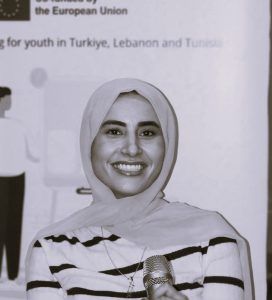
Abir Belmabrouk
Abir Belmabrouk is a dedicated Regional Coordinator and expert with over five years of professional experience operating at the intersection of climate justice, gender equality, and peacebuilding. As an alumna of the Women in Conflict 1325 Fellowship with Beyond Borders Scotland, she has strengthened her expertise in the Women, Peace, and Security agenda, complementing her role as a UN delegate for peacebuilding at the World Youth Forum. Her professional background includes serving as a Gender Expert where she developed feminist curricula and delivered training on gender justice, alongside her leadership in coordinating regional climate advocacy and environmental governance projects. A Chevening Scholar with an MA in Gender Analysis and International Development from the University of East Anglia, Abir’s academic foundation in conflict resolution and international humanitarian law informs her strategic approach to social justice. She has successfully managed multi-stakeholder partnerships and human rights initiatives, demonstrating a consistent commitment to empowering marginalized communities and driving systemic change across Tunisia and the broader region.
Participant in: November/December 2022 Fellowship: Peacebuilding and Women’s Meaningful Participation in Peacebuilding Processes
Amina Bintalib
Amina Bintalib is the founder of Recovery Platform. She is doing training, advocacy, and is raising awareness about gender and climate. She is also a member of the Yemeni Women’s Solidity. She has more than five years’ worth of experience in the humanitarian-development nexus. Academically she has a degree in Marketing from Sana’a University. She is also a social entrepreneur who is interested in empowering women in Business.
Participant in: November/December 2022 Fellowship: Peacebuilding and Women’s Meaningful Participation in Peacebuilding Processes
Shatha Altowai
Shatha Altowai is a Yemeni visual artist based in Edinburgh. She has presented at several art galleries in Yemen and beyond. Much of her work reflects aspects of life in her society, and the suffering caused by the ongoing civil war in Yemen. Shatha has been awarded the IIE-Artist Protection Fund (APF) Fellowship which was hosted at the Institute for Advanced Studies in the Humanities (IASH) at the University of Edinburgh (2020-2021). Since her arrival in Edinburgh in November 2021, Shatha has had the opportunity to resume her art practice that was restricted for 2 years since2018 due to threats she received in Yemen. She has been awarded also the first prize of The John Byrne Award on July 2021 for the first quarter. Shatha launched several art exhibitions and participated in some cultural events in Scotland in collaboration with different organizations. She is an artist-in-residence at Art27Scotland, where she co-created and performed the short-play ‘Saber Came to Tea’ and is currently exhibiting several paintings as part of Edinburgh Fringe Festival.
Participant in: August 2022 Fellowship: The Arts as a Tool for Peacebuilding
Rasha Obaid
Rasha Obaid is a sculptor and a painter from Yemen. Coming from Hadramout, Rasha’s style is influenced by her heritage, Sufi Islamic art. She is also interested in figurative 19th century realism and Ancient Greek and Roman sculptures. In particular, she is inspired by the female form, women’s rights, corporeal movement, abstract patterns, and the dynamics of light and shadow. She works with a wide range of materials, including clay, wax, graphite, charcoal, and stone. Beyond the artistic realm, Rasha has over 10years’ experience in the field of Women, Peace, and Security. She is a Visiting Fellow for the Centre for Women, Peace, and Security at the London School of Economics, and part of the Peace Track Initiative. She worked as a Gender Specialist at Falcon Speciality Coffee, advising on supply-chain and gender equity issues. In Yemen, she worked nation-wide on issues regarding women political participation and combating violence against women.
Participant in: August 2022 Fellowship: The Arts as a Tool for Peacebuilding
Lanka Bandaranayke
Lanka Bandaranayke is an award-winning short film producer, director, writer and actor from Sri Lanka. She started her stage drama career in 1998.Since then, she has produced and directed national award-Winning short dramas. Lanka finished her Bachelor of Arts degree (External) in 2016 from the University of Kelaniya, Sri Lanka and in 2019 she received the ITEC scholarship to study a filmmaking certificate course at the Satyajit Ray Film and Television School in Kolkata. She is a2021/22Chevening scholarship recipient and is currently doing her master’s in Directing Film and Television at Bournemouth University in the United Kingdom. Lanka directed, produced, and wrote her first short film ‘Tradition’ in 2016, which was screened in more than 50 international film festivals–including Open Doors screenings at Locarno Film Festival in 2018–followed by international and national awards. She was a jury and curator for fiction at the Sound & Image Challenge International Festival in 2018 and 2019at Macau. In 2020, Lanka made her short film Inheritance in partnership with the British council Sri Lanka under the Female Filmmakers First program. Since then, she has produced several other short films and her reputation as a young Sri Lankan female filmmaker has been steadily climbing.
Participant in: August 2022 Fellowship: The Arts as a Tool for Peacebuilding
Maria Proshkowka
Maria Proshkowka is an artist from Kyiv, Ukraine. She graduated from Kyiv National University of Internal Affairs and studied at Modern Art School at the Modern Art Research Institute. Her work addresses problems of gender social studies, traumas and their impact on societies and self-identification issues. She was awarded a special prize by the contest of young artists МУХі 2017, as well as by VOGUE magazine, and participated in the American Arts Incubator in Ukraine. Her artworks are part of collections at Shcherbenko Art Center (Kyiv, Ukraine), MAMbo (Bologna, Italy) and private collections in Ukraine and abroad.
Participant in: August 2022 Fellowship: The Arts as a Tool for Peacebuilding
Anna Makhlay
Anna Makhlay is Project Manager in the Group of Strategic Consultants, Ukraine. The group provides policy building strategies for Ukrainian politicians and parties. In this position, she has also worked on arts-based events and initiatives including events with Ukrainian contemporary artists and musicians on the promotion of homeland sovereignty, the organisation of flash mobs, and the analysis of the impact of visual products on voters.
Prior to this Anna was an Assistant Consultant to a Member of Parliament of Ukraine and Chairman of the Legislative Support of Law Enforcement Committee. This involved providing legal expertise to party initiatives, building the framework for conflict resolution through round table discussions, organizing Committee hearings, preparation of deputy appeals and queries projects, and representation of the Chairman during parliamentary committees. From 2004 to 2011 she was the personal assistant to Yulia Timoshenko, Prime Minister and leader of the All-Ukranian Union “Batkivschyna”.
Anna graduated from the Faculty of Law of the Kyiv National University and is a John Smith Trust Fellow.
Participant in: August 2022 Fellowship: The Arts as a Tool for Peacebuilding
Vibhaa Sreedharan
Vibhaa Sreedharan is a final-year law student from India. She is passionate about International Law, International Relations, and Human Rights and seeks to practice in these fields upon completion of her studies. As a woman, she is curious to learn more about the roles that women play in dealing with and preventing conflicts. She is keen to learn from other people’s experiences and contexts.
Participant in: March/April 2022 Fellowship: Peacebuilding and Women’s Meaningful Participation in Peacebuilding Processes
Salima Njoki Macharia
Salima Njoki is a human rights defender from Kenya championing the rights of women working at the grassroots level. Salima has spearheaded various programmes working with different human rights organisations and movements in Kenya. She assisted in mobilising women human rights defenders from 33 counties in Kenya to participate in the National Conference on Women held in Nairobi in 2015. In 1994, Salima joined the movement calling for constitutional change in Kenya and as a trained community organiser, Salima was instrumental in engaging with communities and worked with the Citizens Coalition for Constitutional Culture (4Cs) in the early 2000s. Salima also works as a facilitator and trainer and has trained teams of human rights monitors for Kenya Human Rights Commission. She conducts trainings on physical and digital security and is an associate trainer with RedR, a UK based organisation that provides training for people working in disaster relief.
Participant in: March/April 2022 Fellowship: Peacebuilding and Women’s Meaningful Participation in Peacebuilding Processes
Kula Roba Wako
Kula Roba Wako is an Advocate of the High Court of Kenya. She advocates for children rights, gender equality and social empowerment. She is the founder of CHAGI, a community-based organisation (CBO) whose vision is to educate residents of Marsabit County, Kenya on matters relating to HIV/AIDS and the stigma attached to it. CHAGI also works to protects child rights through community education on the rights of girls and particularly the importance of education for girls. Kula is also the National Coordinator at Equality Effect and works closely with the Kenyan National Police Service to develop a curriculum on the Investigation of Defilement that will be used to train police officers in the NPS across the country to be able to conduct prompt, effective, proper, and professional investigations. Kula has worked as a consultant and trainer with various organisations in Kenya. She was the Legal Officer at HAKI (Humanity, Activism, Knowledge, Integrity) Africa where her duties included giving legal advice on cases relating to defilement, domestic violence, land related issues, and child support.
March/April 2022 Fellowship: Peacebuilding and Women’s Meaningful Participation in Peacebuilding Processes
Sharon Auma
Sharon Auma is a social worker based in Pader, Uganda. She completed her master’s in Social Work and Social Administration at the Kyambogo University in 2018. She currently works as a Project Officer at Pader NGO Forum. Pader NGO Forum began in 2002 as a coordination and advocacy network for civil society during the height of the civil conflicts wars that ravaged Northern Uganda for more than two decades. The organisation supports youth and women through human rights awareness, networking, and livelihood empowerment. In her role as Project Officer, Sharon leads a project that focusses on securing women’s land rights in Northern Uganda.
March/April 2022 Fellowship: Peacebuilding and Women’s Meaningful Participation in Peacebuilding Processes
Kate Akello
Kate Akello is a two-time Commonwealth scholar, funded by the Commonwealth Scholarship Commission in the UK. She holds Master of Laws from Warwick University and is currently pursuing a PhD in Law at Durham University. Her PhD thesis locates itself within the rapidly expanding genre of literature known as Third World Approaches to International Law (TWAIL). Her research is two-fold, and it unpacks mainstream international law with the aim of exposing its biases and hegemony and on the other hand her research also reconstructs it to a counter-hegemonic international law.
Kate has worked in complex conflict and post-conflict contexts with various non- governmental organisations in Uganda including Finnish Refugee Council, International Rescue Committee, War Child Holland, and Caritas Uganda. She has extensive experience in refugee response, IDP programming, peacebuilding, transitional justice, inclusive education and sustainable livelihoods. Kate developed an interest in peacebuilding and conflict resolution following her personal experiences during the protracted civil war between the Lord’s Resistance Army (LRA) and the Government of Uganda which resulted in a situation of ongoing violence, internally displaced people and child abduction and the recruitment of child soldiers. Throughout the course of her work, Kate has developed communication, education and communication materials, advocacy strategies, gender inclusion strategies in humanitarian response, facilitated smooth reintegration of former LRA rebels into the community, built the capacity of stakeholders in alternative dispute resolution, contributed to the promotion of peaceful co-existence among refugees and between refugee and host communities. What motivates her most in her work is making a difference in the lives of marginalized communities.
March/April 2022 Fellowship: Peacebuilding and Women’s Meaningful Participation in Peacebuilding Processes
Hooria Mashour
Hooria Mashour is a human rights defender, focused on the protection of rights of women and children. She was appointed to be the Minister of Human Rights as part of the National Accord Government in Yemen for 2012-2014. Prior to that, she was appointed as the Official Spokesperson for the National Council for the Peaceful Revolution in Yemen in 2011. She was the head of the National Women Committee, and after 10 years of experience, she was appointed to be a member of the Truth Investigation Committee to investigate the violent events in Aden. However, she resigned from her position and announced her objection to violence against the demonstrators. She is currently the Senior Advisor to the Transitional Justice Centre in Yemen. Hooria also works as a consultant on gender issues with many international organisations, some of which include UNFPA, UNDP, UNICEF, ILO, UNFPA, Counterpart, and Oxfam-GB. She also worked as a consultant in Oman during the preparation of the first national report on the 2010 Convention on the Elimination of All Forms of Discrimination Against Women (CEDAW).
Throughout her career, Hooria has had many prominent roles and has made many different contributions in Yemen. She was the leader of the Women Development Strategy Team during 2000-2003, leader of the CEDAW reporting team, she supervised the team that was responsible for reviewing the law in Yemen considering Islamic law and its compatibility with international standards, especially CEDAW standards. She was also head of the National Delegation at the United Nations to present the Fourth, Fifth, and Sixth National Report and was the head of the Gender Team with Responsive Governance Project (RGP) and supervised the preparation of the 2013 Human Rights Strategy. Hooria has a BA in Economics. She has many publications, the most important of which are: The Political Participation of Yemeni Women, a study with IDEA International (2004), Incorporation of Gender in Development with CEDAW, the National Assessment on Gender-Based Violence with UNFPA (2007).
March/April 2022 Fellowship: Peacebuilding and Women’s Meaningful Participation in Peacebuilding Processes
Forozan Rasooli
Forozan Rasool is from Helmand Province, Afghanistan. She holds master’s degree in Public Administration from University of Portsmouth, UK. Forozan currently works as a Campaign Support Consultant with Amnesty International – South Asian Regional Office to support Human Rights Defenders in Afghanistan who are at risk. Forozan has worked for more than a decade with international organisations and NGOs in Afghanistan on good governance, women’s rights, human rights, and peacebuilding. She often works with local communities and strives to ensure that the perspectives of different groups working at grassroots level (women, community leaders, youth, community influential figures etc.) are heard by policymakers and international organisations. In 2019 and 2020, she facilitated two Peace Consultative Loya Jirgas in Afghanistan where major decisions were consulted with community leaders from various provinces. In 2020, she was awarded a “Top Peace Builder’ award from the Women’s Regional Network (WRN) and in 2021 was awarded the ‘Solidarity and Commitment Award’ from the Afghan Women’s Network. Forozan has represented Afghanistan at different national and international conferences including the Geneva Ministerial Conference in 2018 and 2020 and has conducted advocacy work with different UN agencies and with parliament members and senior diplomats in the EU, USA, and other countries.
March/April 2022 Fellowship: Peacebuilding and Women’s Meaningful Participation in Peacebuilding Processes
Savan Abdulrahman
Savan Abdulrahman is a Research Assistant at the Centre for Gender and Development Studies at the American University of Iraq, Sulaimani. She is currently working on an LSE research project on the Roots of Masculinity. Savan is the editor-in-chief at DidiMn, a Kurdish cultural website. She is also a literary translator. Savan has worked in consultation with the director of Zheen Archive to select and translate Piramerd’s selected prose and poetry into English. Her translated work has also appeared in M—Dash, Mask Magazine, and The Militant. DidiMn has published her book “Translation: An Act More Than Changing Words” and May68 Youth Group has published her translated book “Universities in a Neoliberal World.”
March/April 2022 Fellowship: Peacebuilding and Women’s Meaningful Participation in Peacebuilding Processes
Fatima Alwardi
Fatima Alwardi is from Baghdad, Iraq and is currently a HR Officer at Public Aid Organisation (PAO)Iraq. PAO is an NGO that works on strengthening human rights in society, women’s empowerment as well as research on perceptions of and the implementation on UNSCR 1325 in Iraq. Fatima is passionate about women’s rights and social movements
March/April 2022 Fellowship: Peacebuilding and Women’s Meaningful Participation in Peacebuilding Processes
Elissa Shamma
Elissa Shamma is a passionate activist from Lebanon who strives to be an advocate for human rights, and specifically women’s rights throughout her work and her life. She is currently a Programme Officer for Syria Programme at The Kvinna till Kvinna Foundation, which promotes women’s rights in over 20 conflict-affected countries across the Middle East, Africa, Europe, and the South Caucasus. Prior to this, Elissa worked with several civil society organisations in Lebanon and Syria, and worked in the fields of social justice, women’s rights, conflict transformation, peacebuilding and empowerment. She is always keen to utilize participatory and feminist approaches in her work and uses the theory of change of working with people and not for them. Her interest in research, particularly on the topics of women’s rights, peacebuilding and non-violence brought her to study at the Academic University for Non-violence and Human Rights in the Arab World (AUNOHR) in Beirut, Lebanon, where she is now finalising her master’s thesis.
March/April 2022 Fellowship: Peacebuilding and Women’s Meaningful Participation in Peacebuilding Processes
Dr. Asma Wali
Dr Asma Wali holds an MBA and a PhD in Entrepreneurship. Asma has been an Assistant Professor at the University of Kashmir and Delhi Business School for over 8 years and teaches business ethics and management. In 2017, Asma established Poash, a non-political initiative that provides opportunities for female entrepreneurs to establish businesses and promote peace through dialogue by bringing together women from various walks of life and with varied political and social backgrounds. Asma runs various workshops and seminars for Poash members, some of which have included experiences of anxiety in women in conflict affected areas, work life balance for women working in conflict affected and conservative societies, and the role of technology for online sellers. Asma is 38 years old and a mother of two.
March/April 2022 Fellowship: Peacebuilding and Women’s Meaningful Participation in Peacebuilding Processes
Diana Tellez-Delgado
Diana Tellez- Delgado is from Colombia, she is an inclusion consultant and transitional justice expert. Diana currently works in the Office of the Mayor of Bogota as the Reconciliation Coordinator for the High Council for Peace, Victims and Reconciliation. Diana is an anthropologist, and holds degrees in Law and a Joint Master in Comparative Local Development from the Erasmus Mundus Programme. Her areas of research include intrastate conflict, gender studies, transitional justice, and public policy construction. Diana has more than 15 years’ experience working with the development of social and human rights national agendas in close cooperation with international organisations, NGOs and the Colombian Government. She has pursued additional studies in Peace, Human Rights and Democratisation Processes from institutes in Norway, Spain, Chile and Colombia. Diana currently resides with her husband, Jorge, and her dog Sula in Bogota, Colombia. Her character reflects the mountains of her native land in the Southern region of Colombia.
March/April 2022 Fellowship: Peacebuilding and Women’s Meaningful Participation in Peacebuilding Processes
Aluat Mary Sebit
Aluat Mary Sebit is from South Sudan. Aluat Mary has a background working in the banking sector and in financial services and holds a BSc in Procurement and Logistics Management. Whilst working in various banking jobs she attended several training programmes that focused on women’s economic independence. From these trainings she learnt more about the challenges that women face due to financial dependency and she was inspired to develop additional skills to become a better advocate for women and work on women’s protection through economic empowerment. She decided to change her career and now works for the Centre for Inclusive Governance, Peace and Justice. In her current position she works on the protection of women through economic empowerment and the prevention of violence against women due to poverty and financial dependency. She works to create safe and reliable avenues for women to be financially stable.
March/April 2022 Fellowship: Peacebuilding and Women’s Meaningful Participation in Peacebuilding Processes
Elizabeth Atong Malual
Elizabeth Atong Malual is a trained lawyer, women’s rights activist and a peacebuilder. She is currently a Senior Program Officer for Gender Peace and Security at PAX for PEACE Netherlands. PAX for PEACE is a Dutch non-profit organisation that brings together people in conflict areas and concerned citizens worldwide to build just and peaceful societies across the globe. As a Senior Gender Programme Officer, Elizabeth provides internal advice and capacity building training on gender to their partner organisations; ensures gender mainstreaming across all programmes and at all project levels (design, implementation, monitoring, and evaluation) and also facilitates knowledge development on gender, peace, and security at the organisation’s office in Juba, South Sudan. She also conducts trainings, workshops, and provides technical support to the programme stakeholders of their partner organisations.
As a peacebuilder, women’s rights activist and peace activist Elizabeth is particularly interested in human rights, mediation, gender programming, good governance in conflict, post-conflict and transitional processes, as well as civil society driven change. Elizabeth’s goal is to fight hard for the rights of women in her country and in the region with the vision of seeing a country where women and girls feel safe to freely speak up on their fundamental rights without any threats or fear.
Participant in: January/February 2022 Fellowship: Peacebuilding and Women’s Meaningful Participation in Peacebuilding Processes
Grace John Kenyi Geri
Grace John Kenyi Geri is a Women Peace Activist and Human Rights Defender from Juba, South Sudan. Grace is the Founder of Center for Strengthening Community Voices-South Sudan, women led organization working on Good Governance, Peace Building and Women’s Empowerment. She is also the former Governance and Peace Manager of the organization, Community Empowerment for Progress Organization (CEPO). She holds a Postgraduate Diploma in Diplomatic Studies from the University of Juba, Centre for Peace and Development Studies; and a degree in Rural Development from the college of community studies and Rural Development-University of Juba.
Grace is well known for being an outspoken female activist in South Sudan on issues of human rights, conflict resolution, UNSCR 1325/South Sudan NAP, peacebuilding, governance, security sector reform, sexual gender-based violence and gender equality. She led a civil society campaign on inclusion of civil society in UN Peacekeeping Mission (UNMISS mandate) in South Sudan. She has effectively influenced the renewal of the UNMISS mandate since 2015. Grace John is also one of the civil society focal persons on the implementation of transitional justice as per the South Sudan Peace Agreement, 2015.
Grace John has participated in numerous regional and international women campaigns and lobby events, and is a progressive, influential female activist in conflict situations, with experiences of working with communities in violent armed conflict on issues of SGBV/GBV and conflict resolution. She is one of the female activists that are championing the implementation of UNSCR 1325, 1889 & 1820 during violent conflict contexts.
Before joining CEPO, Grace spent her professional life in various positions and organizations advancing in broadcast media (Radio and Television).
Participant in: January/February 2022 Fellowship: Peacebuilding and Women’s Meaningful Participation in Peacebuilding Processes
Deepti Singh
Deepti Singh is a recent master’s graduate of International Peace Studies from Soka University, Japan. She completed her Bachelor’s degree in Technology in Computer Science major from Vidya College of Engineering, Uttar Pradesh in 2012. Post her engineering, she worked with the leading healthcare company – The United Health Group (UHG) for five years as a Software Tester and parallelly played a pivotal role in the CSR (Corporate Social Responsibility) sector of UHG. She has worked alongside several NGOs which focus on imparting education and character building for the less privileged kids in Gurugram, Haryana.
As a master’s student at Soka University, Deepti’s research was focused on “Global Citizenship Education as an educational priority to achieve the Sustainable Development Goals”. Since August 2019, she has been working as a Global Schools Program Advocate in Japan which is an initiative of the UN Sustainable Development Solutions Network of Youth. As an advocate, she has been facilitating programmes with schools in Japan to implement SDG education and Global Citizenship Education. She is also trained as a Climate Reality Leader by the former US Vice President Al Gore as a part of his project ‘Climate Reality Project – Tokyo’.
Deepti has been working as a freelance facilitator to provide mentoring and facilitation across a series of workshops online as part of the Beyond Skin Peace IV programme ‘Blueprint’ since August 2020. Blueprint is Building Positive Relations Cultural Diversity Programme that works across the Newry, Mourne and Down District Council areas in Northern Ireland supported by the European Union’s PEACE IV Programme, managed by the Special EU Programmes Body (SEUPB).
She is currently working as an ALT (Assistant Language Trainer) at a school based in Tokyo, Japan. She uses English as a medium of instruction to teach about SDGs, peace and sustainability.
Participant in: January/February 2022 Fellowship: Peacebuilding and Women’s Meaningful Participation in Peacebuilding Processes
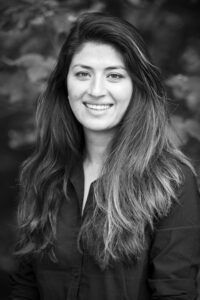
Samina Ansari
Samina Ansari, is the head of public and corporate relations at Equality Check, a Norwegian tech- company with the mission to diversify corporate governance globally. She is also the founding director of Avyanna Diplomacy, a platform with the aim to connect social entrepreneurs from the Middle East and Central Asia to Europe for sustainable growth and stability. She has lived and worked in Kabul, Afghanistan (2015-2021), and actively worked on inclusion in the peace process. Ansari has a background in Cyber Security Law from the University of Oslo and Diplomacy from Sciences Po Paris. She is fluent in English, Norwegian and Dari. Since 2014, Ansari has implemented large-scale social impact projects for North Atlantic Treaty Organization, the United Nations, the European Union, International Trade Center, and Goldman Sachs in the US, Europe, and Central Asia with a focus on human security, economic growth, diversity and inclusion, and human rights.
Participant in:
November 2021 Fellowship: Climate Change, Gender and Conflict
Beyond Borders International Festival 2021: Dispatches from Kabul: Join Allan Little with Eldridge Adolfo, Advisor to the EU Envoy to Afghanistan, Afghan rights campaigner Samina Ansari, Beyond Borders Fellow Mariam Safi, and William Dalrymple, as they discuss the crisis in Afghanistan. (2021)
Titilope Ngozi Akosa
Titilope Ngozi Akosa is a lawyer, policy analyst, researcher, climate and gender expert and the executive Director of Centre for 21st Century issues. Ms Akosa is the Green Climate Fund (GCF) Gender Monitor for Anglophone Africa. She is a member of the continental executive board of the Pan African Climate and Environmental Justice Alliance (PACJA) as well as the South Western Nigeria focal point for Women in Peace Building (WIPNET), Nigeria.
Participant in: November 2021 Fellowship: Climate Change, Gender and Conflict
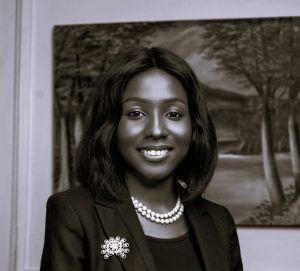
Comfort Usman Kariko
Comfort Usman Kariko is a Nigerian legal practitioner, peacebuilding expert, and social impact leader advancing justice reform and inclusive governance across Africa. She holds a Law degree from the University of Jos and was called to the Nigerian Bar in 2020. With extensive experience in the development sector, she brings expertise in policy advocacy, programme design and management, gender equality, and conflict prevention.
Comfort has worked with leading institutions including the Kukah Centre and Partners West Africa Nigeria, where she led high-impact programmes on social cohesion, access to justice, and community resilience. Her work has strengthened state and local peace architectures, supported the expansion of women-led mediation networks, and advanced the implementation of the Women, Peace and Security (WPS) and Youth, Peace and Security (YPS) agendas. She has also played a key role in policy processes, contributing to the development and adoption of youth-focused peace frameworks and facilitating multi-stakeholder engagement across government and community levels.
She currently serves as the Executive Director of Amplify Youth Initiative, a youth-led organisation she founded to drive youth inclusion, justice reform, and inclusive governance. Under her leadership, the organisation implements the youth peace and security agenda, community-driven programmes on gender-based violence prevention, civic engagement, and access to justice, while leveraging civic technology to expand legal access for underserved populations.
Comfort has led and contributed to multiple research and consultancy engagements on gender equality, social inclusion, and conflict prevention, translating evidence into policy and practice.
Participant in:
November 2021 Fellowship: Climate Change, Gender and Conflict
March 2023 Fellowship: Climate Change, Gender, and Conflict
Ameya Kilara
Ameya Kilara directs the South Asian Leadership Initiative at Inter Mediate, a programme focused on the role of leadership in conflict resolution in South Asia, working in partnership with Conciliation Resources and experts at the Harvard Kennedy School. Ameya has facilitated various dialogue initiatives across the Line of Control in Kashmir and an India-Pakistan track two process with former military and intelligence chiefs. She has provided technical support to the UN’s Office of the Special Envoy for Syria. As a solicitor at Linklaters, a leading international law firm, she helped to promote the mediation of commercial disputes. She holds a Master in Public Administration from the John F. Kennedy School of Government, Harvard University. She has received multiple awards for her work including Temasek Foundation-NUS Leadership Enrichment and Regional Networking Award 2008, the Gleitsman Leadership Fellowship at Harvard’s Center for Public Leadership 2016-18 and the Women of the Future Award 2019.
Participant in: November 2021 Fellowship: Climate Change, Gender and Conflict
Muna Baig
Muna Baig is a Commonwealth, Chevening and Fulbright scholar with an academic and professional background in public international law, human rights and advocacy. As the Director of the Human Rights Commission of Pakistan, she led one of the oldest membership-based NGOs in Pakistan in the areas of human rights and democratic development, which was co-founded by the late Asma Jahangir in 1986. Prior to this, she worked with the International Bar Association’s Human Rights Institute on strengthening the role and independence of the legal profession and the judiciary as well as focusing on rule of law and justice sector reform issues across the MENA region. Muna previously worked in the Middle East to document and refer to the United Nations High Commissioner for Refugees (UNHCR) the most vulnerable Syrian and lraqi refugees in need of third-country resettlement. She gained experience in international law-making and humanitarian diplomacy at the UN Security Council and the Sixth Committee in New York as a member of the International Committee of the Red Cross (ICRC) Delegation to the UN.
Participant in: February/March 2021 Fellowship: Peacebuilding and Women’s Meaningful Participation in Peacebuilding Processes
Zorgh Madi
Zorgh Madi is passionate about promoting gender equality and peace processes in Libya. Zorgh was born and raised in Libya. She studied Political Science and Economics. As a Program Manager at the TWM Organisation and a Women’s Empowerment Assistant at the International Youth Foundation, she is responsible for managing programs and projects that are implemented in both organizations. Through her work, she launched a campaign that promotes peace between Indigenous people and Arabs in Libya. As an advocate, Zorgh is proud to be the first person to include the gender perspective in the Libyan education system. Zorg was inspired to become an advocate by her grandmother, who was one of the first women to attend school in Libya.
Participant in: November/December 2020 Fellowship: Peacebuilding and Women’s Meaningful Participation in Peacebuilding Processes
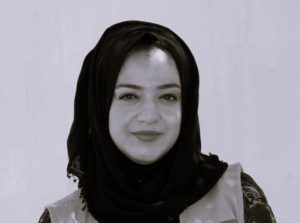
Vian Ahmed
Vian Ahmed is a senior humanitarian and women’s rights leader with nearly a decade of experience in founding, directing, and scaling regionally impactful programmes for women and girls affected by conflict, displacement, and humanitarian crises in Iraq and the Kurdistan Region. Currently serving as Regional Director of Lotus Flower NGO, she has played a decisive role in shaping the organisation’s vision, governance, operational systems, and strategic growth, transforming it from a start-up initiative into a regionally recognised women-led organisation operating across multiple governorates. Since 2016, she has led and overseen integrated interventions that have directly reached more than 100,000 refugee and internally displaced women and girls, delivering protection, GBV prevention and response, MHPSS, livelihoods, and leadership development programmes.
Vian brings senior-level strategic, operational, and representational leadership, with full oversight of regional programme portfolios, multi-location field operations, organisational MEAL systems, and large multidisciplinary teams exceeding 100 staff. As a core member of senior management, she contributes to organisational strategy, financial planning, risk management, safeguarding, and long-term sustainability, while ensuring full compliance with international humanitarian standards and donor requirements. She has extensive experience in resource mobilisation, including proposal development, donor reporting, and partnership building with UN agencies, international NGOs, academic institutions, and government stakeholders.
Beyond operational leadership, Vian is a recognised international advocate and policy influencer on women’s rights, gender equality, displacement, migration, and the intersection of climate change and gender-based violence. She has been selected and invited by multiple governments and diplomatic missions — including the German Federal Foreign Office, the Netherlands Ministry of Foreign Affairs, the U.S. Consulate General in Erbil, the Government of Canada, and European consulates — to participate in high-level advocacy missions, leadership programmes, and diplomatic forums in Germany, the Netherlands, Washington DC, and Iraq, engaging directly with parliamentarians, policymakers, donors, and senior decision-makers.
Her leadership and expertise have been recognised through highly competitive international fellowships and appointments, including selection as one of 25 women leaders globally for the Harvard Humanitarian Academy-led National NGO Programme for Humanitarian Leadership, fellowship in the Women in Conflict UNSCR 1325 programme, membership in the High Council of Women Affairs committee contributing to Iraq’s National Action Plan on Women, Peace and Security, and ambassadorship with Days for Girls International. She is a frequent keynote speaker, panel lead, and expert contributor at high-level events organised by UN agencies, INGOs, universities, donor-funded programmes, and diplomatic missions.
Known for credible leadership, strategic vision, and the ability to bridge grassroots realities with international policy and advocacy spaces, Vian brings a rare combination of founding authority, senior management expertise, and diplomatic-level advocacy experience. Her work is grounded in feminist leadership, accountability to affected populations, and a sustained commitment to advancing the rights, protection, and meaningful participation of women and girls in humanitarian response, peacebuilding, and sustainable development.
Participant in: November/December 2020 Fellowship: Peacebuilding and Women’s Meaningful Participation in Peacebuilding Processes
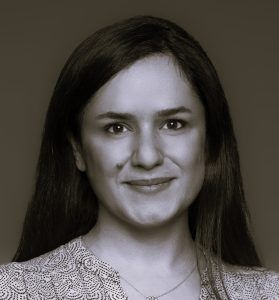
Shan Sherwan Hussein
Shan Sherwan Hussein is currently a research fellow with the center for Public Leadership at the Harvard Kennedy School were she focuses on peace negotiations and AI. She recently graduated with a Master in Public Administration from Harvard Kennedy School. Shan is a Gender Based Violence specialist. She is an experienced humanitarian leader, having first embarked on her professional journey by responding to support Syrian refugees and Iraqi IDPs during the war with ISIS. Shan has contributed during deployments by developing the toolkits used to help women and girls affected by conflicts in Iraq, Ukraine and most recently in Jordan.
Shan is also a dedicated educator and advocate for inclusive leadership and peacebuilding. She has taught negotiation and conflict resolution to civil society leaders, government officials, and students in India, Afghanistan, and Iraq, with a focus on empowering marginalized communities and advancing gender equity.
Participant in: November/December 2020 Fellowship: Peacebuilding and Women’s Meaningful Participation in Peacebuilding Processes
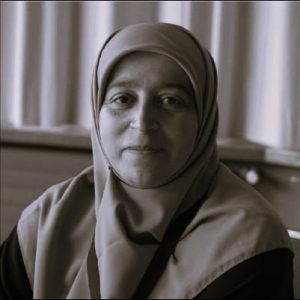
Dr. Raghdaa Zidan
Dr. Raghdaa Zidan is an academic researcher with a PhD in Islamic Studies, specializing in social thought, legal, and constitutional studies, with extensive experience spanning over 25 years in academic research and education. She has made significant and effective contributions to international and local intellectual, social, and constitutional legal conferences and workshops.
A civil society activist, she has held several administrative positions in civil society organizations and institutions concerned with law, women’s issues, and the constitution. She has also worked in various academic and administrative positions, supervised several doctoral and master’s theses in the social sciences, and published approximately 12 books and a large number of peer-reviewed research papers. She is currently an assistant to the Minister of Social Affairs and Labor in Syria.
Participant in: November/December 2020 Fellowship: Peacebuilding and Women’s Meaningful Participation in Peacebuilding Processes
Leena Taha
Leena Taha is a Gender Analyst at the UNDP Syria Country Office, where she implements projects on gender and the empowerment of vulnerable women. Prior to this, she was the National Gender Programme Lead and Coordinator at the OXFAM Syria Country Office, and Adolescent Development and Participation Officer at UNICEF in Homs and Damascus.
Participant in: November/December 2020 Fellowship: Peacebuilding and Women’s Meaningful Participation in Peacebuilding Processes
Kaushila Sunuwar
Kaushila Sunuwar is one of the Co-Founders of Nepal Unites. She has 6 years of experience as a facilitator and mobilizer. Nepal Unites works with marginalised people on youth leadership, non-violence, reconciliation, conflict transformation, and grassroots movements and focusses on bringing young people from different faiths, cultures, ethnicities and backgrounds together. She enjoys working with and integrating with people in different communities and is committed to writing and sharing their stories, to make their stories and experiences more widely understood. Kaushila has a degree in Sociology from Tribhuvan University, and is now pursuing a Master’s degree in Sociology. In 2019, she took part in the School of Peace Course run by Interfaith Cooperation Foundation which took place in Chiang Mai, Thailand.
Participant in: November/December 2020 Fellowship: Peacebuilding and Women’s Meaningful Participation in Peacebuilding Processes
Gulshan Saglam
Gulshan Saglam is a seasoned academic and advocate with nearly 10 years of experience in academia and over 28 years of active engagement in social work, specialising in sustainable development, public policy, and human rights. Throughout her career, she has focused on research, writing, lecturing, and organising think tanks that address critical social issues such as human rights, women’s empowerment, youth development, and sustainability.
With a passion for empowering others, Gulshan has dedicated much of her work to supporting entrepreneurs, particularly women and youth, by coaching them and connecting them to vital networks that promote business growth and development. Her commitment to social change is reflected in her role as a trainer and mentor, certified as a Trainer of Trainers (TOT) since 2007. She has delivered professional training across the MENA region and Europe, helping to build capacity and foster strategic initiatives that advance sustainable development and social transformation.
In addition to her academic and training roles, Gulshan is a weekly radio show host, focusing on women in leadership and sharing inspiring stories and lessons from successful role models. She is also the author of numerous studies, research papers, and academic articles, contributing to the global dialogue on sustainable development, social justice, and empowerment. Her work is driven by a deep belief in collaboration, capacity building, and the power of education to drive meaningful, lasting change.
Participant in: November/December 2020 Fellowship: Peacebuilding and Women’s Meaningful Participation in Peacebuilding Processes
Ola Alaghbary
Ola Alaghbary is the founder of Sheba Youth Foundation, a Yemeni civil society organization dedicated to peace and sustainable development. She is a committed peacebuilder with practical experience in local mediation. Her work involves direct engagement with conflicting parties in Yemen, focusing on facilitating agreements related to essential public services provision like “Water Local Mediation Efforts in Taiz City, Yemen”. Her commitment to peace is further demonstrated by her participation in the first track of peacebuilding in Yemen, where she represented civil society in the crucial negotiations for opening roads in Taiz city that was facilitated by the Office of Special Envoy to Yemen. With a background in law from Taiz University, Yemen, and having worked with various national and international peacebuilding and development organizations, Ola is currently pursuing a Master’s in Public Administration (MPA) at the American University of Cairo.
Participant in: November/December 2020 Fellowship: Peacebuilding and Women’s Meaningful Participation in Peacebuilding Processes
Alma Hashem
Alma Hashem is a Yemeni feminist and currently works as Safeguarding and Inclusion Coordinator at Islamic Relief in Yemen. She is a member of the Intersectional Feminist Collective (IFC) regional grassroots collective. Alma has been involved in many campaigns advocating for women’s rights and women’s political participation. She has represented women activists in a number of different international trainings and conferences.
Participant in: November/December 2020 Fellowship: Peacebuilding and Women’s Meaningful Participation in Peacebuilding Processes
Sena Namlu
Sena Namlu is a youth activist and social entrepreneur. She is the founder of SisterShip, an online platform aiming to bring together women volunteers from the host community and refugee women in need. Sena often engages with social profit organisations working on girls and youth empowerment. She has initiated many projects such as “We All One & Unique” a research project on women’s rights in Islamic countries and “GSU Student Council” that she founded at her university to empower Muslim girls. She is a board member of YCDC, the representative institution of Youth 20 in Turkey, and the project coordinator of Young Academics Forum, the annual forum of YCDC. She represented Turkey at the Y20 Summit in Argentina and at G(irls)20 Summit in Japan. After graduation, she worked for Doctors of the World – Turkey Office as a Grant Officer. Sena is currently a graduate student at King’s College London.
Participant in: November/December 2020 Fellowship: Peacebuilding and Women’s Meaningful Participation in Peacebuilding Processes
Gülece Şenel
Gülece Şenel is a senior lecturer in the Department of International Relations at Khoja Akhmet Yassawi International Turkish–Kazakh University, Kazakhstan. She earned her PhD in International Relations from Middle East Technical University (METU). She also holds MA degrees in Migration Studies (University of Sussex) and Conflict Analysis and Resolution (Sabancı University), as well as a BSc in Economics (Hacettepe University) and a BA in Modern Greek Language and Literature (Ankara University). Her research focuses on return migration, highly skilled migration, emigration, and the concepts of resilience, deservingness, and differential inclusion. Beyond academia, she has worked as a project manager and consultant with international organisations and higher education institutions.
Participant in:
November/December 2020 Fellowship: Peacebuilding and Women’s Meaningful Participation in Peacebuilding Processes
August 2022: The Arts as a Tool for Peacebuilding
Razan Wazwaz
Razan Wazwaz is currently a Programme Officer at the Kvinna till Kvinna Foundation in Jerusalem, a Swedish grant-making organisation that supports women’s influence and empowerment in times of conflict and war based on UNSCR 1325. Her work focuses on supporting the civil society in Palestine and Israel to combat gender-based violence, sexual violence and advance the participation of women in peace building initiatives, and advocate for their rights in national and international arenas.
Participant in: April/May 2019 Fellowship: Peacebuilding and Women’s Meaningful Participation in Peacebuilding Processes; MENA Focus
Aaliyah Kulsoom
Aaliyah Kulsoom is a development worker based in Kashmir. She works extensively on women empowerment through skill development and livelihood creation. Aaliyah uses the centuries old art and crafts of Kashmir to empower Kashmiri artisans. Currently, she is working as a program specialist for a World Bank project implemented by Department of Handicrafts in Kashmir in collaboration with an Indian Organisation, Rangsutra Crafts India Limited.
In the past, she has worked in remote parts of Kashmir with female artisans and trained them with modern techniques in various handicrafts. She also linked these female artisans with designers in India, creating market links for their products.
Aaliyah has a Masters degree in Craft Management and Entrepreneurship from University of Kashmir. She also holds masters in Commerce and a post graduate diploma in International Business Operations. She is currently pursuing masters in Development Studies from Indira Ghandi National Open University.
Participant in: August 2019 Fellowship: The Arts as a Tool for Peacebuilding
Nahiya Mahmood
Nahiya Mahmood is from Chittagong, a coastal city in Bangladesh. She is currently a Country Programme Analyst at International Fund for Agricultural Development. Nahiya completed her MSc in Conflict Prevention and Peacebuilding from Durham University, UK in 2020. From her experiences studying and working, she now has a wide network of over 1000 young Asian female leaders pursuing exciting work all over the world. Nahiya has travelled to South Korea and Hong Kong to participate in political economy and international development aid dialogues. Nahiya also worked for a year in Bangladesh in the world’s largest refugee camp supporting Rohingya refugees from Myanmar. Nahiya is a passionate advocate for women’s rights and children’s education. In her spare time, she enjoys listening to podcasts, cooking, and watching the tv show Friends with her friends.
Participant in: March/April 2022 Fellowship: Peacebuilding and Women’s Meaningful Participation in Peacebuilding Processes
Ana María Aristizábal Ramirez
Ana María Aristizábal Ramirez is a dedicated psychologist and a Master in Peacebuilding. Her professional journey has been marked by a deep commitment to addressing critical issues. From working in conflict zones, where she actively contributed to protection initiatives and the promotion of human rights, to leading environmental conservation projects, her focus has always been on fostering positive change. With substantial experience in project management in conflict-affected areas, Aristizábal Ramirez has tackled challenges head-on, working to protect vulnerable communities and ensure their safety in complex environments. This experience has been instrumental in shaping her approach, addressing immediate needs while laying a solid foundation for sustainable futures. Aristizábal Ramirez’s dedication to environmental protection has driven her involvement in sustainable projects, where she seamlessly integrates conservation efforts with community dialogue and participation. Currently, as an intern at the OAS, she contributes to the area of dialogue, participation, and the environment, with a special emphasis on gender-related issues. Aristizábal Ramirez firmly believes that integrating a gender perspective into all facets of her work is pivotal for building equitable and sustainable societies. Her vision is to continue working at the intersection of rights protection, environmental conservation, and gender equality to create a lasting positive impact.
Participant in:
March/April 2022 Fellowship: Peacebuilding and Women’s Meaningful Participation in Peacebuilding Processes
March 2024: Climate Change, Gender, and Conflict
Yazmin Ramirez
Yazmin Ramirez is a Colombian artist with 20 years’ experience in developing strategies for peace and reconciliation through exercises and artistic processes with vulnerable populations. As an actress, she has contributed with her experience to the formulation of public policy on children and women at national level and in the department of Cundinamarca, and compiled memories of the process to produce the play Otilia with the Juaica Terra group. As a singer and composer she has collected memories of the processes she went through with communities of victims of the armed conflict in Colombia and with reintegrated former combatants who took part in the artistic processes. She has worked in depressed and vulnerable communities in the Amazon, North Santander, Cundinamarca and Tolima. She has been involved in the development of educational processes for children’s and young people’s rights, gender equality and environment in the department. She has lived in the rural area of Tabio Cundinamarca for the last 20 years.
Participant in: March/April 2022 Fellowship: Peacebuilding and Women’s Meaningful Participation in Peacebuilding Processes
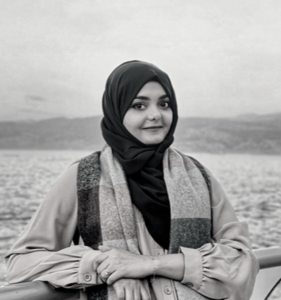
Shaima Bin Othman
Shaima Bin Othman is a Yemeni woman from Hadramawt. She is a human rights defender, especially women’s rights. As a co-founder of Takween Cultural Club and Meemz Arts Initiative, Shaima has been a social activist and volunteer, focusing on the Arts and Culture as a method of advocating for social change since 2016. Shaima is the former CEO of Wa’ai foundation; during her time at Wa’ai, she established the first political forum in Hadramawt /Mukalla. She also participated at the young activist camp in Berlin in 2019 as a young leader from Yemen. She is currently working as a Research Fellow at the Yemen Policy Center (YPC). She has published numerous reports and articles highlighting the role of youth-led initiatives in the peace process. Shaima is a member of the Women Solidarity Network. She holds a Bachelor of Arts in English Literature from Hadramawt University. She was granted a scholarship from the U.S. Middle East Partnership Initiative (MEPI) for the Tomorrow Leaders Program to study her master’s degree in Middle East Study at the American University of Beirut. Shaima’s MA thesis will be revolving around Women Political Participation.
Participant in: March/April 2022 Fellowship: Peacebuilding and Women’s Meaningful Participation in Peacebuilding Processes
Sara Al Mahbshi
Sara Al-Mahbshi is currently a project assistant working on the Feminist Peace Project at Peace Track Initiative. Sara is also an MA candidate at the University of Lethbridge where her research focusses on Yemeni women’s political participation post-2014 conflict. Sara holds a BA in Political Science and History from the American University in Cairo. In 2018, Sara spent 6 months in Sudan working with UNICEF in the Child Protection Section and worked in the fields of child soldiers and alternative families. She is interested in international relations, gender studies and conflict studies.
Participant in: March/April 2022 Fellowship: Peacebuilding and Women’s Meaningful Participation in Peacebuilding Processes
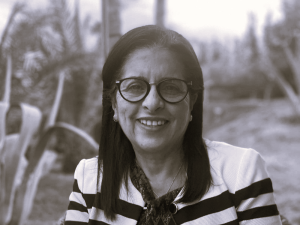
Fatima Outaleb
Fatima Outaleb is a human rights activist with extensive experience advancing women’s rights at local, regional, and international levels. She has worked on UN and international instruments on gender equality and developed response toolkits and guides for survivors of gender-based violence (UNFP, ABAAD). She has served as an expert with the North-South Council of Europe, she currently serves as MENA regional representative on the board of the Global Network of Women’s Shelters, and as a steering committee member of the Feminist Alliance for Rights. She also sits on the advisory board of ABAAD (Lebanon), the executive board of Union de l’Action Feministe (Morocco), and is co-founder of the Arab Feminist CSOs Network (2020). Her writings cover feminist movements, Islamic feminism, gender-based violence, and practical tools such as SOPs and helpline guides.
Participant in: March/April 2022 Fellowship: Peacebuilding and Women’s Meaningful Participation in Peacebuilding Processes
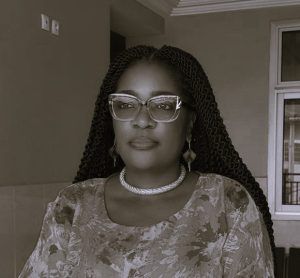
Beatrice Ndefon Ngwe
Beatrice Ndefon Ngwe is a Cameroonian peace builder, humanitarian leader, and advocate for women’s rights. Born in Cameroon, she is the Founder and Executive Director of the Solidarity Health Foundation, which provides health care education to vulnerable communities in the country’s conflict-affected South West Region. Beatrice has played a pivotal role in advancing peace building initiatives, including contributing to the landmark Cameroon Women’s Peace Pact. As Chief Financial Officer of the South West North West Women’s Taskforce ( SNWOT), an Alumni of the Beyond Border Scotland Women in conflict program, she has championed women-led humanitarian coalitions during the ongoing Anglophone Crisis. Ndefon has taken the cause she supports to international stages, including the Copenhagen Democracy Summit, where she has pressed for global solidarity with Cameroon civilians facing displacement, insecurity, and rights abuses. Her grassroots leadership emphasizes evidence-based advocacy and community-driven solutions, from lobbying for safe school resumption during conflict to improving livelihoods, climate resilience, and local governance.
Participant in: March/April 2022 Fellowship: Peacebuilding and Women’s Meaningful Participation in Peacebuilding Processes
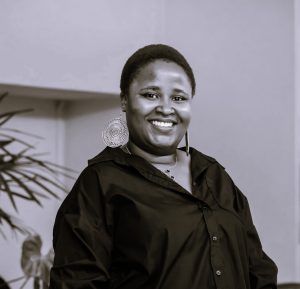
Clariss Rufaro Masiya
Clariss Rufaro Masiya is dedicated and well-trained Project Manager, and Gender Equality and Social Inclusion expert who has a working knowledge of Monitoring and Evaluation with a rich mix of over 7 years’ proven success in coordinating positively impacting programs and robust capacity-building initiatives with a passion in enriching marginalized communities and promoting social inclusion. In addition to her development work, Clariss is an accomplished writer, contributing articles and opinion papers on topics related to social vulnerability, community development, environmental issues, and women’s rights. She holds a BSc in Peace and Governance and an MSc in Disaster Management.
Participant in:
March/April 2022 Fellowship: Peacebuilding and Women’s Meaningful Participation in Peacebuilding Processes
November/December 2022 Fellowship: Peacebuilding and Women’s Meaningful Participation in Peacebuilding Processes
Jaya Tiwari
Jaya Tiwari is a Senior Manager, at Maitrayana Charity Foundation. Maitrayana leverages the power of sport to create ecosystems that empower girls and women to fulfil their potential. With over two decades of experience working in the Indian development sector. Jaya has worn many hats and Since 2009, Jaya has been responsible for the overall implementation of the Young People’s Initiative (formerly Goal programme) across Delhi, Mumbai and Bangalore and through partners in Tamil Nadu and Punjab. She ensures high quality execution of the programme, manages grants and is instrumental in the further development of the YPI. Jaya manages a team of 60 young leaders and builds relationships with a variety of stakeholders. She has attended various leadership conferences organised by Dasra (India), American Express, Women Win (Netherlands) and Laureus (UK) and has been a member of Global networks like Vital Voices and Woman Sports Leadership Academy (University of Chichester). Member women in conflict 1325 2022. In 2025, Jaya successfully completed Reliance Foundation and Vital Voices, Women leaders India Fellowship. Jaya holds a Master’s Degree in Human Development, S.N.D.T University, Mumbai and wrote her post-graduation dissertation on Home-Based Care for People Living with HIV.
Participant in: January/February 2022 Fellowship: Peacebuilding and Women’s Meaningful Participation in Peacebuilding Processes
Mina Mahmood Ibrahim
Mina Mahmood Ibrahim is from Baghdad, Iraq. She is currently a Programme Officer at Public Aid Organisation (PAO), Iraq. PAO is an NGO that works on strengthening human rights in society. Her work focusses on women’s empowerment, perceptions of and the implementation of UNSCR 1325 in Iraq, and on changing the discriminatory stereotypes against women. Mina Studied Computer Science at the University of Technology, Baghdad.
Participant in: January/February 2022 Fellowship: Peacebuilding and Women’s Meaningful Participation in Peacebuilding Processes
Bonyan Jamal
Bonyan Gamal is a feminist human rights activist and lawyer based in Sana’a Yemen, she is a cofounder of Kalbunyan for Development. She was a field researcher, then a field lawyer, then an Accountability and Redress officer and she was the legal support unit director at Mwatana for Human Rights, she has been working in Mwatana for 8 years, during which she worked on documenting human rights violations through field and open source research. She worked on Transitional Justice, cases of women and minorities and cases on international and criminal international law and lead the legal support team in providing legal support in thousands of cases around Yemen.
Bonyan currently serves as Program Manager for the Yemeni Archive an international organization based in Berlin – Germany, where she leads a team of 4 people working on documentation, strategic research planning, fundraising and strategic development, while collaborating with local and international partners to strengthen accountability, evidence preservation, and advocacy efforts related to violations in Yemen.
Participant in: January/February 2022 Fellowship: Peacebuilding and Women’s Meaningful Participation in Peacebuilding Processes
Asmahan Aleriani
Asmahan Aleriani is the General Manager at Enjaz Foundation for Development which is a Yemeni civil society organisation that runs humanitarian response programmes in various fields of work including food and agricultural security, water and sanitation, education in emergencies, economic empowerment, and peace and good governance. She has over 10 years of experience as a trainer and advisor on various social development projects and has particularly focussed upon gender equality, good governance, and peacebuilding projects in Yemen.
Participant in: January/February 2022 Fellowship: Peacebuilding and Women’s Meaningful Participation in Peacebuilding Processes
Shanya Mohammed Saeed
Shanya Mohammed Saeed is from Kurdistan, Iraq. She is currently working as the Communication and Digital Media Officer at the Center for Gender and Development Studies at the American University of Iraq, Sulaimani. She holds a Bachelor of Arts (2015) in English Language and Literature from the University of Sulaimani. Following her graduation, she started working with IDPs and refugees through organisations such as the Global Youth Organization and Un Ponte Per as a mediator and peacebuilding facilitator working to promote peace, social cohesion, and coexistence. As a female in Iraq, she has a strong passion for gender-based causes, women’s rights, and gender equality. Her aim has been to support and encourage women to get a sense of independence and to support them in pursuing decision-making positions in society.
Living in Iraq, one of the most diverse nations in the world with several different communities, Shanya has consistently worked on planting the seed of peace; to engage with different communities despite all the contextual, ethnic, religious, and gender-based variances that exist. The latter being one of the main reasons why she always tries to enrich her background with different cultures and languages in Iraq to understand people’s needs. She hopes to see peace take over the instabilities that occur in Iraq by working to make dialogue sessions a tool for finding common ground in the area, as well as showing the real image of Iraq to the world, not the one that has been illustrated by the media.
Participant in: January/February 2022 Fellowship: Peacebuilding and Women’s Meaningful Participation in Peacebuilding Processes
Baiye Frida Ebai
Baiye Frida Ebai is a Cameroonian peacebuilding researcher, practitioner, and trainer with over 10 years of experience working in fragile and conflict-affected contexts. She specializes in gender, conflict, and Artificial Intelligence in peacebuilding, exploring how tools such as AI-assisted early warning, risk forecasting, counter-disinformation, and digital civic governance can strengthen conflict prevention, civil security, and inclusive peace processes.
Frida holds an M.Sc. in Corporate Communication and is a PhD Fellow in Sociology at the University of Buea, Cameroon. She has completed professional certifications in Migration Management, AI in Peacebuilding, Women in Conflict Prevention, Conflict Analysis and Mediation, Responsibility to Protect (R2P), DDR, and Gender, Conflict & Peacebuilding, among others.
As a trainer and facilitator in Digital Security and Safety, she equips peacebuilders and communities with practical tools to navigate digital and physical environments safely. Frida has served as a Women, Peace & Security Consultant for the International Crisis Group in Cameroon, contributing to research, stakeholder engagement, and policy recommendations, including co-authoring reports such as “Rebels, Victims, Peacebuilders: Women in the Anglophone Conflict”, and facilitating workshops to strengthen women’s participation in peace processes.
Her work centres on amplifying marginalized voices, promoting inclusive dialogue, and advancing responsible AI governance in peacebuilding and civic protection.
Participant in: January/February 2022 Fellowship: Peacebuilding and Women’s Meaningful Participation in Peacebuilding Processes
Sanjula Pietersz
Sanjula Pietersz is a young lawyer from Sri Lanka and is currently working as the project coordinator of the Social Justice Commission of Alliance Development Trust, a leading NGO in Sri Lanka which works in the areas of human rights, governance and peace. Her role is primarily associated with mobilizing and empowering grassroot level youth on democracy and human rights in Sri Lanka. Sanjula completed a Bachelor of Law (LL.B.) degree at The Faculty of Law, University of Colombo in 2018.
In 2016, Sanjula received an award as ‘The best young reviewer’ from an alternative newspaper in Sri Lanka. She was the representative of ‘Families of the disappeared’ (FOD) at United Nations Sri Lanka in making the report on the United Nations Security Council Resolution 2250 “Youth, Peace and Security”, in 2017. She contributed as an author for a collection of Tamil language articles published on the 10th anniversary of the end of the Sri Lankan civil war, in 2019.
Sanjula is working very closely with the war affected people in the North and East of Sri Lanka, particularly with families of the disappeared and supporting their struggle towards seeking truth and justice. She actively engages with social movements against enforced disappearances, land grabbing, political prisoners, militarization etc. in Sri Lanka. She has contributed towards addressing the issue through speaking in public platforms as a freelance writer, photographer and a translator.
Sanjula studied photography at ‘Hegoda’, School of Photography. She used her passion and skill on photography to bring out the hidden stories of war victims. She has contributed to photography exhibitions, published photo-stories and her photographs have also been used for other articles. Sanjula was one of the contributors of the “My Sri Lanka, y Future” photography exhibition organized by the United Nations Sri Lanka” in 2014. She was also on of the contributors for the “Unframed” photography exhibition organized by Vikalpa.org (http://unframedsl.org/about-unframed/) in 2018, which highlighted the realities of the post war context in Sri Lanka.
Sanjula is the editor of a Sinhala language E-magazine – Sahurdhaspandhana (Pulsation of Solidarity) – which consists of Tamil literature and art, and strives to signify the unavoidable need for justice through publishing victim’s literature and art in majority language. Such a magazine has not been published for over 20 years in Sri Lanka. She is also a translator who tries to create political consciousness by translating poems and other literary products on conflict written by Tamils into Sinhala. Sanjula is an influencer on social media. She shares information on the national question in Sri Lanka and opinions by re-reading the distorted history of the country, which enlightens the public. In 2020, she and three of her friends started an initiative on social media based on Sinhala and Tamil literature to develop a political dialogue on the ethnic issue in Sri Lanka that aims to reformulate the established social myths regarding minority people’s rights (https://www.facebook.com/groups/1302974290054251).
Participant in:
January/February 2022 Fellowship: Peacebuilding and Women’s Meaningful Participation in Peacebuilding Processes
August 2022 Fellowship: The Arts as a Tool for Peacebuilding
Dr. Marufa Akter
Dr. Marufa Akter is an Associate Professor at the Department of Global Studies and Governance (GSG), Independent University, Bangladesh (IUB). Her academic and policy research spans over 15 years, with a particular focus on South Asia’s evolving geopolitical landscape, human security, regional security in the Bay of Bengal, and feminist approaches to foreign policy. She holds a PhD in Political Science from the University of Bremen, Germany. Dr. Akter also earned a Master’s degree in Public Policy from the Willy Brandt School of Public Policy, University of Erfurt, Germany, under a DAAD scholarship, as well as Bachelor’s and Master’s degrees in International Relations from the University of Dhaka. Additionally, she completed a year-long graduate program on Peacebuilding and Conflict Transformation at the SIT Graduate Institute in Vermont, USA.
Dr. Akter has taught international relations and Bangladesh studies at the University of Bremen, Germany, and BRAC University, Bangladesh. She is a recipient of several international fellowships, including the SUSI Institute on Foreign Policy (University of Delaware, USA) and the 1325 Women in Conflict Fellowship (Beyond Borders, Scotland). Her expertise has been sought by multilateral agencies, including the World Bank, where she has provided strategic advisory on gender, SEA/SH risk management, and social inclusion. Her research covers a wide range of themes, including women’s political empowerment, gender-based violence, inclusive governance, refugee rights, trafficking of women and children, female labour force participation, water governance, geopolitics, and the socio-economic impacts of the COVID-19 pandemic. She has conducted significant work with the Rohingya community from a gender equality and human rights perspective.
Participant in: January/February 2022 Fellowship: Peacebuilding and Women’s Meaningful Participation in Peacebuilding Processes
Suparva Narasimhaiah
Suparva Narasimhaiah is currently working as a Gender Specialist for the Security Sector Reform (SSR)/ Rule of Law Programme at UNDP Iraq. She works with the Office of the National Security Advisor in Iraq to mainstream “gender” across the National Security Strategy and the Security Sector Reforms Plan for Iraq. She also engages extensively with the Ministry of Interior, Women’s Empowerment Directorate, Independent Human Rights Commission, and civil society organisations in Iraq to support the implementation of the Women Peace and Security 1325 National Action Plan for Iraq. She additionally works within the UNDP Iraq Country Office to support gender mainstreaming across the Country Office programming on all thematic areas. Prior to working with UNDP in Iraq, she worked for five years with USAID and UNDP in Afghanistan – as a Programme Management Specialist – focusing on Anti Human Trafficking, Rule of Law (SSR and Human Security), Gender (Spotlight Initiative for Afghanistan), and Transitional Justice with the Human Rights Commission in light of the peace talks between the Government of Afghanistan and the Taliban. She has also worked with the International Law Commission, UN Secretariat, International Peace Institute, and United Nations High Commissioner for Refugees.
Suparva graduated with a Master’s in International Law and Diplomacy from the Fletcher School of Law and Diplomacy, Tufts University in 2012. She graduated with her bachelor’s in law from Gujarat National Law University (GNLU), in India after which she clerked with the former Chief Justice of India at the Supreme Court of India.
Participant in: January/February 2022 Fellowship: Peacebuilding and Women’s Meaningful Participation in Peacebuilding Processes
Zaina Waturi Kombo
Zaina Waturi Kombo is an Advocate of the High Court of Kenya and a Woman Human Rights Defender. She has over 7 years of experiences working in human rights and development with a mix of both grassroots organising and policy influencing. She holds an LLB and LLM in Law, Governance and Democracy both from the University of Nairobi. She is an active member of Federation of Women Lawyers (FIDA) – Kenya, International Commission of Jurists (ICJ) – Kenya and the Law Society of Kenya. She holds a certificate from the African Union on Gender Mainstreaming in Peace Support Operations, she is a trained budget facilitator on Gender Responsive Budgeting (By Institute of Public Finance Management – Kenya), and completed training on results-based project management (by Swedish Development Agency) as well as training on inclusion and nondiscrimination (by LSU – Sweden).
In her various experiences, she has worked with youth and women in efforts to prevent violent extremism. In her current role she is involved in peace and security initiatives geared towards security accountability in African countries through capacity building and supporting grassroots human rights organisations in Kenya and beyond.
Zaina Kombo believes that women still need to fight for their space in development and decision-making processes as the “glass ceiling” has proved to have numerous layers in different contexts of the world.
Participant in: January/February 2022 Fellowship: Peacebuilding and Women’s Meaningful Participation in Peacebuilding Processes
Bahar Ali
Bahar Ali is the Director of Emma Organisation for Human Development in Erbil, where one of their main focuses is upon the implementation of UNSCR 1325. Prior to this role, Bahar was a UNFPA and UN Women consultant on developing strategies for ending violence against women in Kurdistan and the elimination of GBV. She has taken part in numerous conferences on service provision for GBV survivors, combatting violence against women, and gender issues in Iraq.
Participant in: May 2018 Fellowship: Peacebuilding and Women’s Meaningful Participation in Peacebuilding Processes
Dr. Khedija Arfaoui
Dr. Khedija Arfaoui is a a prominent Tunisian peace activist, feminist, academic, and a member of ICAN’s Women’s Alliance for Security Leadership (WASL). She worked as an English teacher, a vice-principal and principal before teaching at the University of Tunis. She was a teaching assistant at George Washington University in 1978-1979 and 1979-1980 (where she got her M. Phil in 1992), and a Fulbright lecturer at Lake Forest College (2005). She joined civil society in the mid 1980s and has since then worked extensively to promote environmental issues and women’s claims to equality, peace and stability. She is a freelance researcher, lecturer and feminist activist and has had several articles published, particularly about women’s rights in the Middle-East and North Africa.
Participant in: December 2019 Fellowship: Peacebuilding and Women’s Meaningful Participation in Peacebuilding Processes
Soudaba Wahabzada
Soudaba Wahabzada is a Peace and Reconciliation Associate with UNAMA, where she contributes in projects promoting peace and conflict resolution in remote provinces of Afghanistan with a focus on women’s inclusion in mediation, conflict resolution, and peace negotiations. In addition, she has been working on providing practical legal courses and legal aid clinics focusing on gender-equality and promoting women’s access to free legal aid services and justice institutions.
Soudaba was born and grew up in a remote district (Injil) of Herat province where she graduated with the honor of first-grade student of her school. She then the American University of Afghanistan (AUAF) through U.S Embassy Scholarship in 2015. She was selected to participate in and represent AUAF in the Nuremberg Moot Court Competition in 2016 in Germany and was selected as a member for Gujrat International Moot Court competition in 2018 in India. In December 2018, she graduated from AUAF majoring in Law and minoring in English with a GPA of 3.90 and she was selected as the Valedictorian for AUAF Graduating Class of 2019.
Soudaba’s great passion is to contribute in achieving a sustainable peace in Afghanistan, especially by building capacities on conflict analysis and peacebuilding as well as to protect fundamental human rights in conflict-affected communities. She is currently writing a short story displaying the effects of child marriage and unpleasant traditional stereotypes on Afghan girls’ lives.
Participant in: December 2019 Fellowship: Peacebuilding and Women’s Meaningful Participation in Peacebuilding Processes
Anusha Maharjan
Anusha Maharjan is a spoken word poet, podcaster and a youth-activist who leads youth movements in Kathmandu, Nepal. Anusha works as Vice-President in the only youth-led NGO in Kathmandu named ‘We’ for Change. The NGO promotes spaces for leadership for young people aged 16-24 years. She is a passionate activist of the Global Goals and is motivated to work towards building a sustainable and peaceful society where there is equity, peace and justice, and equal rights. She believes we all have the power to bring people together and change the world through our words, our voices, and our kindness.
Participant in: November/December 2020 Fellowship: Peacebuilding and Women’s Meaningful Participation in Peacebuilding Processes
Shokhan Ahmad
Shokhan Hama Rashid Ahmad is a human rights defender and activist working in the Iraqi Kurdistan Region. Ahmad is the director of Women’s Legal Assistance Organization (WOLA). WOLA is the first women-led legal aid organisation in the Iraqi Kurdistan Region. She is a member of the board of directors of the federation of civil society organisations. Ahmed has been working for more than 16 years to protect the rights of women, especially the victims of honour killing.
Shokhan is also a trainer in the field of domestic violence and advocacy. She regularly arranges seminars and workshops to raise legal awareness about domestic violence. She had a key part in the advocacy and campaigns for the passing of the domestic violence law at the Kurdistan Parliament. She received an honorary recognition from the Kurdistan Parliament for her work on laws related to women. She received the Dutch Consul’s Award in 2017 for working to reduce and eliminate female genital mutilation in different regions in Iraq, as well as activities that have led to the enactment of domestic violence law. Shokhan believes that women need to be bold by stepping up and ending violence and other abuses perpetrated against them.
Participant in: February/March 2021 Fellowship: Peacebuilding and Women’s Meaningful Participation in Peacebuilding Processes
Amal Abdulqader Al-Bokhiti
Amal Abdulqader Al-Bokhiti is the Executive Director of AWAM Foundation for Development and Cooperation, an independent non-profit organisation based in Yemen concerned with issues of democracy, good governance, peacebuilding and human rights, and especially strengthening and achieving women’s rights in conflict areas. She is also the head of the initiative Shahab Peace for Peacebuilding. Amal has been working in the field of women’s rights since 2010 and works on raising awareness at community level on gender-related issues including early marriage, women’s participation in decision making, and women empowerment. Since 2015, Amal has been involved in convening meetings with Yemeni women on peace and security issues. She is a member of the 1325 Alliance for Women’s Issues and Link Alliance for Yemeni Women. She has participated in a number of workshops and meetings to support women’s participation in peacebuilding and conflict resolution, mostly in Amman, Beirut and Cairo.
Participant in: February/March 2021 Fellowship: Peacebuilding and Women’s Meaningful Participation in Peacebuilding Processes
Dr. Nadia Al Sakkaf
Dr. Nadia Al Sakkaf is a professional researcher with expertise in policy and politics research with a solid background in communication and advocacy. She has worked extensively in both academic and practical aspects of politics, as well as in government. In 2014 she was the first woman to be appointed Minister of Information in the Republic of Yemen.
In addition to her academic research and policy papers, Nadia also specialises in developing and implementing communication strategies. Her combined experience in journalism, non-profit organisation, academic research, advocacy and policy enables her to produce cross-cultural effective and engaging campaigns. While working in the non-profit sector, a part of her job was designing strategies and policy papers as well as oversee their implementation, and to train partners and stakeholders in relevant aspects. In recognition of her work in the public domain, Nadia has received several international awards including the Oslo Business for Peace Foundation Award in 2013, being the first Arab woman to be awarded so.
Participant in: February/March 2021 Fellowship: Peacebuilding and Women’s Meaningful Participation in Peacebuilding Processes
Wimarshana Ranasinghe
Wimarshana Ranasinghe is a peacebuilding and learning professional with over a decade of experience designing and facilitating transformative training programs across diverse cultural and institutional contexts. She holds a Master of Arts in Conflict Transformation from Eastern Mennonite University and has worked across Sri Lanka, the United States, and India.
Her work centers on conflict transformation, restorative and trauma-informed practice, and inclusive leadership development. Wimarshana has led youth leadership and multicultural initiatives and facilitated trainings in Nonviolent Communication and restorative justice, strengthening trust and collaboration within diverse communities and institutions.
She currently serves as a Visiting Academic at the Open University of Sri Lanka, where she teaches Nonviolent Communication, and at the Sri Lanka Institute of Information Technology, where she teaches multicultural education. In these roles, she integrates theory and lived experience to cultivate emotionally intelligent, socially responsible learners.
Known for creating participatory and psychologically safe learning spaces, Wimarshana is committed to nurturing resilience, deep listening, and inclusive dialogue. Through her work, she continues to support individuals and communities in building just, compassionate, and sustainable pathways toward peace.
Participant in: February/March 2021 Fellowship: Peacebuilding and Women’s Meaningful Participation in Peacebuilding Processes
Nyuon Susan Sebit
Nyuon Susan Sebit (Suzy) is a seasoned young lawyer/advocate passionate about the rule of law and access to justice with a wide range of experience and training in Justice Peace and Security. She specialises in women and girls’ rights, women, peace & security, youth, peace & security and human rights. She believes in equality of all before the court of law. Ms. Susan holds Bachelor of Law (LLB) from the University of Juba, 2013 and had several years of training in the field of human rights, mediation and conflict resolution. In 2018, Suzy joined the Global Network of Women Peacebuilders (GNWP), as the third recipient of the Cora Weiss Fellowship for Young Women Peacebuilders. Through this fellowship, she can join the GNWP International Coordinating Team where they work to promote effective implementation of UNSCRs 1325 and 2250, and the supporting resolutions on women, peace, and security. She supports the youth, peace and security agenda at the national and local levels. She has previously worked with UN Women South Sudan Country Office on the Ending Violence Against Women and Girls programme. Suzy is a founder and the Executive Director of National Alliance of Women Lawyers (NAWL) where she works to promote and protect women and girls to ensure the implementation of women peace and security and ending violence against women and girls. Suzy advocates for women’s participation at all levels of governance and leadership. Susan believes in gender equality and the empowerment of women and girls to unleash their full potential and be most effective to their society and the nation at large. Susan believes that women’s economic empowerment through education will lead to key leadership positions and equal pay.
Participant in: February/March 2021 Fellowship: Peacebuilding and Women’s Meaningful Participation in Peacebuilding Processes
Ishika Millaniyage
Ishika Millaniyage specializes in youth leadership and community peacebuilding with over 10 years’ experience working with leading local and international civil society organizations such as Sarvodaya movement, Australia Awards – Afghanistan, UNFPA, and is currently attached to Internews Sri Lanka as a senior project officer. During her career as a program coordinator with Sarvodaya, Sri Lanka’s largest civil society movement, Ishika has represented Sarvodaya at National Reconciliation Policy drafting consultations and National Transitional Justice taskforce consultations. Ishika holds a MSc. in Project Management from the University of Bedfordshire, UK, a post graduate diploma in Peace and Conflict studies from University of Colombo, Sri Lanka, and is currently pursuing her second BSc. degree in the Psychology stream from Cardiff Metropolitan University, UK. She has represented Sri Lanka at the Youth Town Hall – Summit for Democracy 2021 organized by Joe Biden administration and has also served as a judge of the Royal Commonwealth Society – the Queen’s Commonwealth Essay Competition 2021. She was a Beyond Borders -Women in Conflict 1325 fellowship recipient in 2020 and is a US Department of State Alumnus; a Community Solutions – Tolerance and Conflict resolution Fellow 2015 and has worked with Little Friends For Peace (LFFP) on peace education curriculum development and facilitating peace building and conflict resolution training. She has also served in the US State Department Community Solutions, and Community Engagement Exchange fellowship program selection panels for five consecutive years since 2017. In 2013, she was appointed by the National Youth Services Council Sri Lanka to serve the Brunei High Commission as a Youth Ambassador during Commonwealth Heads of Government Meeting (CHOGM). Ishika is a volunteer of Sri Lanka Unites Youth movement since 2012 and is also attached to Global Unites, and Centenary Movement as a core team member.
Participant in:
November/December 2020 Fellowship: Peacebuilding and Women’s Meaningful Participation in Peacebuilding Processes
August 2022 Fellowship: The Arts as a Tool for Peacebuilding
Filo Tuivanulevu
Filo Tuivanulevu is originally from Fiji, in the South Pacific and holds a M.A in International Development from the University of Sussex, with specialism in Participation, power and social change. She is currently International Projects Coordinator at the 2050 Climate Group. She has worked in the areas of development, gender equality, youth and young women’s leadership in Fiji and the Pacific. Filo’s areas of interest include, exploring the challenges of power relations, participation and young people’s engagement in development and civic processes. She is also interested in engaging in change processes in pursuit of social justice. Prior to joining 2050 Climate Group, Filo has worked in development programmes that aim to build on young people’s leadership potential, and find ways to effectively engage in decision making spaces. She has also worked in programmes that aim to address gender inequality and the exclusion of women and girls from decision making processes that affect them.
Participant in: November 2021 Fellowship: Climate Change, Gender and Conflict
Caroline Usikpedo-Oliseowe
Amb. Chief (Mrs.) Caroline Usikpedo-Oliseowe, FCIA is the Executive Director of Noble Delta Women for Peace and Development International, a non-governmental organisation based in Nigeria with special consultative status with the United Nations ECOSOC, accredited to the United Nations Environment Programme and the Green Climate Fund. The organisation’s vision is to empower Niger Delta women and the most vulnerable people in the region, and to promote and realise their rights. She is also the convener of the Civil Society Advance Forum on Sustainable Development (CAS2030), a national platform and alliance of civil society organisations working to advance the achievement of the SDGs and Agenda 2030 in Nigeria. She previously served as Assistant Minister of Foreign Affairs to International Organisations for the International Human Rights Commission, and currently holds the position of Deputy Secretary General (Africa).
A Chartered Administrator and Fellow of the Chartered Institute of Administration, she holds a degree in Government and Public Administration from Imo State University, Owerri, a Master’s degree in Public Administration from IICSE University, Delaware, USA, and a Certificate in Climate Change and Governance from Wageningen University, Netherlands.
Prior to refocusing her career, she worked as an actress, model and beautician, and spent 20 years gaining extensive experience across the hospitality, ICT and NGO sectors. An accomplished international speaker, she has presented numerous papers on development, peace and conflict, and human rights on behalf of rural women at global conferences and United Nations forums across the USA, Canada, the United Kingdom and beyond. She was a Keynote Speaker at the High-Level Panel of the United Nations High Level Political Forum (HLPF) in New York, USA, in July 2014. As an Ambassador for Peace, she regards community peace and security as critical to sustainable development, and is committed to peacemaking through women’s empowerment — a model she has applied in transforming the lives of women and young people through skills and vocational training, both at home and abroad.
Recognised as a women’s leader within her community, across Nigeria and on the global stage, she has served as President General of the Isoko Development Union (IDU) Women’s Wing, and has held board positions with several international organisations and networks, including CIVICUS World Alliance for Citizen Participation (2013–2016, South Africa), Innovation for Change Africa Hub (Kenya), Co-Chair of the Women Major Group of UNEP Forum (Kenya), the Africa Round-Table on Sustainable Consumption and Production (Uganda), and as a Global Facilitation Team Member for the Feminist Task Force (FTF) in New York, USA. Her work has earned her recognition and awards from the local to the international level. In her daily life, Caroline is a wife, mother, activist, leader, princess of a royal family, and a community chief.
Participant in: November 2021 Fellowship: Climate Change, Gender and Conflict
Reem Belkeir
Reem Belikeir is a Libyan activist and human rights defender. She holds a Bachelor’s Degree in Law and is a Human Rights and international humanitarian trainer. Reem is also an advisor to Libya’s National Anti-Corruption Commission (NACC). Reem has a strong interest in Libyan general affairs and human rights issues. She is a civil society activist and is the head of an organisation that supports youth and women.
Participant in: February/March 2021 Fellowship: Peacebuilding and Women’s Meaningful Participation in Peacebuilding Processes
Hana Al-Showafi
Hana Al-Showafi is based in Yemen and works in the fields of women, peace and security, inclusive governance, and conflict resolution as well as youth empowerment on local and community level. Hana Al-Showafi is currently the Gender Policy Officer at the Embassy of the Netherlands in Yemen. She has experience of over eight years in working under extreme conditions of political instability, war and conflict with a number of aid and development International Non-Governmental Organisations (INGOs), as well as local stakeholders in Yemen. She is a member of #SupportYemen Art Collective and a member of the Broader Middle East and North Africa (BMENA) Chatham House Initiative, as well as a delegate of Generations for Peace.
Participant in: February/March 2021 Fellowship: Peacebuilding and Women’s Meaningful Participation in Peacebuilding Processes
Shatha Al-Aghbari
Shatha Al-Aghbari a Yemeni Peace activist and digital marketing specialist. Programme Officer at Sisters Arab Forum for Human Rights (SAF). SAF is an independent, non-governmental feminist organization that has been working since 1999 to defend human rights in Yemen. She is also coordinator of Women’s Voices of Peace Network, that focuses on women, peace and security in Yemen. Shatha is a member of Arab Voluntary Union, Arab African Council for Integration and Development and Eval_Youth that work on an Arab and regional level regarding youth and development. She has been working in the field of peace and gender since 2015. She has been participating in many conferences, workshops and trainings regarding peace and gender at the Arab and international level, including the Torino Forum for Sustaining Peace. Recently, She is working in the field of empowering women within the framework of Resolution 1325. Shatha is a member of YPS-Pact, Women’s Solidarity Network and Civil Agglomeration of Taiz Youth. She holds a bachelor’s degree in Marketing from Sana’a University.
Participant in: February/March 2021 Fellowship: Peacebuilding and Women’s Meaningful Participation in Peacebuilding Processes
Nyaboth Paska Alfred
Nyaboth Alfred is a youth and women’s rights activist. Nyaboth is the Advocacy Coordinator for South Sudan Council of Churches. She is also a Founding Member of Organisation for Responsive Governance (ORG) a civil society organizstion keenly involved in monitoring the implementation of the Revitalized Agreement on the Resolution of Conflict in South Sudan, R-ARCSS. Nyaboth is a trained peacebuilder and for the last five years has been working with both national and international organisations to contribute to a peaceful and gender equal society. She is currently an Expert in the Intergovernmental Authority on Development (IGAD) Roster of Technical Experts in the Mediation Support Unit (MSU), she provides technical support to mediators and mediation processes in the IGAD region.
Nyaboth is passionate about youth and women rights issues, her work at the community level contributes to changing the minds of young people about violence especially towards women. Her work also involves empowering women to speak up about violence at all levels. She also mentors girls who are survivors of violence both in IDP camps and in schools. Nyaboth contributed to the development of Youth, Peace and Security 2250 document ‘The Missing Peace’. Ms. Nyaboth believes that a society can achieve a sustainable peace and development when women are absolutely respected and included in the issues facing the societies.
Participant in: February/March 2021 Fellowship: Peacebuilding and Women’s Meaningful Participation in Peacebuilding Processes
Mary Deng
Mary Deng was born in South Sudan and grew up in the East Africa region, where she pursued her early education and later moved to Australia to continue her studies and achieved a Diploma in laboratory technology and a degree in Medical Science at the Queensland University of Technology. She settled back in South Sudan after her studies, where she works for world health organization (WHO) as a consultant/technical officer. She later become the founder and the executive director of Hope Beyond Adversity (HBA). She has years of experience in humanitarian settings and in the private sector. She’s a member of many associations who are working for the interest of women. She also works as a facilitator and a trainer as part of her consultancy works; she recently facilitated lobby and advocacy training for women parliamentarians in South Sudan. Her previous work experiences enable her to effectively use her professional skills in her current position as the executive director of hope beyond adversity. In this position, her role is to oversee the administration, programme and strategic plan of the organisation, resource mobilisation, and to organise community outreach programmes especially for women. Mary is an activist and a peacebuilder and is passionate about women peace and security as well as women empowerment.
Participant in: February/March 2021 Fellowship: Peacebuilding and Women’s Meaningful Participation in Peacebuilding Processes
Aicha Duihi
Aicha Duihi is a researcher specializing in human rights and economics, working at the intersection of governance, sustainable development, and social justice. She serves as President of the Geneva International Observatory for Peace, Democracy, and Human Rights (IOPDHR-GENEVA-NGO) and is a member of the Commission for the Coordination of Measures to Combat and Prevent Trafficking in Human Beings. She is also a co-founder of the regional “WE” network, which brings together women human rights defenders across North Africa and the Middle East.
She holds a postgraduate diploma (DESA) in Organizational Economics from Mohammed V University in Rabat, a Bachelor’s degree in Management from Cadi Ayyad University in Marrakech, and is a graduate of the IAE in Poitiers, France. She has also received specialized training on the implementation of United Nations Security Council Resolution 1325 on Women, Peace, and Security.
Active internationally, Aicha Duihi regularly contributes to regional and global initiatives promoting human rights, peace, and democratic governance. Her commitment has earned her several international recognitions, including being named among the 100 Most Influential African Women in 2023.
Participant in: February/March 2021 Fellowship: Peacebuilding and Women’s Meaningful Participation in Peacebuilding Processes
Manjula Vijay
Manjula Vijay is a Programme Manager of Operation Red Alert, a programme run by My Choices Foundation – an organisation committed to stopping domestic violence and sex trafficking in India. She handles documentation of the process of the Safe Village Program, from approvals to follow ups. She also manages the Red Alert Helpline and documents all of the Data received.
Manjula has always believed in gender equality and justice, but her voice was heard, and views validated when she started working for a feminist organisation in 2013. This was the beginning of her commitment to working for justice and safety of women and girls. Believing that children are the hope for the future, she is passionate about interacting with young children about issues of gender discrimination, equality, and violence against women. Manjula is a passionate learner and is always looking to acquiring new skills and constantly keep herself updated.
Participant in: February/March 2021 Fellowship: Peacebuilding and Women’s Meaningful Participation in Peacebuilding Processes
Jini Agrawal
Jini Agrawal, a resident of Nepal, has experience working in media, private consulting firm, and international non-profit. She has been leading Miyamoto offices in Nepal and has supported in recovery and rebuilding efforts since the 2015 Nepal Earthquake. Prior to that, she has worked with national and international media, her major focus being disaster and women issues. She has worked with indigenous communities in the rural parts of the country focusing on housing and livelihood issues. She is a board member of Initiatives of Change Nepal and is actively involved in design and implementation of the trust building program that focuses on bridging gaps between different communities within the country. She is also the National Coordinator for Women’s Peace Circle.
Jini completed her master studies from University for Peace in Costa Rica in Media, Peace and Conflict studies. She has attended several trainings on mediation, negotiation, peace, reconciliation, and justice. She loves to experience culture and food during travels, to visit war and history museums, and to read non-fictional books.
Participant in: February/March 2021 Fellowship: Peacebuilding and Women’s Meaningful Participation in Peacebuilding Processes
Hana’a Hamood Abbas
Hana’a Hamood is from Baghdad, Iraq. She has been working in the NGO field in Iraq since 2004 and she is currently the head of the administrative board for the Public Aid Organisation (PAO) and is a member of the Iraqi Women Network (IWNW). Her work focusses on women’s empowerment and on changing the discriminatory stereotypes against women. She is working with colleagues from the Iraqi Women Network on establishing new legislation concerning women’s rights. She has also written reports including a shadow report on the CEDAW convention, and the reality of implementation of UNSCR 1325 in Iraq. During the conflict she started worked closely with Iraqi IDPs and returnee women, specifically on protection and economic empowerment and continues this work today.
Participant in: February/March 2021 Fellowship: Peacebuilding and Women’s Meaningful Participation in Peacebuilding Processes
Dr. Aishath Rafiyya
Dr. Aishath Rafiyya has over 18 years of management and administrative experience in various capacities such as banking, diplomacy, social activism, women’s empowerment, business, tourism and NGO management. Rafiyya holds a doctorate degree in Politics & International Relations, Master’s in Business Administration, and a Master’s in Information Technology. Rafiyya currently holds multiple positions at various institutions in the Maldives and abroad. She is a Director at the Sun Siyam Group of Companies, Founding Member & Deputy Leader of the political party Maldives Development Alliance (MDA), Director of the Global Peace Institute (GPI), and an elected Member at Women Development Committee (WDC) of Male’ City Council. Rafiyya is also the Founding President of the Regional Alliance for Fostering Youth (RAFY) – the first international NGO established in the Maldives. She has been involved in peacebuilding missions for a decade and has been contributing to National Counter Terrorism Centre (NCTC) Maldives as a consultant, contributor to UNDP Maldives and is an invited expert from to UNODC events on preventing and countering violent extremism. She has founded several platforms for young people to be involved in the global peacebuilding mission such as the Global Peace Ambassadors Program, Global Teens Peace Summit, Global Youth Peace Summit, Girls Peace Talk show, Maldives Youth Peace Summit among others.
Participant in: February/March 2021 Fellowship: Peacebuilding and Women’s Meaningful Participation in Peacebuilding Processes
Aïcha Madi
Aïcha Madi is a political analyst that specializes in security and gender issues. She currently serves as a feminist peace project officer at Peace Tack Initiative, a women-led Yemeni NGO that promotes women’s participation in the peace and political processes in Yemen. She has had several field experiences in the MENA region where she worked with women victims of sexual and gender-based violence as well as with mothers of victims of enforced disappearances and victims of torture.
Aïcha holds a Bachelor’s degree in international studies with a peace and security concentration, and a Master’s degree in public and international affairs, with a specialization in political communication and journalism. from the University of Montreal (Canada). She also studied at the UN Mandated University for Peace where she focused on the protection of refugees and women’s participation in peacebuilding. Her research interests lie in the study of international security threats such as armed conflicts, terrorism, radicalization, corruption, and gender issues. Her latest research on collective memory trauma and transitional justice processes was published in the International Rehabilitation Council for Torture Victims’ Journal of Torture.
Aïcha has also worked with a team of Canadian researchers on the prevention of radicalization leading to violence in North America. She cultivates an approach that promotes peace, security, and gender equality and that focuses on victim impact analysis.
Participant in: February/March 2021 Fellowship: Peacebuilding and Women’s Meaningful Participation in Peacebuilding Processes
Nyachangkuoth Rambang Tai
Nyachangkuoth Rambang Tai is a feminist, a peace activist, human rights defender, and is a co-founder of The Mother Care Organization. She is the special Assistant to the AU chairperson advisor on policy and strategic relations with the African Union Organs (AUO). Nyachangkuoth is also head of Gender Programmes at the Assistance Mission for Africa (AMA). Nyachangkuoth raises awareness of the cross-cutting nature of gender equality considerations in the social, economic, political, scientific, cultural, and educational fields. She seeks the participation and inclusion of women in decision-making processes and the protection of women from all types of violence. Nyachangkuoth also conducts trainings and workshops that empower women to embrace free, just, dignified, and self-actualizing lives in South Sudan. In her work, she incorporates the Generation Change training manual, which has allowed her to effectively transform her community. She was a USIP youth advisory council member, and she briefed the UN Security Council on South Sudan representing South Sudan Civil Society. Nyachangkuoth is a graduate of Bahr El Ghazal University with a bachelor’s degree in Economics and Social Studies.
Participant in: November/December 2020 Fellowship: Peacebuilding and Women’s Meaningful Participation in Peacebuilding Processes
Sudha Upadhyayula
Sudha Upadhyayula has over 20 years of experience in both the corporate and social sectors. She has a strong project management background. Structuring efficient processes, building scalable technology ecosystems enabling seamless growth in operations are her strengths. With a desire to contribute to society, she decided to build a career in the social sector and joined My Choices Foundation’s Operation Red Alert as Head of Operations in August 2016. She believes in the concept of lifelong learning and is pursuing a Ph.D. from the Tata Institute of Social Sciences. The Indian concept of “Vasudaiva Kutumbam” – “the world is one family” is very close to her heart which says that the happiness of a society depends on the happiness of each and every person within it. She constantly strives to pursue activities to build happy communities.
Participant in: November/December 2020 Fellowship: Peacebuilding and Women’s Meaningful Participation in Peacebuilding Processes
Ola Ali
Ola Ali is a technical and qualified WASH Senior Engineer with project and delivery experience in the humanitarian and private sector. She has extensive experience in development and building organizational capacity in fast-paced, start-up and community centred environments with a particular focus on built environments. Her background provides a combination of strong technical skills with field experience where she often works in collaborative and multicultural settings. Ola is currently a Chevening Scholar and is completing a master’s degree in Water and Environmental Engineering at the University of Surrey, Guildford.
Participant in: November/December 2020 Fellowship: Peacebuilding and Women’s Meaningful Participation in Peacebuilding Processes
Tahani Yaghshi
Tahani Yaghshi works as a Conduct and Conflict Management Specialist at The George Washington University. Tahani is a peacebuilding practitioner and researcher with over ten years of experience in conflict-affected contexts, including Syria, Tunisia, and Sudan. Her work focuses on conflict transformation and community-based dialogues, with a particular emphasis on the roles of women and youth in building sustainable peace. Her research explores bottom-up approaches to peacebuilding, the role of civil society, and reconciliation processes. Tahani holds a Master of Science in Conflict Management and Humanitarian Action from the Doha Institute for Graduate Studies and a Bachelor of Arts in English Literature from Damascus University and she will start her PhD in Conflict Analysis and Resolution at George Mason University in the Fall of 2026.
Participant in: November/December 2020 Fellowship: Peacebuilding and Women’s Meaningful Participation in Peacebuilding Processes
Iqra Zaffar
Iqra Zaffar is a Researcher at the Central University of Kashmir. She has a keen interest in issues related to gender and social justice. She has conducted numerous studies on the impact of conflict on women. In her latest work, she has documented the effect of perpetual lockdowns on women experiencing domestic violence in Kashmir. As a part of her doctoral research, she is currently studying the impact that gender has on happiness and performance in the workplace. She is also a Samanbal member, which is a programme that provides safe space for women to express themselves and share their experiences about the ongoing conflict in Kashmir.
Participant in: February/March 2021 Fellowship: Peacebuilding and Women’s Meaningful Participation in Peacebuilding Processes
Naima Korchi
Naima Korchi is an international lawyer and an expert on the Women, Peace, and Security (WPS) agenda. She began her career with the United Nations, and it was during her tenure with UNHCR that she recognized that while women are the most heavily impacted by conflict, they also serve as excellent mediators in prevention. This realization led her to focus her professional efforts specifically on WPS.
Following her work with the UN, Naima continued her career as an international consultant, deploying to numerous countries. Since 2018, she has been a member of the African Union Network of Women Mediators (FemWise-Africa) and has served as a mediator in several countries, including year-long deployments to both Sudan and Madagascar.
Naima is also a facilitator on WPS, having organized training sessions for UNITAR for Libyan civil society organizations and for Beyond Borders Scotland on the topic of climate change. She is regularly invited as an expert on UN Security Council Resolution 1325 both in Morocco and abroad. Finally, she is the founder of the NGO Africa Women’s Forum, which seeks to strengthen cooperation between women across the African continent.
Lailufar Yasmin
Lailufar Yasmin, PhD, is Professor and former Chair of the Department of International Relations at the University of Dhaka, Bangladesh. She studied at the University of Dhaka, Bangladesh, Georgia State University in Atlanta, USA, and Macquarie University in Sydney, Australia. She has received the US Fulbright, the British Chevening, and the Australian International Post-Graduate Research Scholarship (IPRS). Her fellowships include positions at the University of Ulster, Northern Ireland; the Chinese Academy of Social Sciences (CASS) in Beijing; the Daniel K. Inouye Asia-Pacific Center for Security Studies (APCSS) in Hawaii as a Fellow of the FIPSS (Fellowships in Indo-Pacific Security Studies); Beyond Borders Scotland; the Marshall Center for European Security Studies (GMCC) in Germany; and Ghent University in Belgium. Her recent publications focus on women’s participation in the July Uprising in Bangladesh (“Where are the Women?”), the Rohingya issue (Palgrave Macmillan: London) and “The Development of International Relations in South Asia” (Oxford Research Encyclopedia). She is a regular speaker at various national and international seminars, and particularly on Women, Peace and Security, at the Bangladesh Institute of Peace Support Operations and Training (BIPSOT). Her areas of expertise encompass Bangladesh’s politics, economy, and foreign policy; the Rohingya issue and maritime mixed migration; South Asian affairs; China’s foreign policy; maritime security and the Indo-Pacific Region; and women’s participation in UN Peacekeeping, among others.
Participant in: February/March 2021 Fellowship: Peacebuilding and Women’s Meaningful Participation in Peacebuilding Processes
Zineb Benalla
Zineb Benalla is an international expert and consultant in preventing and countering violent extremism, counter terrorism and peacebuilding who spent years working in violent extremism hotspots in the Maghreb, Sahel, and the Middle East. Zineb Benalla has a long experience working with international organisations, civil society, communities, religious leaders, traditional leaders, and with policy makers across many countries and continents.She was nominated for the International Women of Courage Award in 2015 for her work in preventing and countering violent extremism and building peace in the Sahel and Maghreb region. She was awarded Alumna of the Year by Alakhawayan University, Morocco for her outstanding career after graduation. She won The International Studies Association Peace Section and Kroc Institute for International Peace Studies Global South Peace Award in 2020 for her work and research on gender equality and preventing and countering violent extremism in the Maghreb and Sahel.
Zineb Benalla is the CEO and Founder of Eirene Associates Int. which is the first international development and security company in Morocco, she is also the co-founder of a civil society organisation working on transnational violence and countering violent extremism. Zineb Benalla is a visiting professor at the intersession unit at Alkhawayan University where she teaches ‘Rethinking Counter terrorism in Africa: Lessons in Prevention’. Zineb Benalla holds a bachelor’s degree in International Relations from Alakhawayn University, Morocco and Georgetown University, USA. She holds a Degree in International Law from Kent Law School and Brussels School of International Studies.
Participant in: February/March 2021 Fellowship: Peacebuilding and Women’s Meaningful Participation in Peacebuilding Processes
Kritika Krishnamurthy
Kritika Krishnamurthy is a corporate commercial lawyer and policy expert with extensive experience in financial regulation, dispute resolution, and digital reforms. She serves as Honorary Director at Bridge Policy Think Tank, India, a sector-agnostic think tank dedicated to shaping India’s public policy landscape as a non-profit. She works at the intersection of law, economics, pharmaceuticals, fintech, MedTech and governance to support governmental and non-governmental organisations, regulatory bodies and international institutions.
Kritika serves in several distinguished international and governmental capacities, including being empanelled as a Mediator with the World Bank, and holding advisory roles as External Consultant to the Indian Institute of Corporate Affairs under the Ministry of Corporate Affairs, External Consultant to the Bombay Chamber of Commerce and Industry, and Mediator for the National Company Law Tribunal (NCLT). Her professional contributions have been recognised through multiple honours, including the Forbes Legal Powerlist, ASSOCHAM National Legal Excellence Award, India Business Law Journal’s Future Legal Leaders, and BW Legal World 40 Under 40. She is a Fellow of UN 1325 Women in Conflict (Beyond Borders, Scotland) and an alumna of the Dhirubhai Ambani Foundation and Government of Maharashtra scholarship programmes, reflecting academic excellence and global leadership. She has also received advanced mediation training from the International Centre for Alternative Dispute Resolution (ICADR) and the Global Mediation Forum in Bangkok.
Her previous work includes high-impact policy research and advisory projects across diverse sectors. She has authored reports on payment innovations and financial inclusion in South Asia for the Alliance for Financial Inclusion, advised the International Financial Services Centres Authority (IFSCA) on creating a global dispute resolution framework at GIFT City, and provided expert inputs to the World Bank on improving delayed payment mechanisms for MSMEs under the India RAMP Project. She has consulted for USAID Sri Lanka on enhancing access to justice through ADR, collaborated with the European Union on harmonising digital health regulations under the EU-India Think Tanks Twinning Initiative, and developed multi-jurisdictional studies on drug pricing for the National Pharmaceutical Pricing Authority. Her work also spans emerging areas such as Central Bank Digital Currency, fintech regulation, climate governance with the Green Climate Fund, and sustainable municipal waste management with Deutsche Gesellschaft für Internationale Zusammenarbeit (GIZ) and the Ministry of Housing and Urban Affairs (MOHUA). These initiatives reflect her commitment to evidence-based policymaking, institutional reform, and socio-economic inclusion.
Kritika is deeply invested in knowledge dissemination. She serves as visiting faculty at the Reserve Bank of India (RBI), the Institute of Chartered Accountants of India (ICAI), the Institute of Company Secretaries of India (ICSI), and the National Academy of Legal Studies and Research (NALSAR) University of Law. As an author and academic, she has co-authored *The Art of Negotiation and Mediation*, published by LexisNexis and recommended by the Bar Council of India as a textbook for law students, and *Third Party Funding of Dispute Resolution*, published by Eastern Book Company (EBC).
Participant in: November/December 2020 Fellowship: Peacebuilding and Women’s Meaningful Participation in Peacebuilding Processes
Nadia Gamal Ebrahim
Nadia Gamal Ebrahim is a committed advocate, researcher, and human rights defender with 19+ years leading protection and gender justice across Yemen, Egypt, and MENA. Amid conflict’s shadows, she has driven transformative projects with national and International Organizations including IRC, MSF, PTI, UAF, funded by OFDA, EU, NORAD, GFW to forge gender equality, protection, livelihoods, development, and resilience via innovative design and international human rights mechanisms.
As advocate and defender, she transforms strategic vision into tangible impact, designing protection programs for women HRDs, supporting GBV survivors through rapid response mechanisms, conducting researches, policy advocacy, trauma-informed approaches, safeguarding, integrating gender/resilience frameworks, and strengthening capacities for peacebuilders, and community changes makers.
Her resonant voice advances WPS analyzing Yemen’s UNSCR 1325 NAP and exposing human rights/GBV realities to catalyze reform. Co-Founder of The Pomegranate Collective; Technical Advisor to Bridges of Hope Foundation (Zimbabwe); board member of Center for Peacebuilding Organization in Africa (CFPO), she nurtures and empowers emerging changemakers with inspiring vision.
Nadia is a Fulbright FLTA alumna (USA); Countering Hate Action Network; and member of several networks including Women Solidarity Network; Yemen Justice Network; WHRDMENA Network; Women in Leadership Network, and Global Mentoring Connect. She now weaves coaching and mentoring into her roles of impact and forges paths of enduring progress, turning adversity into opportunity for change and hope.
She speaks Arabic, English, and French. In addition, Nadia is a published writer with articles, studies, analysis and researches on gender, GBV, peacebuilding/conflict, protection, and contributed to develop some tools and guides.
Participant in: November/December 2020 Fellowship: Peacebuilding and Women’s Meaningful Participation in Peacebuilding Processes
Eman Ftayah
Eman Ftayah is a Syrian women’s rights advocate and peacebuilding leader currently residing in Luxembourg. She holds a Teacher Training College Certificate and serves as Head of the Syrian Women’s Peace Forum. Since 2012, she has participated in numerous workshops and conferences both inside and outside Syria, demonstrating a long-standing commitment to women’s rights and political dialogue. She served for four years as Project Manager of the initiative “Syrian Women and Their Role in Resolution 1325,” a project funded by the EuroMed Feminist Initiative, and is a member of the Syrian Women’s Coalition for the Implementation of Resolution 1325.
Eman has represented Syrian women at significant international forums, including the 2018 Sochi Conference for Syrian Political Dialogue, and has participated in numerous women’s conferences held under the auspices of UN Women and the Dutch organisation Hivos. She has also taken part in workshops focused on Arab women and their role in peacebuilding in Jordan. Beyond her advocacy work, she has served as supervisor of several emerging grassroots initiatives in Syria, including the Euphrates Girls Initiative, the Zenobia Syrian Women’s Gathering, and the Read Initiative. She is a recipient of a fellowship certificate from Beyond Borders, Scotland, and was a candidate in the Syrian People’s Assembly elections in 2020.
Participant in: November/December 2020 Fellowship: Peacebuilding and Women’s Meaningful Participation in Peacebuilding Processes
Dr. Payal Bose Biswas
Dr. Payal Bose Biswas is currently a Senior Assistant Professor at the Department of Political Science at Ramakrishna Sarada Mission Vivekananda Vidyabhavan based in Kolkata. Payal has more than 15 years of teaching at a range of academic institutions. She has won various fellowships and scholarships and has represented India in a US Government sponsored program on Foreign Policy. She has authored various textbooks, research-based books and published many other articles in renowned journals and edited volumes. Her research focuses on gender equality and gender mainstreaming. Payal holds an M.Phil from the University of Calcutta and a Ph.D from Jadavapur University.
Participant in: November/December 2020 Fellowship: Peacebuilding and Women’s Meaningful Participation in Peacebuilding Processes
Tamana Slathia
Tamana Slathia is the founder of a youth-led peacebuilding organisation called The Daffodils Project. She has been working towards peacebuilding and conflict transformation in Jammu, Kashmir and Ladakh for over 5 years. She is recognized as a Global Peace Ambassador for mainstreaming gender in peacebuilding processes and projects. As part of her inclusive peacebuilding approach, she has trained over 500 youth from different backgrounds and organised events sensitising youth towards conflict in Jammu and Kashmir. She is a public speaker on Youth, Peace and Security and is a mentor to young women, globally, for feminist peacebuilding. Working on SDG 16 (Peace, Justice and Stronger Institutions) with a focus on localising SCR 2250 (Youth, Peace and Security) and SCR 1325 (Women, Peace and Security), through her new role at The Daffodils Project, she advocates and facilitates a larger role of youth and women in peacebuilding and conflict transformation.
Participant in: December 2019 Fellowship: Peacebuilding and Women’s Meaningful Participation in Peacebuilding Processes
Choman Hardi
Choman Hardi is Assistant Professor and Chair of the English Department at American University of Iraq Sulaimani, where she founded the Center for Gender and Development Studies. Choman was awarded a scholarship from the Leverhulme Trust to carry out post-doctoral research about women survivors of genocide in Kurdistan-Iraq. The resulting book, Gendered Experiences of Genocide: Anfal Survivors in Kurdistan-Iraq, was chosen by the Yankee Book Peddler as a UK Core Title. Choman is a published poet and was poet in residence at Moniack Mhor Writers Centre (Scotland), Villa Hellebosch (Belgium), Hedgebrook Women Writers’ Retreat (USA) and The Booth (Shetland). She began writing poetry at the age of 20, producing, Life for Us and the moving, Considering the Women, which explores the relationship between immigrants and their homeland, and the plight of women in an aggressive, patriarchal society and as survivors of political violence. The work received a Recommendation from the Poetry Book Society and was shortlisted for the Forward Prize for Best collection. As an academic researcher she has been a visiting scholar in The Centre for Multiethnic Research (Uppsala University), Zentrum Moderner Orient and The Department of Humanities at the University of Amsterdam.
Participated in:
August 2016 Fellowship: Peacebuilding and Women’s Meaningful Participation in Peacebuilding Processes
August 2019 Fellowship: The Arts as a Tool for Peacebuilding
Beyond Borders International Festival 2019: Considering the Women: Listen as Kurdish poet and translator Choman Hardi reads from her latest poetry collection Considering the Women, a collection exploring the equivocal relationship between immigrants and their homeland. (2019)
Utpala Chakma
Utpala Chakma was born in Arunachal Pradesh in a Chakma community in northeast part of India bordering Mayanmar and China. Chakma is lingual and religious minority in the country. She currently works for the DHRD Network in Pune, where she works on strengthening human rights defenders from marginalized communities in India. Prior to this, she has held roles with a focus on women’s empowerment and youth and community development with a variety of CSOs. Utpala studied social work as a specialization on Dalit and Tribal Studies at the Tata Institute of Social Sciences in Mumbai. She is looking forward to being a social activist and making a difference in the lives of people from marginalised sections of society, especially women.
Participant in: December 2019 Fellowship: Peacebuilding and Women’s Meaningful Participation in Peacebuilding Processes
Khalida Darwish
Khalida Darwish is the focal point (Kandahar) for “Women for Peace and Participation”, which promotes the social and political inclusion of women and youth in peace building processes at the grassroots, national, and global levels. They aim to bring balance and enhance women’s participation in peacebuilding processes at all levels, and especially to raise the voices of those working at the grassroots level.
Khalida graduated from Kabul University with a BA in Russian Literature and obtained a master’s in business administration from the University of Commerce and Business Management in India. She also obtained a Certificate in Professional Development for Businesswomen from American University of Afghanistan (AUAF) and holds a diploma in Banking and Finance. During her education she was passionate about gender equality and women’s empowerment having experienced gender imbalance and gender discrimination. She is focused on women’s empowerment by providing them opportunities, education, and advocacy to explore the potential and build believes that our little efforts can provide the platform or foundation to bring that is required and rebuild our society. She works with a group of volunteers to organize workshops, trainings and other related events for women and their families at different level to bring the positive change in the attitudes.
Participant in: December 2019 Fellowship: Peacebuilding and Women’s Meaningful Participation in Peacebuilding Processes
Chandra Senaratne
Chandra Senaratne is the Director of NGO Management Development Centre, based in Colombo, Sri Lanka, where she provides capacity development training facilities for the staff of private, public and non-Governmental organisations in Sri Lanka. She provides consultation services to develop training modules on entrepreneurship development, human resource management, capacity development, gender-based violence, gender and development, gender mainstreaming, women and conflict management, disaster management, Human Rights, humanitarian work, social accountability, governance and advocacy, good governance and social integration.
Prior to joining NGO Management Development Centre, she was the Deputy Director at National Youth Services Council in Sri Lanka where she contributed her professional experience to produce youth development and training policy. She worked at National Youth Services Council for nearly 26 years in a senior executive level position. She was the designated project Director of Youth Council for UNFPA in Sri Lanka. She was the first officer who led and coordinated Canada-Sri Lanka Youth Exchange programs in 1978/79 and 1980/81. She completed a Diploma Course on Youth Development and Training in India under Commonwealth Asia-Pacific youth Program, Manpower Planning training Course in Thailand and Environmental training in Pakistan. She worked for the United Nations Peacekeeping Mission in Cambodia and East-Timor in 1992 and 1996. Chandra graduated from the University of Ceylon with a special degree in Political Science.
Participant in: December 2019 Fellowship: Peacebuilding and Women’s Meaningful Participation in Peacebuilding Processes
Nizhan Ramadhan
Nizhan Ramadhan has 5 years of unique expertise in the humanitarian field in Iraq, and she currently works as Gender and Protection Officer with CARE International in Middle East, a role she has held since 2016. Nizhan has a Bachelor’s degree in 2014 from the University of Duhok Humanities Faculty. She has been active in violence against women and violence prevention issues for more than 5 years and is considered a national expert on sexual, domestic violence, fighting against gender inequality and social injustice. She believes poverty cannot be overcome unless everyone has equal access and control over resources and services including equal participation of women and girls in discussions and decision makings process at both community and household levels this is why she is honored to spend her time working on an issue she cares deeply about in order to make a shift in gender norms and structures underlying inequities. She is committed to uncovering and transforming the political, social and economic relationships at the heart of poverty —to improve the health and well-being of women and girls which is critical to that fight through fighting for every individual’s right to be free from abuse or violence.
Nizhan represents CARE in relevant external fora, media and with other external stakeholders on gender issues. Moreover, she supports project research, evaluations, and baseline studies on gender/women’s empowerment with technical advice and guidance including leading inclusion, GBV and RGA and conflict assessments in the conflict sensitive and disputed areas in Iraq such as Sinjar and Zumar in Ninawa governorate. Also, she has a long experience in developing training materials, modules and material for sessions on UN Security Resolution Council 1325, oversight on whether staff and mainstreaming gender by appropriately apply the skills acquired through trainings, include planning, evaluative monitoring and reporting. Nizhan brings professional experience in the development of concept notes, proposal, budget designing, project documents and policy frameworks\ reviews and research area and gender issues for best practices. She attends conferences, workshops and seminars as directed by the supervisors in the region and represents CARE at CARE MENA and other CARE country offices. She is a staff representative of CARE international in Iraq from 2017 until to 2019 and her main role is to provide individual staff an opportunity to discuss issues in the workplace confidentially.
Participant in: December 2019 Fellowship: Peacebuilding and Women’s Meaningful Participation in Peacebuilding Processes
Eesha Oaj
Eesha Oaj works as a researcher, trainer and young peacebuilder with the Kashmir Institute of International Relations (KIIR), which is a civil society organisation working on peacebuilding, mediation, and reconciliation with the motto of ‘peace through dialogue’. As a researcher she has worked extensively on documenting the impact of conflict on women living along the rural Line of Control (LoC) areas in Pakistan-administered Kashmir (PAK). She has travelled widely across PAK and engaged with grassroots communities by facilitating workshops, focus group discussions and storytelling sessions with conflict-affected women and youth. Eesha has also been engaged in reconciliation initiatives in refugee camps based on peace through arts and nonviolent resistance. As a young peace builder, she has worked on community cohesion and cultural harmony by facilitating dialogues at community level.
Participant in: December 2019 Fellowship: Peacebuilding and Women’s Meaningful Participation in Peacebuilding Processes
Yasmin Luqman
Yasmin Luqman is a recent graduate from the MSc International Relations of the Middle East with Arabic programme at the University of Edinburgh. She fascinated by the role of women in peacemaking and conflict resolution and especially in the role of Middle Eastern women. For example, she has been passionate about the Palestinian cause since she was young and recognises the critical role women play in preserving cultural memory and resistance movements. In completing her Master’s degree, she researched and wrote her dissertation on the role of Yemeni female activists during the Arab Spring uprising in Yemen and the challenges they have faced due to their gender, including a chapter on the role of peacemakers and the challenges they face from male delegates. She is half-Yemeni and has an aunt who is heavily involved in empowering Yemeni women and girls and in peacemaking processes to end the war in Yemen. She would eventually like to pursue a PhD programme furthering this research and is looking forward to hearing perspectives from others on this! In addition, she is a volunteer for the Scottish Green Party and also works on the social media strategy for an Edinburgh-based NGO focused on climate change called MAD Challenges.
Participant in: December 2019 Fellowship: Peacebuilding and Women’s Meaningful Participation in Peacebuilding Processes
Sanaa Khan
Sanaa Khan is a Monitoring and Evaluation Specialist at Prodigy Systems, a third-party monitoring organisation in Yemen. She leads large-scale third-party monitoring tasks for UN agencies. She has experience in conducting monitoring and assessments for UN projects that are related to health, communication for development and protection sectors. Her work includes providing real-time monitoring of outreach and vaccination campaigns, non-technical monitoring of mine action activities and tracking of behavioral change practices in cholera affected communities. Sanaa has a B.A in Gender Studies from Westminster College in the United States and is an alumna of Lester B. Pearson College, United World College.
Participant in: December 2019 Fellowship: Peacebuilding and Women’s Meaningful Participation in Peacebuilding Processes
Ola Karakra
Ola Karakra is an international practitioner who currently works as a Livelihoods Specialist in UNDP Iraq. The main goal of her work is to jump start the local economy in areas recently liberated from ISIL, through provision of different schemes in livelihoods. Prior to working with UNDP Iraq, Ola worked in DAI Europe in the Arab Women’s Enterprise Fund as a Lead Market Systems Analyst in Palestine, Jordan and Egypt. Before this, she worked with UNDP Palestine on Livelihoods’ Improvement and Poverty Reduction, in order to economically empower the less privileged people, which happen to mostly be women. In addition to this, she worked for Japan International Cooperation Agency (JICA) in Palestine on local governance improvement and community empowerment.
Participant in: December 2019 Fellowship: Peacebuilding and Women’s Meaningful Participation in Peacebuilding Processes
Dilara Gök
Dilara Gök is the Director and Founder of DG Consultancy and Training, a London-based firm established in 2021 to support the development sector through conflict resolution, research, and strategic intervention. With over a decade of experience in peacebuilding, conflict transformation, and social cohesion, she has designed and implemented various programmes across Türkiye and internationally.
Since 2012, her work has focused on anti-discrimination, mediation, and inclusive dialogue. Her technical expertise includes conducting conflict analysis, designing intervention strategies, and developing educational tools for NGOs, public institutions, and international organizations. Her professional practice combines policy development with field-level engagement, covering local dialogue processes, stakeholder mapping, and adaptive methodologies. She also focuses on the social impacts of displacement and the role of local actors in fostering resilience.
Prior to founding DG Consultancy, she co-founded Conflictus Training and Consultancy, where she led initiatives connecting civil society and local authorities to build peace infrastructure. Dilara is a member of the Mediterranean Women Mediators Network (MWMN) and a founding member of its Turkish Antenna. Additionally, she served as a certified victim-offender mediator at the Istanbul Courthouse between 2016 and 2021, facilitating restorative justice mechanisms.
Currently, she is pursuing an MA in Humanitarianism, Aid, and Conflict at SOAS, University of London. She holds a BA in International Relations from Istanbul University. An alumna of the Women in Conflict 1325 Fellowship, Dilara views conflict as a point of entry for building more resilient social systems.
Participant in: December 2019 Fellowship: Peacebuilding and Women’s Meaningful Participation in Peacebuilding Processes
Zaina Erhaim
Zaina Erhaim is a Syrian journalist and a consultant in media and gender with different organisations across the region.
She is the founder of Women Journalist Alliance that works to support and amplify the voices of women in journalism in the region.
She works as a managing editor of feminist website. Before working independently, Zaina was the communications manager for the Institute for War and Peace Reporting.
Ms. Erhaim has a master’s degree in international journalism from City, University of London.
Participant in: December 2019 Fellowship: Peacebuilding and Women’s Meaningful Participation in Peacebuilding Processes
Alisar Elias
Alisar Elias has been working with UNHCR for over 12 years; she started her journey as a field assistant conducting needs assessments and delivering humanitarian assistance to refugees in Syria. She then became involved in providing case management to SGBV survivors. In 2015, as the Senior Protection Associate (SGBV), she was leading the SGBV unit at the country office level, designing and planning SGBV prevention and response programmes nationwide focusing on internally displaced persons and returnees. Alisar has worked on developing community-based structures to empower the role of women in the community and enhance their involvement in the decision-making process.
Participant in: December 2019 Fellowship: Peacebuilding and Women’s Meaningful Participation in Peacebuilding Processes
Samira Bouhia
Samira Bouhia is an activist who advocates for women’s rights in Morocco and more widely in the MENA region. She is an active member of a number of advocacy groups and networks and holds senior positions in many. She is a member of the Central Bureau of the Moroccan Association for Human Rights and leads on activities relating to women’s rights; coordinator of the Association’s Central Committee for Women’s Rights; coordinator of the National Coordinating Committee for the Commemoration of International Women’s Days (including human rights, women’s, youth, trade union and political bodies); a member of a committee of the Spring of Dignity Alliance (an alliance of 25 women’s and human rights organizations advocating women’s rights); coordinator of the World March in Morocco, a member of EuroMed Rights in the Working Group on Gender Equality and Women’s Rights; and a member of the Regional Coalition for Women Human Rights Defenders in the Middle East and North Africa. Samira has coordinated a number of projects and training programmes relating to women’s political participation, women’s participation in senior decision-making positions as well as programmes that support female victims of gender-based violence. From 2007 to 2010, Samira was the Project Coordinator for the women’s anti-illiteracy programmes run by the Ministry of National Education.
Participant in: December 2019 Fellowship: Peacebuilding and Women’s Meaningful Participation in Peacebuilding Processes
Lamees BenSaad
Dr. Lamees A. BenSaad is one of the founders of Tripolitanian Society, a civil society organisation working on national reconciliation, peacebuilding and gender-based violence. Lamees is also a member of Women Federation for World Peace International and World Heritage Watch and is a lecturer at the Faculty of Medicine at the University of Tripoli. She has been active in a number of charity organisations and educational programs in the International Women’s Group in Tripoli. She was a member of the Family Care Association from 1998-2002. In 1999, she represented Libya at the Women’s Federation for World Peace Congress entitled: ‘True Family and Love Congress’, held in Kuala Lumpur, Malaysia. Additionally, she joined the International Women’s Association of Kuala Lumpur from 2009-2015.
At Tripolitanian Society she is the head of Women Committee, where her responsibilities are to open doors and work with others on a national and international scale. She has been involved in many projects such as national dialogue, and empowerment of women. She influenced many women from her region to believe in themselves and actively take up roles in the society. She has participated in many workshops and conferences that promote peace, security and women’s well-being.
Participant in: December 2019 Fellowship: Peacebuilding and Women’s Meaningful Participation in Peacebuilding Processes
Manal Bawazir
Manal Bawazir is from Aden, Yemen and has been active in women’s and children’s rights since her childhood. Manal has been working in various fields in child protection and has carried out a lot of voluntary work that serviced society and contributed to raising awareness about the early marriage of girls, female genital mutilation (FGM) in rural areas, campaigns to prevent diseases and epidemics such as cholera and typhoid, and hygiene awareness. Manal currently works for the United Nations Children’s Fund (UNICEF) in Aden as a Programme Associate, a position she has held since 2015.
During the crises of the internal wars of Yemen in 2011 as well as 2015 she contributed to volunteer work in the internally displaced persons (IDP) camps where she supervised the Abyan IDP camp in 2011. She coordinated the team of volunteers to organize food and clothing distribution campaigns as well as for the camp building supplies. Manal’s future goal is to study a master’s degree in women’s and children’s rights, and to then establish a humanitarian foundation, which will focus on women’s and children’s empowerment to become active partners in society. Manal hopes that one day she will make a substantial change in Yemen, especially regarding the unfair laws towards women’s rights that put severe penalties on anyone who violates them. This often manifests as either or both physical or psychological violence.
Participant in: December 2019 Fellowship: Peacebuilding and Women’s Meaningful Participation in Peacebuilding Processes
Mansi Arun Panjwani
Mansi Arun Panjwani is an international peace educator and facilitator with over sixteen years of experience advancing peacebuilding through education, leadership development, and organisational culture. She works with educators, young leaders, and mission-driven institutions and organisations across countries to cultivate cultures of peace grounded in care, inclusion, and human dignity.
Her work brings together peace education, conflict transformation, humanistic leadership, and trauma-informed practice to support leaders and communities navigating complexity, difference, and social change. Mansi is known for designing participatory learning spaces that enable courageous dialogue, deepen reflection, and strengthen compassionate leadership.
She is the founder of The Peace Collective, an initiative that supports schools, organisations, and communities in building more humanistic and peace-centred cultures.
Mansi holds a Master’s degree in Conflict Analysis and Peacebuilding from Jamia Millia Islamia, India, and a Master’s degree in Peace Education from the University for Peace in Costa Rica.
Participant in: December 2019 Fellowship: Peacebuilding and Women’s Meaningful Participation in Peacebuilding Processes
Sama’a Al-Hamdani
Sama’a Al-Hamdani is a non-resident fellow at the Middle East Institute (MEI) focusing on political dynamics in Yemen. She has been published both in Arab and Western media and think tanks, including Al-Monitor, the LawFare blog, Brookings, The National (UAE), MENAsource (Atlantic Council Blog), Al-Araby Al-Jadeed, Fikra Forum, The Middle East Institute Journal, Yemen Observer, and Yemen Times, among others. Al-Hamdani has spoken at many events and forums, including at Brown University, the Carnegie Middle East Center, the World Bank, the United Nations, and Chatham House. She has also made appearances on France24, BBC World Service, CNN, Aljazeera, Al-Araby Television, and C-SPAN, among other outlets.
Before joining MEI, she was a visiting fellow at the Center for Contemporary Arab Studies (CCAS) at Georgetown University and a fellow at the Sana’a Center for Strategic Studies (SCSS). She is also the director of the Yemen Cultural Institute for Heritage and the Arts (YCIHA), a non-profit based in Washington, DC dedicated to Yemeni arts and heritage. Also, from 2011 to 2015 she wrote the blog Yemeniaty.com, with the slogan of “Yemen Simplified,” which helped explain political developments in Yemen during the Arab Spring and leading up to the civil war.
Participant in: August 2019 Fellowship: The Arts as a Tool for Peacebuilding
Tairah Firdous
Tairah Firdous is a communication expert, film maker and humanitarian worker. She is currently working as a media and gender advisor for Internews Network in Afghanistan for a media project called Rasana. Rasana trains female journalists in Afghanistan and supports women led media outlets in order to produce media content on women’s issues. The project also works on journalist safety issues and supports investigative journalism initiatives in Afghanistan.
Tairah has worked with Oxfam and Mercy Corps in emergencies and conflicts. She has reported extensively from conflicts in India and worked closely with IDPs. She has also covered humanitarian emergencies and the aftermath, especially in the devastating Kashmir Floods of 2014 , as well as 2015 Nepal Earth Quake.
In 2016, she moved to Kabul to take a Research Manager position at the Afghanistan Public Policy Research Organization. Tairah has an undergraduate degree in journalism from the University of Kashmir. In 2006, She received a Ford Foundation Fellowship to pursue higher studies in the United States and completed her Master’s in Journalism at Hawaii Pacific University, with a specialization in documentary filmmaking.
Tairah is working on her first novel, mostly influenced by her own experiences of growing up in a conflict and working in other war zones.
Participant in: August 2019 Fellowship: The Arts as a Tool for Peacebuilding
Ameenah Sawwan
Ameenah A. Sawwan is a human rights activist/advocate from Syria, based in Berlin since 2016. Currently, she works as a campaigner at The Syria Campaign, a human rights and advocacy group. Ameenah works in particular on the campaign of the detention supporting detainees families and survivors to have the detainees cause as a priority in the peace talks of Syria. Back in Syria, she was part of the anti-regime movement in Western Damascus and worked along with other activists to highlight the violations committed in that area. At the end of 2012, she started ‘Vision’ which was a local civil society organization dedicated to the welfare of women empowerment and traumatized children. Activities included relief assistance, population census for relief work coordination, and coming up with creative approaches/activities to support children. Vision worked strongly on holding events and also produce multimedia reports to advocate for the situation under the strict siege in Western Damascus. Ameenah kept working on that until she left Syria at the end of 2013. Ameenah has experience in advocacy and campaigning, communication and media as she has spent the last eight years working on Syria for several NGOs and media outlets. In Berlin, she is now studying Ethics and Politics at Bard College Berlin.
Participant in: August 2019 Fellowship: The Arts as a Tool for Peacebuilding
Rania Hayouk
Rania Kanjam Mohammad Al-Hayouk is a Jordanian women’s rights advocate and development professional with extensive experience in civil society leadership, gender equality, and human rights. She currently serves as the Executive Director of the National Association for Family Empowerment in Jordan, where she leads strategic initiatives aimed at empowering women, youth, and vulnerable communities across the country.
Rania has a strong track record in managing and implementing development programs, having overseen more than 20 national projects focused on enhancing women’s participation in public, private, and digital spheres. Her work centers on strengthening women’s leadership, promoting inclusive development, and advancing community resilience.
Throughout her career, Rania has collaborated with numerous international and regional organizations, contributing to initiatives that support gender justice, social inclusion, and sustainable development. Her leadership and commitment have led to her being selected among 1,000 distinguished women leaders, representing Jordan in several international and national forums focused on women’s empowerment and leadership.
Rania previously served as Deputy Secretary-General of the Jordanian National Women’s Gathering, where she played a key role in advancing advocacy efforts for women’s rights and policy engagement.
She is actively involved in national advocacy platforms, serving as a member of the National Coalition for the Implementation of UN Security Council Resolution 1325, President of the Jordanian Forum for the Implementation of Resolution 1325, and President of the National Protection Coalition in Jordan.
Through her work, Rania continues to champion women’s leadership, human rights, and inclusive participation in decision-making processes at the national and international levels.
Participant in: August 2019 Fellowship: The Arts as a Tool for Peacebuilding
Sumona DasGupta
Sumona DasGupta trained as a Political Scientist and is currently an independent writer and researcher based out of New Delhi India. She is senior research Consultant to Women in Security , Conflict Management and Peace (WISCOMP) an initiative based in New Delhi, Guest editor of Peace Prints the South Asian journal of Peacebuilding, and a member of Women Mediators across the Commonwealth. She researches and writes on participatory democracy, gender peace and conflict. She was previously the chair of the International Advisory Group of the International Conflict Research Institute at the University of Ulster from 2010-2016.
Participant in: August 2019 Fellowship: The Arts as a Tool for Peacebuilding
Visaka Dharmadasa
Visaka Dharmadasa is the founder and Chair of Association of War Affected Women and Parents of Servicemen Missing in Action, struggling to end the civil war, she was able to broker the ceasefire between GOSL and LTTE, and was able to bring women together across the conflict lines to work for peace, Ms Dharmadasa educates soldiers and community leaders about international standards of conduct of war specifically to raise awareness about the importance of soldier’s identification tags and treatment to prisoners of war. She also works on disseminating the content of UN resolution 1325 on women peace and security, calling for the inclusion of women at all levels of peace building and decision making., She trains women to run for political office and power sharing. In 2023 she was able to bring Buddhist monks and the Tamil Diaspora to a facilitated dialogue which resulted in a 6 points Himalaya Declaration which has received acceptance from the highest office of the country. She was awarded the prestigious Humanitarian award for 2006 by Interaction of Washington DC a consortium comprises of 160 non-governmental organizations. In coordination with the “1000 Peace women across the globe” movement, she was nominated for a collective Nobel Peace Prize in 2005. She was awarded the Human Rights Salutation for 2022. She was a team member of special rapporteur to look into the violence in northeast of Sri Lanka and the ceasefire violations by the Human Rights commission, and Consultation Taskforce on Reconciliation Mechanisms appointed by Government of Sri Lanka. She is a network member of Women Waging Peace, a founding member of Women’s Alliance for Security Leadership (WASL), a member of the expert pool of Resolution to Act, a member of Global Network of Women Peace builders, as well a senior member of Women Mediators Across the Commonwealth. She convenes Sri Lankan Collective for Consensus and Awakened Citizens. She is the gender focal point for GPPAC in Sri Lanka, a director of the board of National Peace Council and PAFFREL of Sri Lanka. She was a member of the Civil Society Advisory Group of UN Women for the region. Visaka Dharmadasa holds a degree in negotiations and mediation skills and in women and security from Harvard.
Participant in: August 2017 Fellowship: Peacebuilding and Women’s Meaningful Participation in Peacebuilding Processes
Sala Khaled
Sala Khaled is a Programmes Officer at the Sana’a Center for Strategic Studies. She leads the programme ‘Strategic Local Peace Building in Yemen: Building Peace From the Ground Up’, which explores creative, inclusive new models to achieve lasting peace in Marib and Hadramawt. In addition to this, she is responsible for the human rights section of the monthly publication, The Yemen Review. This involves monitoring, researching and writing about human rights violations from airstrikes to abuses of prisoners.
She is also a co-founder of ‘Innovative Yemen’, an initiative that seeks to foster entrepreneurship and innovative development in assessing and addressing local challenges in Yemen. She holds a BA in International Business Management from the Lebanese International University in Yemen, and a diploma in project management from Talal Abu Ghazaleh University in Amman, Jordan.
Participant in: August 2019 Fellowship: The Arts as a Tool for Peacebuilding
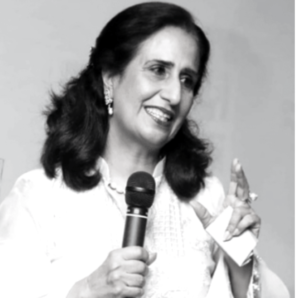
Naela Chohan
Naela Chohan is a career diplomat and an artist. As a seasoned and veteran diplomat, ambassador Chohan has assumed a leadership position in eight different Pakistani diplomatic missions on five different continents. Along with only a handful of other diplomats, Naela Chohan represents the first and senior-most cohort of women to rise to the highest echelon of Pakistan’s Ministry of Foreign Affairs. Canada’s weekly foreign policy Embassy Magazine in January, 2008 described her by saying that “though slight in stature and soft in speech, Naela Chohan accounts for 50 per cent of the Pakistani foreign service’s most potent power couple.”
Having started her diplomatic career on the China Desk at Pakistan’s Ministry of Foreign Affairs, she has been a proponent of a strong Pakistan-China Alliance premised on multifaceted cooperation. Naela Chohan is also committed to the prohibition of global Chemical Weapons, being the first civilian and woman to head the National Authority on the Implementation of the Convention on the Prohibition of Chemical weapons in Pakistan. She is responsible for having conceived or restored several Pakistani landmarks including the Plaza de Pakistan in Buenos Aires, Argentina. She was the first female foreign diplomat to be formally received by the Iranian Government after the 1979 Revolution. Naela Chohan was unanimously elected Chairperson for three consecutive years of Asia Pacific Centre (APDC), Kuala Lumpur.
Naela Chohan has served as High Commissioner of Pakistan to Australia, where she laid emphasis on bolstering bilateral ties, therein prioritizing the enhancement of security, agricultural, educational and economic relations. She has previously served as Pakistan’s Additional Foreign Secretary for the Middle East and Africa, prior to which she was the Ambassador of Pakistan to Argentina, Uruguay, Peru and Ecuador, where she has been a vocal proponent of stronger ties between Pakistan and Latin America. She is an alumnus of Quaid-e-Azam University and the Kennedy School of Government at Harvard University.
Beyond her diplomatic career, Ambassador Naela Chohan is a strong advocate of Women’s Rights through the medium of visual arts, and exhibitions of her art have taken place on five Continents. She has continued to create awareness about various social and humanitarian issues internationally including at the UN. Her most notable work is “Encaged” at her solo painting exhibition entitled Souffrance, which is kept on permanent display at the UNESCO headquarters in Paris since 2002. According to UNESCO, “Cest une voix visuelle. Forte par la coluer et la compositition des image” (She is a visual voice. Strong in colours and in composition of images). Ambassador Chohan received her formal training in visual arts from Malaysian Institute of Arts (MIA), l’ecole Nationale Superior des Beaux Arts, l’ecole de Louvre. She has a Diploma in Trompe l’oiel from Ateliers du Carrousel, Palais de Louvre.
She retired from her Diplomatic Service in Pakistan’s Foreign Affairs on 5th May 2018, and is since is pursuing her “Give Back” to the youth of Pakistan by opting teaching at her alma mater and other strategic organisations and institutions, in addition to actively taking up her artistic talent.
Participant in: August 2019 Fellowship: The Arts as a Tool for Peacebuilding
Thouiba Galad
Thouiba Galad is a Programme Assistant for Human Rights and Governance at the European Union Delegation in Sudan. Prior to this, she worked at the United Nations High Commission for Refugees, and at AECOM International (USAID). She has a diploma in Peace and Development from Bahri University and a masters in Gender and Migration, and has carried out research on human trafficking in Eastern Sudan since 2013.
Participant in: April/May 2019 Fellowship: Peacebuilding and Women’s Meaningful Participation in Peacebuilding Processes; MENA Focus
Marwa Khaled
Marwa Khaled is a humanitarian worker and gender equality activist. She is currently a WASH Officer at UNICEF in Aden, a role that includes programme management and implementation, alongside communication and networking. She is also involved in data collection and analysis, and collaborates with local stakeholders and other members of the development community, including NGOS, the UN, and bilateral agencies, in the WASH sector in particular. She has several years of experience of working on gender equality, conflict resolution, and women’s empowerment.
Participant in: April/May 2019 Fellowship: Peacebuilding and Women’s Meaningful Participation in Peacebuilding Processes; MENA Focus
Pinar Akpinar
Pinar Akpinar is a scholar at the Conflict Resolution and Mediation Stream of Istanbul Policy Center. She is currently Project Manager of Dialogue and Sustainable Conflict Resolution in the Kurdish Question and Polarization in Turkey Project. Pinar received her PhD from the School of Politics, International Relations and Philosophy (SPIRE), Keele University with her dissertation entitled ‘An emerging mediator on the periphery: Turkey’s mediations in the Syrian-Israeli talks and in Somalia’. Her research interests lie in the intersection of conflict resolution and foreign policy with a focus on mediation, peacebuilding, Turkish foreign policy and the Middle East. Pinar taught at various universities including Sabancı University and Keele University. Between 2014-2014, she was lecturer at the Department of International Relations and Vice Director at Center for International Conflict Resolution, Yalova University. She was a visiting scholar at the School for Conflict Analysis and Resolution at George Mason University in 2013.
Participant in: April/May 2019 Fellowship: Peacebuilding and Women’s Meaningful Participation in Peacebuilding Processes; MENA Focus
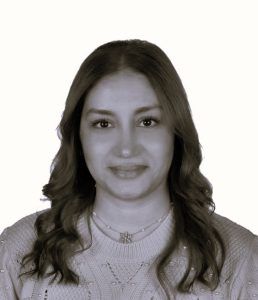
Mais Al-Lobaidy
Mais Al-Lobaidy is a passionate individual committed to growth, community, and academic excellence. Originally from Syria, she shows resilience and curiosity in pursuing opportunities that broaden her perspective and skills.
With a background in Social and Behavioural Change, Ditetics, and Public Health, Mais is interested in leadership, community development, social cohesion, technology, and innovation. Her experiences have fostered appreciation for cultural exchange and global collaboration, motivating her to engage in initiatives across Syria, Lebanon, Zimbabwe, Nepal, Sri Lanka, Bangladesh, and Afghanistan.
Beyond academics, Mais is involved in the humanitarian field, which has strengthened her ability to adapt, lead, and work in diverse environments. She cares about justice, children’s rights, and seeks opportunities for personal and professional growth.
Joining the Scotland Bound Borders Foundation is an exciting step, providing a platform to expand her horizons, connect with like-minded people, and contribute to an international community.
Looking ahead, Mais aims to foster peaceful, cohesive communities, using her skills to make a positive impact.
Participant in: April/May 2019 Fellowship: Peacebuilding and Women’s Meaningful Participation in Peacebuilding Processes; MENA Focus
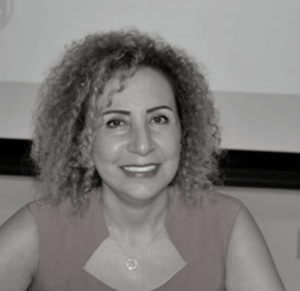
Lama Kannout
Lama Kannout is a Syrian feminist, political activist, and researcher, and is currently the executive director of the Syrian Feminist Lobby in Beirut. She earned a BA in Interior Design, and owned and directed Lama Advertising Agency between 1992 and 2014. She was a member of the political office of the Arab Socialists Movement from 2000 to 2008, and has co-founded several civil society organisations. She is also an executive office member of the Musawa organisation, chairperson of the board of directors of the Syrian Centre for Citizenship, and coordinator of the studies committee in the Syrian Feminist Lobby. Ms Kannout participated in the indirect talks of Gevena II in 2014 as a member of the follow-up committee of the Syrian Women Initiative for Peace and Democracy.
Participant in: April/May 2019 Fellowship: Peacebuilding and Women’s Meaningful Participation in Peacebuilding Processes; MENA Focus
Khouloud Mansour
Khouloud Mansour is one of the founding members of the Syrian Women Initiative for Peace and Democracy, supported by UN Women. She is also a founding member of the Syrian’s Women Political Movement. Khouloud has extensive experience in humanitarian and development response, UN functions, refugees and migration, civil society, transitional justice, and conflict mitigation. Alongside her practitioner experience, she has extensive academic background in Conflict Prevention, and International Peacebuilding with an MA in Middle Easter Studies from Lund University, Sweden and Postgraduate Diplomas in Conflict Prevention, Resolution, and Reconciliation from John Hopkins University.
Participant in: April/May 2019 Fellowship: Peacebuilding and Women’s Meaningful Participation in Peacebuilding Processes; MENA Focus
Rida Al Tubuly
Rida Al Tubuly is a Co-Founder and Director of the organisation Together We Build It, an NGO that works towards the promotion of human rights and women’s political & economic empowerment. Dr. Rida Al-Tubuly fights for women’s rights and is interested in issues such as gender equality and political empowerment of women. Ms. Al-Tubuly is the executive manager of the 1325 Network in Libya, a network which advocates on UNSCR1325 (2000) in Libya, and a co-author of the first Libyan Civil Society Monitoring Report on UNSCR1325 (2000). She is a Professor of Pharmacology at the University of Tripoli. She holds an MSc from the University of Poland and was awarded her PhD from the University of London in 1997.
Participant in: April/May 2019 Fellowship: Peacebuilding and Women’s Meaningful Participation in Peacebuilding Processes; MENA Focus
Mona Zeineddine
Mona Zeineddine is a member of the litigation team at the Syrian Centre for Media and Freedom of Expression, a grassroots human rights organisation. Her work largely focuses on civil society and women’s participation and developing and implementing comprehensive litigation, communications and advocacy strategies. She holds an MSc In Global Governance and Diplomacy from the University of Oxford and a BA in Political Studies from the American University of Beirut.
Participant in: April/May 2019 Fellowship: Peacebuilding and Women’s Meaningful Participation in Peacebuilding Processes; MENA Focus
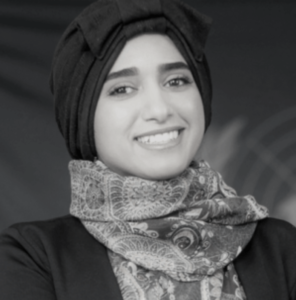
Zuha Al-Hammadi
Zuha Al-Hammadi is a campaigns and communications professional specializing in global advocacy, social impact campaigns, and strategic engagement across diverse audiences and stakeholders. Her work focuses on designing initiatives that address complex societal issues such as misinformation, polarization, and social cohesion, translating these challenges into compelling narratives that encourage dialogue, participation, and collective action.
Zuha has international experience across humanitarian, diplomatic, and corporate environments. She has worked with organizations including the United Nations, the Yemen Embassy, and Médecins Sans Frontières (MSF). These experiences shaped her interest in communication as a tool for advocacy, behaviour change, and crisis response in complex global contexts.
At Allianz, Zuha contributes to the development of global campaigns that promote unity, responsible information engagement, and social awareness. Her work includes shaping campaign narratives, engagement strategies, and activations that bring people together around shared values and collective action.
Originally from Yemen, Zuha maintains a strong connection to the region and is particularly interested in how campaigning can support humanitarian advocacy and crisis response in conflict-affected contexts. She aims to bridge international communication expertise with regional understanding to amplify voices, foster dialogue, and support communities navigating complex challenges.
With a background in laboratory medicine and a strong interest in neuroscience and human behaviour, Zuha combines scientific curiosity with creative communication to design campaigns that resonate, encourage critical thinking, and strengthen connections across cultures.
Participant in: April/May 2019 Fellowship: Peacebuilding and Women’s Meaningful Participation in Peacebuilding Processes; MENA Focus
Elif Kalan
Eilf Kalan is a co-founder of, and trainer at Conflictus Consultancy on Conflict Resolution and Co-founder of İhtiyaç Haritası project based in Turkey. Currently, she has been a consultant to GIZ Youth Leaders for Social Cohesion (between refugee and host communities) program, to UNWOMEN Turkey in Gender Sensitive Refugee Response Programs and to other UN agencies and international organizations. Moreover, she has been a consultant to various peacebuilding and conflict resolution related, and social development focusing projects. Since 2005, she has been working within civil society sector at the local, national and international levels for developing conflict resolution and peacebuilding, local development, public and civil engagement contents and programs for various organizations such as Youth Association for Habitat, UNDP, UNICEF, UNWOMEN, and universities such as Sabancı University, Kadir Has Universityy, Bilgi University, Muğla Sıtkı Koçman University and Coventry University.
Participant in: April/May 2019 Fellowship: Peacebuilding and Women’s Meaningful Participation in Peacebuilding Processes; MENA Focus
Ghaida Rishmawi
Ghaida Rishmawi is a Gender & NGO Management expert with demonstrated experience in Project Management, civil society and social work, emergency & relief Programs, Capacity Building and Community Development. Her 16 years work experience in Middle East includes 14 years working in International NGO & Emergency Relief Programs in different countries; Palestine, South Sudan, Turkey, Jordan, Iraq, and Italy at senior management positions where she has been worked with some of the International and local donors as; USAID, EU, JICA, UNTF,CIDA, UN/HPF, DFID, OFDA, UKAID, German-MOFA, German-BMZ, and Various UN agencies.
Participant in: April/May 2019 Fellowship: Peacebuilding and Women’s Meaningful Participation in Peacebuilding Processes; MENA Focus
Rezan Khattab Ali
Rezan Khattab Ali holds a Master’s degree in Sociology and Social Policy, obtained from Kurdistan University-Hawler, in 2010. Since 2011, she has been a member of the teaching faculty in the Social Work Department at the College of Arts, where her academic speciality lies in gender studies. Her research focuses on gender awareness and its associated issues within the Kurdistan Region of Iraq. Alongside her research commitments, she teaches across a broad range of subjects, including direct practical social work, family therapy, casework skills, case management, social change, and approaches to solving social problems.
Participant in: April/May 2019 Fellowship: Peacebuilding and Women’s Meaningful Participation in Peacebuilding Processes; MENA Focus
Arththi Sathananthar
Arththi Sathananthar is Lecturer at the Faculty of Arts at the University of Groningen. She completed her PhD in English at the University of Leeds and gained her Associate Fellowship at the British Higher Education Academy. She is also editor of the Tamil Academic Journal. Her research is positioned at the intersection of life writing and postcolonial studies with a focus on diaspora, transculturalism, and home. Her work explores the socio-political dimensions of life narratives, in particular memoirs, and argues for this genre as an alternative form of historiography. Her work has appeared in the Journals of Women’s Writing, Intercultural Studies, and Algerian Journal of Research and Human Studies among others, as well as in several Routledge edited collections.
Participant in: August 2019 Fellowship: The Arts as a Tool for Peacebuilding
Sawssan Abou Zahr
Sawssan Abou Zahr is an independent Lebanese journalist who perceives her profession as a medium to promote democracy, peace and human rights and exert social activism. She worked for 16 years with Annahar, the leading newspaper in Lebanon. Her writings in Arabic focused on Arab Spring issues and emerging democracies, women causes and human rights, Syrian and Palestinians refugees and Islamic radical movements. Through her work, she covered political events and human rights issues from several countries around the world and notably Afghanistan and Libya, where she focused on new political systems, women rights and peace building efforts after the wounds of war.
Sawssan works on mapping local peace building actors as a partner in Lebanon for Peace Direct, whose website Peace Insight is a leading source on peace building efforts throughout conflict zones in the world. She contributes to comprehensive reports, case studies and research projects with other correspondents in the network. On her blog, she writes articles in English on internal reconciliation, human security and refugee issues, especially women.
She works with Women Human Rights Defenders in the MENA and the regional coalition supporting them. Her role is consultancy, proof reading and editing the web material and producing manuals and reports in Arabic.
Sawssan served in 2016 and 2018 as a jury member for Tomorrow’s Peacebuilders Award. She was a speaker at World Press Freedom Day in Jakarta in 2017 on portrayal of Syrian refugees in Lebanese media media, took part in several international forums on journalism and women empowerment, as well as panels at International Peace Institute in New York on countering violent extremism and peace building.
Participant in: December 2018 Fellowship: Peacebuilding and Women’s Meaningful Participation in Peacebuilding Processes
Khin Lay
Khin Lay is a women’s rights activist and the founding director of Triangle Women Organization. She is dedicated to promoting the status of women in Myanmar through individual empowerment and structural reforms. Her organization works to build the capacity of the women leaders to assume leadership roles in politics and public life. Through her organization, Khin Lay is a leading advocate for legal and policy reforms that promote gender equity and women’s empowerment. She is also leading efforts to protect women and girls who are survivors of sexual and gender-based violence.
After the coup in Myanmar on February 1, 2021, Khin Lay and her family went into hiding and eventually escaped Myanmar. Since her escape, she has worked to support the democracy movement and continues to provide direct support to women who face increased threats of S/GBV under the military junta. She is a Reagan-Fascell Democracy Fellow at the National Endowment for Democracy, and recently established the Women’s Advocacy Coalition-Myanmar together with other prominent women leaders, which seeks to promote gender equity in the democracy movement and in the on-going political negotiations around Myanmar’s future and serves as a coordinator as well. She is now serving as an advisory board member of Ministry of Human Rights, National Unity Government.
Before establishing Triangle Women Organization, Khin Lay was a prominent political activist and youth leader for the National League for Democracy. She has also held numerous other roles, including as an Eisenhower Fellow, a chair of the Access To Justice Initiative, a steering committee member of Women’s Organization Network, the Country Coordinator for Freedom House, and a Program Consultant on Gender and Land Rights for Landesa Rural Development Institute. She holds a B.Sc. and M.Sc from Yangon University.
Participant in: August 2018 Fellowship: Peacebuilding and Women’s Meaningful Participation in Peacebuilding Processes
Pranjali Singh
Pranjali Singh is the Programme Coordinator of the Children’s Art Museum of Nepal. Her projects are mainly art-based workshops that address social issues and allow participants to express their emotions. Her recent projects include: Paint for Peace project with Youth victims of war in Sri Lanka, Safe Spaces for Conflict Victim Women and Girls in Nepal, Establishment and mobilization of Peace Scholarship Fund for Children of Armed Conflict Victim of Nepal, Temporary Learning Centres (TLCs) for Earth Quake victim children and girls of Nepal. Her recent projects include: Safe Spaces for Conflict Victim Women and Girls in Nepal, Establishment and mobilization of Peace Scholarship Fund for Children of Armed Conflict Victim of Nepal, Mental health awareness through art based workshops conducted in Temporary Learning Centers (TLCs) for Earth Quake victim children and girls of Nepal, Paint for Peace project with Youth victims of war in Sri Lanka.
Participant in: August 2018 Fellowship: Peacebuilding and Women’s Meaningful Participation in Peacebuilding Processes
Saloni Singh
Saloni Singh is founder chair of DidiBahini, a NGO working on gender equality and social equity issues in Nepal. She is also one of the founding members of Shantimalika (a national network of women peace builders) and Nepal\’s national network to work on UN SCR # 1325 called 1325 action Group . She was also one of the EC Members of ASPBAE (Asian South Pacific Association of Basic and Adult education, she represents South Asia in the global executive committee. She also holds the position of Gender Focal Point for South Asia and Steering Committee member of GPPAC (Global Partnership on Prevention of Armed Conflict) and Regional Steering Group member of South Asia Regional Center for Strategic Studies. Ms. Singh is also one of the founder executive members of Asia Pacific Women in Politics (APWIP) network as well as founder co-chair of Nepal Participatory Action Network (NEPAN). Saloni Singh has Masters Degree in Economics from Tribhuban University of Nepal , a degree in Social Development from at St. Francis Xavier University of Canada. At present she is visiting scholar in Coady International Institute, St. FX. University, Canada and also pursuing her PHD in Economics. Ms Singh is founder chair of Coady Alumni Association of Nepal (CAAN).
She has been extensively involved in development programmes for more than two decades in Nepal and almost all the countries of South Asia like Pakistan, Afghanistan, Sri Lanka and Bangladesh.
Participant in: August 2018 Fellowship: Peacebuilding and Women’s Meaningful Participation in Peacebuilding Processes
Bushra Hyder
Bushra Hyder is the Executive Director of Qadims Lumiere, an O and A Level institute in Peshawar, Pakistan, serving over 2,000 students. She has pioneered the integration of peace education into the school’s curriculum, making it the only institution in Pakistan to have done so. This innovative model employs creative writing, theatre, and group work to develop conflict transformation, critical thinking, and leadership skills among students. Following its success, the model has expanded to ten other private schools and five madaris.
Bushra has received professional training at the School of International Training (Vermont), Inclusive Security (USA), and Beyond Borders (Scotland). A Goldman Sachs 10,000 Women Fellow (2010), she was also selected as an emerging leader for the Women in Public Service Institute, USA. As a master trainer with PAIMAN Trust, she has developed training manuals on conflict transformation and peacebuilding, trained 2,000 educated young people from conflict zones, and worked directly with 100 extremist and vulnerable youth using PAIMAN’s innovative reformation model. She has additionally trained parliamentarians and police in early warning and response mechanisms for countering violent extremism.
Participant in: August 2018 Fellowship: Peacebuilding and Women’s Meaningful Participation in Peacebuilding Processes
Sarah Arumagam
Sarah Arumagam is an Attorney-at-Law, who also works as a consultant in the areas of Violence Against Women (VAW), women, peace & security. Previously she was Programme Director at Young Womens Christian Association, Sri Lanka spearheading programmes on VAW, Peace with Justice and Democratic Citizenship. She is a former National Vice President of Young Women’s Christian Association of Sri Lanka which is affiliated to the World YWCA. Her overall work involved promoting women’s rights and peace with justice.
Participant in:
August 2018 Fellowship: Peacebuilding and Women’s Meaningful Participation in Peacebuilding Processes
August 2019 Fellowship: The Arts as a Tool for Peacebuilding
Ianthi Gunawardana
Ianthi Gunawardana, Vice Chairperson of the Kandurata Community Development Foundation (KCDF) Sri Lanka, has provided leadership to the Team at the KCDF in mobilizing the community to be vigilant with regards to issues involving violence against women and children. This work was implemented in close collaboration with the Community Policing Network in the respective project locations. The work carried out by KCDF has also been successful in improving the livelihoods of low-income groups in the project locations. Ianthi Gunawardena is also a member of the Association for Development and Peace through Community Action (ADAPCA) which has worked with different ethnic communities to work towards achieving sustainable peace. Ms. Gunawardena has a professional Diploma from the Institute of Personnel Management and from the London Chamber of Commerce. She has a total of 40 years’ work experience in the private and public sectors in Sri Lanka.
Participant in: August 2018 Fellowship: Peacebuilding and Women’s Meaningful Participation in Peacebuilding Processes
Salma Yusuf
Salma Yusuf is a peace practitioner and mediator from Sri Lanka. She specialises in policy and process development, strategic advocacy, and thought-leadership. She has previously worked as a public official in Government, a university lecturer and researcher, a journalist, and a civil society activist nationally and internationally. In recognition of her professional contributions, she has received leadership awards from the U.S. Department of State, the Foreign Ministry of France, and the European Union. She has a Master of Laws in Public International Law from Queen Mary University of London and a Bachelor of Laws (Honours) from the University of London. She has completed specialised fellowships at the University of Toronto, the University of Canberra and the American University of Washington.
Participant in:
August 2018 Fellowship: Peacebuilding and Women’s Meaningful Participation in Peacebuilding Processes
August 2022 Fellowship: The Arts as a Tool for Peacebuilding
Zozan Alosh
Zozan Alosh is a founding member of the Syrian Women Initiative for Peace and Democracy, and has dedicated her recent work to raising awareness of women’s voices in the Middle East. She is a founding member of the Syrian Women Peace Maker Conference which brought over one hundred Syrian women together and concluded with a statement of unity overcoming the significant political divides between the different groups. Zozan is also a journalist and has worked as TV presenter at Ronahi TV in Belgium.
Participant in: November 2016 Fellowship: Peacebuilding and Women’s Meaningful Participation in Peacebuilding Processes
Lamia Abusedra
Lamia Abusedra is the Co-Founder of the Forum for Democratic Libya, a Benghazi based NGO. She also co-founded the Libyan Coalition of NGOs in 2011, where she was responsible for International Affairs. Lamia was the Head of International Relations Administration under the National Transitional Council’s Office for Culture and Civil Society, and served as the Deputy Minister of the Ministry of Information in 2014.
Participant in: August 2016 Fellowship: Peacebuilding and Women’s Meaningful Participation in Peacebuilding Processes
Yasmine Masri
Yasmine Masri serves as Country Director for Lebanon and Syria with Kvinna till Kvinna. She holds a Master’s degree in International Relations from the Lebanese American University in Beirut, with a thesis focused on the role women have played in ending civil wars and rebuilding peaceful societies. With expertise in Women, Peace and Security (WPS), peacebuilding, and gender, she has a demonstrated history of working in non-profit management, and has overseen several women’s empowerment, peacebuilding, and feminist projects across Lebanon and Syria.
Participant in: May 2018 Fellowship: Peacebuilding and Women’s Meaningful Participation in Peacebuilding Processes
Azza Maghur
Azza Maghur is a lawyer and human rights activist. She is an expert on the technical committee of the UNSMIL/UNDP reconciliation project, and was the only woman member of the February Commission to amend the Constitutional Declaration (2014). She has spoken at numerous international conferences on various aspects of democracy, gender equality, and constitutional rights. She also works for growth in the community through initiatives encouraging women’s participation in cultural activities, and seeks to increase gender equality within communities through such initiatives. She has also published numerous collections of short stories.
Participant in: May 2018 Fellowship: Peacebuilding and Women’s Meaningful Participation in Peacebuilding Processes
Dr. Enas Saleh R. Abduassalam
Dr. Enas Saleh R. Abduassalam is an Ophthalmic General Practitioner at the Tripoli Eye Hospital, Libya, with extensive volunteer experiences with civil society organisations in Libya. She is a passionate advocate for giving women a voice in the medical field, a field that is hugely impacted by all aspects of conflict. She is also a member of Medical Build Up Company for School Health, a programme that examines school children for chronic illnesses. She is a member of the Red Cross and previously managed the charity In Order to Be. During the Libyan revolution, she volunteered in hospitals using her medical skills to treat the wounded. She has held a number of volunteer roles fundraising and event planning for charities.
Participant in: May 2018 Fellowship: Peacebuilding and Women’s Meaningful Participation in Peacebuilding Processes
Zainab Langhi
Zainab Langhi is Assistant Officer and Social Media Team Leader at the Libyan Women’s Platform for Peace, an organization working to ensure women remain central to life in Libya, emphasizing inclusive transition, women’s rights, youth leadership, economic participation, constitutional reform, and education. Prior to this, she held several other positions in the organization, including coordinating various campaigns seeking to empower women and recognize the diverse roles they play.
Participant in: May 2018 Fellowship: Peacebuilding and Women’s Meaningful Participation in Peacebuilding Processes
Hivin Kako
Hivin Kako is the country director of the Maram Foundation for Relief and Development. She is also studying for a Master’s degree in International Development (Conflict, Security and Development) at the University of Birmingham. Previously she was an Executive Director at the BAHAR Relief organization, spokesperson for the Syrian Observatory for Human Rights in London, and the Syrian Women’s Network in Turkey. Her work has focused on raising awareness of complex gender issues in Syrian culture and how these issues are affected by conflict.
Participant in: May 2018 Fellowship: Peacebuilding and Women’s Meaningful Participation in Peacebuilding Processes
Jeeda Alhakim
Dr. Jeeda Alhakim is a bilingual (English/Arabic) Counselling Psychologist with over 15 years’ experience supporting wellbeing across humanitarian, public-sector, corporate, and community contexts. She holds a Doctorate in Counselling Psychology and postgraduate qualifications in psychotherapy and higher-education teaching. She is a Senior Lecturer and researcher at a London university, where she teaches on doctoral-level psychology programmes and contributes to research on trauma, wellbeing, and culturally responsive practice. Alongside her academic role, she works clinically and consultatively with organisations to develop trauma-informed approaches that attend to both individual experience and wider organisational systems.
Jeeda works at the intersection of mental health, culture, and organisational wellbeing. Her practice integrates psychological science, trauma-informed care, and cultural sensitivity to help individuals, teams, and communities foster wellbeing, strengthen connection, and lead change with awareness and integrity. She is particularly interested in creating sustainable transformation at the personal, organisational, and cultural levels, and in supporting people to build communities of care and belonging. Jeeda has delivered workshops and consultancy for a wide range of organisations, including global NGOs and multinational companies, as well as smaller community-based and faith-informed organisations, tailoring her work to diverse cultural and operational contexts. Jeeda’s practice is grounded in psychological research, trauma-informed and social justice principles, and culturally sensitive frameworks. She delivers sessions in both English and Arabic and brings a reflective, evidence-based perspective to conversations about wellbeing, power, and change within organisations.
Participant in: May 2018 Fellowship: Peacebuilding and Women’s Meaningful Participation in Peacebuilding Processes
Sawsan Abou Zainedin
Sawsan Abou Zainedin is the Chief Executive Officer of Madaniya, a Syrian led civic initiative bringing together more than 250 civil society organisations to reclaim political agency of Syria’s civic space. Trained as an architect and urban development planner, she brings a decade of experience in development, policy research, and multidisciplinary approaches to the Syrian conflict through her work with leading international organisations and key Syrian institutions.
She has lectured at universities including McGill, Bath, UCL, and the Istituto Superiore di Politica Internazionale, and has published with respected universities and research centres such as Carnegie Middle East, Chatham House, AUB, AUC, UCL, among others.
Sawsan is a member of IFIT’s Syria Resource Group and Depolarization CoP and of GIZ’s HLP Expert Network. A Chevening scholar, she holds an MSc in Urban Development Planning from the Bartlett’s Development Planning Unit of UCL. She also earned a postgraduate diploma in Integrated Planning and Urban Strategies from the Institute of Housing and Urban Development Studies at Erasmus University and a bachelor’s degree in architectural engineering from the University of Aleppo.
Participant in: May 2018 Fellowship: Peacebuilding and Women’s Meaningful Participation in Peacebuilding Processes
Yaman Al-Qadri
Yaman Al-Qadri is an active member of the Syrian diaspora community, advocating non- violent movements against oppression. In 2012 she was detained in Syria and consequently sought political asylum in Canada where she resumed studying and completed a BSc degree in Psychology at Concordia University. In 2012 she spoke at the UN regarding human rights violations in the detention facilities of Syrian authorities. She is currently studying for a Master’s degree in Psychosocial and Psychoanalytical Studies: Refugee Care at the University of Essex, UK.
Participant in: May 2018 Fellowship: Peacebuilding and Women’s Meaningful Participation in Peacebuilding Processes
Ghadah Hasan
Ghadah Hasan has over seven years of experience as a humanitarian worker at the UN Office for the Coordination of Humanitarian Affairs (UNOCHA) in Sana’a, Yemen. Prior to this she was a supervisor, and teacher of English at the Modern American Language Institute in Sana’a. She has a Master’s degree in Business Administration in which her thesis research focused on the level of satisfaction of affected people with humanitarian assistance in conflicts.
Participant in: May 2018 Fellowship: Peacebuilding and Women’s Meaningful Participation in Peacebuilding Processes
Mariam Safi
Mariam Safi is the founding Director of the Organisation for Policy Research and Development Studies (DROPS), a leading think-tank in Afghanistan committed to strengthening democratic ideas and values through its policy-orientated research, training and advocacy programmes that aim to increase women’s participation and representation in policy discourse. In 2014, she was honoured by the Diplomatic Courier media network as one of their Top Global Women in 2014 for her contribution to the research community in Afghanistan. Her areas of interest and expertise include peace-building, human security and countering violence extremism and offering a grassroots and gendered perspective on issues effecting Afghanistan and the region of South Asia.
Participant in: August 2018 Fellowship: Peacebuilding and Women’s Meaningful Participation in Peacebuilding Processes
Savitri Sharma
Ms. Savitri Sharma, is Country Director of Find Your Feet ( a British Charity ) in India and Nepal and Secretary to Saksham India Trust, Treasurer and board member of ‘Credibility Alliance’ New Delhi and a certified Coach of Plan International , Washington DC . But then those are just dry designations that do no justice to someone who is a passionate changemaker in the lives of those who need it the most- especially tribals, adolescents and women from deprived communities.
As a young girl though, when she had to write that mandatory school essay on life’s ambitions, she had little idea about the development sector. Yet even in those growing up years in Kalimpong, when life’s goals were decided more by circumstances than choice, she was an enthusiastic and committed teacher in her beautiful home town ‘ Kalimpong ’.
After a brief stint in teaching, Ms Sharma moved to Allahabad where she coordinated an integrated programme supported by the Belgian citizens that worked to better the health, education and economic status of deprived communities. Life’s calling had finally found her. She then moved to CARE, India where from field officer who had to walk her way to some of UP’s most remote villages and teach women the importance of thrift and entrepreneurship, she rose to the position of Project Manager. Next came a two year stint as Director of Prerana Population Resource Center, Lucknow, an organisation which catered to the training and capacity building need of hundreds of NGOs engaged in implementing a mammoth USAID funded programme on Population and Reproductive Health. This was not a final destination for her unquestionable commitment to the disadvantaged communities; she then joined ‘Swedish Organization for Individual Relief’ a development partner of Swedish Government as Country Director for India and contributed significantly in the areas of Inclusive Education, Disability, Sustainable livelihood and a major funder to the Tibetan Refugees Administration in Dharamsala.
30 years after she first knocked on a door to talk about how women mattered if change had to be real and long lasting, she heads the Find Your Feet India and Nepal offices she established solely and nurses the eight year old Saksham India Trust to implement projects that empower, among others, brick kiln workers and traditional weavers and various tribal communities in Chhattisgarh, Jharkhand, Uttarakhand , Uttar Pradesh, Tamilnadu and Assam.
Her list of expertise is long term Strategic Planning, Program Management, Liaison & Networking, research and analyses, establishing linkages, handling interstate partnerships- being just some of them.
The position closest to her heart though is being a certified coach for Plan International -USA – a role that calls upon her to mentor women to develop the skills to find success in every area of life. This is a role she has played for women across the world- from Manju-a Raji tribal toiling in the mountains of Pithoragarh to Tina, who heads Youth First, an NGO in Madagascar, to Hadeel in Iraq who supports women to start their enterprise in refugee camps of Iraq and to Megha from SEWA, Gujarat who is replicating SEWA model of women cooperative in Afganistan.s She is also one of the select few in the world to be trained, certified and sponsored by USAID as a master coach on “Women in management” and sponsored for certification and training by the Bill and Melinda Gates Foundation as coach on “Women in Leadership”.
Ms Sharma holds degrees in Commerce, Education, Social Work in addition to certification on NGO management from Bond Institute, UK in NGO management, and has multiple language proficiencies.
She is, most definitely one of the finest embodiments of the belief that if the world is to change, women have to be that change.
Participant in: August 2018 Fellowship: Peacebuilding and Women’s Meaningful Participation in Peacebuilding Processes
Ruqaia Tabasum
Ruqaia Tabasum, a native of Kashmir (Indian side) is currently working as a Research and Programme Manager at the organisation, Equality for Peace and Democracy, based in Kabul. Her main areas of work include monitoring women in peace and security, women’s responses to radicalisation in Afghanistan and Pakistan, improving the economic independence of women in women protection centres, and engaging civil society for improved and accountable local service delivery. Previously, she has worked for a number of international organisations including International Centre for Research, and Jameel Poverty Action Lab, where she mainly focused on girls’; education, and women’s access to health services in rural areas of India. She is currently pursuing her PhD in Human Rights with a focus on Human Rights diplomacy in Indian Foreign Policy. Ruqaia also volunteers for many women’s networks and welfare organisations in India and Kashmir.
Participant in:
August 2018 Fellowship: Peacebuilding and Women’s Meaningful Participation in Peacebuilding Processes
August 2019 Fellowship: The Arts as a Tool for Peacebuilding
Lubna Rafiqi
Lubna Rafiqi is a psychologist committed to fostering healthier relationships with the self and the world. She views healing as the foundation for greater awareness, mindfulness, and conscious living, contributing to a more humane global community.
With a Master’s in Psychology and over a decade of healing experience, Lubna supports women in conflict-affected regions facing trauma, displacement, and instability. Her integrative approach combines evidence-based psychology with nature-based practices—such as immersive pottery, natural nutrition, music and silence retreats, and conscious travel—to promote trauma recovery, self-exploration, emotional resilience, and inner peace in challenging environments.
Holding a Bachelor’s in Education and pedagogy training, she facilitates individual and group sessions, creating safe, structured spaces for deep reflection, collective healing, and authentic connection. These are especially vital for women peacebuilders, activists, and community leaders in conflict zones.
Lubna empowers these women to reclaim agency, achieve personal transformation, and cultivate sustainable well-being, aligning with inclusive peacebuilding and the Women, Peace and Security agenda.
Participant in:
August 2018 Fellowship: Peacebuilding and Women’s Meaningful Participation in Peacebuilding Processes
August 2019 Fellowship: The Arts as a Tool for Peacebuilding
Tamara Abu Nafiseh
Tamara Abu Nafiseh is a Project Coordinator for GBV in Emergencies programme within the UN Relief and Works Agency for Palestine Refugees in the Near East. Prior to this, Tamara has been a Gender Officer within the same department, and has written a number of publications on gender, GBV, and women’s experiences.
Participant in: November 2017 Fellowship: Peacebuilding and Women’s Meaningful Participation in Peacebuilding Processes
Alissar Al-Joundi
Alissar Al-Joundi is a programme associate of the UNDP Strategic Advisory Unit where she works on early recovery and livelihood initiatives as well as promoting youth-led initiatives focussing on peacebuilding and social cohesion. Before this she worked with the Syria Trust for Development, as well as the International Organization for Migration in Syria, where in both cases she focussed on psychosocial support.
Participant in: November 2017 Fellowship: Peacebuilding and Women’s Meaningful Participation in Peacebuilding Processes
Jida Malas
Jida Malas is a trustee of Refugee Action Kingston in Southwest London, where she contributes to governance, strategic development, and community impact initiatives supporting refugees and people seeking asylum. Through this role, she helps strengthen programmes focused on advocacy, integration, welfare support, and empowerment, working to ensure that displaced individuals can rebuild their lives with dignity and opportunity.
Jida is currently completing a PhD in Social Anthropology at University of St Andrews. Her doctoral research explores migrants’ lived experiences in Western societies, with particular attention to identity formation, belonging, cultural negotiation, and the social and structural challenges shaping their everyday lives. Her work examines how migrants navigate shifting social landscapes, reconstruct identity, and respond to pressures related to integration, representation, and marginalisation.
Bringing together rigorous academic research and hands on community engagement, Jida bridges scholarship and practice. Her work reflects a deep commitment to social justice, inclusion, and amplifying migrant voices within both academic and civic spaces.
Participant in: November 2017 Fellowship: Peacebuilding and Women’s Meaningful Participation in Peacebuilding Processes
Lana Khattab
Lana Khattab is as an international development practitioner and researcher. She has worked as Principal Researcher and Project Coordinator for a country-wide Knowledge, Attitude and Practice (KAP) Study for UNICEF in Lebanon and was previously Programme Officer for International Alert’s gender team where she worked on the MENA region as well as globally. Her areas of focus encompass gender equality, displacement and conflict and social cohesion. Before joining International Alert, she has worked in the Gender Unit of the UNRWA in Amman, Jordan. Lana holds an MSc in Middle East Politics from SOAS, University of London and a BA in International Relations from the University of Birmingham
Participant in: November 2017 Fellowship: Peacebuilding and Women’s Meaningful Participation in Peacebuilding Processes
Sarah Karkour
Sarah Karkour is the foreign affairs officer at National Coalition of Syrian Revolution and Opposition Forces (SOC), who works on promoting, strengthening, and activating SOC relationships with the international and regional actors in order to achieve the objectives of the Syrian revolution and implement SOC political vision for a sustainable peace solution in Syria. She worked previously as public relations manager where she developed her skills in political communication and media relationships that helped her build a comprehensive deep understanding of the challenges of the Syrian issue. She holds a B.A. in private law, and a master in Islamic Studies, specialization in comparative law (positive and Islamic law). Currently, she is working on finishing the thesis of her second master in Global Affairs on the role of international organizations in Syria since 2011. She is an alumna of Beyond Borders Women in Conflict1325 fellowship, SciencesPo “Femmes D’avenir en Méditerranée”, International Visitor Leadership Program “Young Political and Economic Leaders”, and Women’s Democracy Network.
Participant in: May 2018 Fellowship: Peacebuilding and Women’s Meaningful Participation in Peacebuilding Processes
Yafa Kasem
Yafa Kasem is currently Senior Registration Assistant at the United Nations High Commissioner for Refugees in Damascus, where she works closely with Iraqi and non-Iraqi refugees. She has also been part of a number of technical units including refugee registration and community-based protection. Her work at UNHCR has also involved deployment to Tunisian-Libyan borders in Zarzis, South Tunisia, where she worked on protection and counselling for vulnerable refugees.
Participant in: November 2017 Fellowship: Peacebuilding and Women’s Meaningful Participation in Peacebuilding Processes
Saoussen Ben Cheikh
Saoussen Ben Cheikh is a humanitarian aid worker and activist from Tunisia with a particular focus on the protection of human rights and gender inclusivity in the peace and reconciliation processes in the MENA region. Saoussen is currently Programme Manager at Internews (MENA), leading a programme coaching media and civil society in conflict zones. Prior to this, Saoussen has been a Humanitarian Affairs Officer at Médecins sans Frontièrs, and a research analyst at various international organisations. Saoussen has a PhD in Contemporary History – Peace and Conflict in MENA, and an MSc in International Cooperation.
Participant in: November 2017 Fellowship: Peacebuilding and Women’s Meaningful Participation in Peacebuilding Processes
Abeer Al-Mutawakel
Abeer Al-Mutawakel is a development and peacebuilding practitioner with extensive experience working at the intersection of humanitarian response, conflict, and governance. She currently serves as the Project Manager of the Hikma Fellowship for Public Leaders at DeepRoot Consulting, where she supports emerging leaders from Yemen in strengthening their leadership, negotiation, and policy engagement skills. Prior to this role, she worked with DeepRoot as a researcher and consultant, contributing to research, dialogue initiatives, and policy discussions focused on conflict resolution and regional stability.
Abeer’s research background includes work with the Center for Development and Emergency Practice (CENDEP) at Oxford Brookes University. Her work focuses on development and humanitarian interventions in conflict-affected contexts, with particular attention to forced migration, peacebuilding, and the empowerment of marginalized groups. While much of her work centers on Yemen, she has also researched the Syrian refugee crisis, examining the social and economic impacts of Syrian refugees and displaced populations on host communities in Lebanon.
Earlier in her career, Abeer served as the general manager of one of the largest hospitals in Yemen, where she gained firsthand experience navigating complex operational and humanitarian challenges in a fragile context.
Abeer holds a Master’s degree in Development and Emergency Practice from Oxford Brookes University and a Bachelor’s degree in Information Management Systems. Her work reflects a strong commitment to inclusive peacebuilding and strengthening the role of emerging leaders in shaping more resilient societies.
Participant in: November 2017 Fellowship: Peacebuilding and Women’s Meaningful Participation in Peacebuilding Processes
Bushra Nasr Kretschmer
Bushra Nasr Kretschmer is an economic development and financial inclusion specialist with over 20 years of experience working in fragile and conflict-affected settings, with a strong focus on Yemen. Her work brings together women’s economic empowerment, private sector development, financial inclusion, and policy reform, with particular interest in the role of women in economy driven peacebuilding, recovery, and long-term resilience. She is also a fellow of Beyond Borders Scotland, where she engages in dialogue and initiatives that promote peace, justice, and inclusive development
Participant in: November 2017 Fellowship: Peacebuilding and Women’s Meaningful Participation in Peacebuilding Processes
Enas Alarashi
Enas Alarashi is a Member of Women Technical Advisory Team to UNOSESGY. Enas graduated from the University of Sana’a with a BA in accounting in 1994. Enas also is an Advisor at the British Embassy, Yemen. Prior to her work at the Embassy, Enas was Yemen Portfolio Coordinator at the UNDP Mine Action Programme and was formerly Financial Manager at the Gender Sensitive Economy Project implemented by the Women’s Economic Empowerment Association.
Participant in: November 2017 Fellowship: Peacebuilding and Women’s Meaningful Participation in Peacebuilding Processes
Marwa Baabbad
Marwa Baabbad is a researcher with a specific interest in the security sector. Marwa has previously worked as a development professional with Saferworld in Yemen, where she led on gender, peace, and security projects in Yemen, Egypt, Libya, Syria, and neighbouring countries. Marwa was also a member of the Youth Consultative Group for the UNDP’s Arab Human Development Report.
Participant in:
November 2017 Fellowship: Peacebuilding and Women’s Meaningful Participation in Peacebuilding Processes
August 2022 Fellowship: The Arts as a Tool for Peacebuilding
Safa Algoum
Safa Algoum is a Protection Cluster Associate at UNHCR Yemen, where she works with government, National/International NGOs and UN agencies to coordinate humanitarian efforts. Prior to this, Safa was a Community Services Associate within the same office, and as a Field Officer for the Orphans and Child Welfare Programme at Islamic Relief Yemen, where she focused primarily upon the protection of children and awareness campaigns.
Participant in: November 2017 Fellowship: Peacebuilding and Women’s Meaningful Participation in Peacebuilding Processes
Salama Bakhalaa
Salama Bakhalaa is a Humanitarian Affairs Officer in the UN Office of Coordination of Humanitarian Affairs in Yemen. Salama has previously worked as National Programme Officer at the International Organisation for Migration, where she previously worked as an Emergency and Post-Crises Programme Officer, and as Senior Programme Assistant. Salama has an MA in International Development Management, and was the recipient of the Chevening Scholar Award in 2013/14, and a Peace Leadership Student (USAID) in 2008/9.
Participant in: November 2017 Fellowship: Peacebuilding and Women’s Meaningful Participation in Peacebuilding Processes
Shada Nasser
Shada Nasser is a Yemeni lawyer and human rights activist dedicated to protecting the rights of women in Yemen. She was the first female Yemeni lawyer and the first female lawyer not to cover her face in Yemen courts.” In 1996, Shada founded an all-female law firm “Pioneer Female Lawyers and represents Yemeni women and girls as a defence lawyer. As an opponent of child marriages in Yemen, she provides legal support for girls to get divorced. In 2008, she succeeded in divorcing Nujood Ali Alahdal, who at the time of divorce was ten, making her the youngest divorcee in the world. Ali’s case encouraged other young female brides in Yemen to seek divorce, and Shada, together with Nujood Ali, were elected Women of the Year at Glamour Magazine. Shada also worked as a lawyer for several NGO’s such as Doctors without Borders, World Doctors and Best Yemen.
Participant in: November 2017 Fellowship: Peacebuilding and Women’s Meaningful Participation in Peacebuilding Processes
Shatha Al Harazi
Shatha Al-Harazi is works at the Office of the Special Envoy of the Secretary General for Yemen, and was a delegate at the Yemen National Dialogue Conference, where she was a member of the National Issues, Transitional Justice, and National Reconciliation Committee, and was elected as rapporteur. Al-Harazi is the co-founder of a youth initiative called Inclusion for women and youth engagement in the decision-making process. Inclusion worked as a watchdog enabling women and youth to monitor the performance of the interim Yemeni government. In 2012, Al-Harazi received the Global Trailblazer award by Vital Voices for her work.
Participant in: November 2017 Fellowship: Peacebuilding and Women’s Meaningful Participation in Peacebuilding Processes
Dalia Mahir
Dalia Mahir is a Human Rights Officer at the United Nations Assistance Mission for Iraq, where she supports legislation efforts related to minorities; documents human rights violations; and supports local institutional reform. Prior to this, she was Assistant Cultural Affairs Officer at the US Embassy in Baghdad, and a Field Officer with the United States Institute of Peace, where she worked on Civic Education and Interfaith Dialogue. In 2014, she was awarded an FCO Chevening Fellowship Award.
Participant in: May 2018 Fellowship: Peacebuilding and Women’s Meaningful Participation in Peacebuilding Processes
Rajeshwari Krishnamurthy
Rajeshwari Krishnamurthy is the Deputy Director of the Institute of Peace and Conflict Studies and the coordinator of its Centre for Internal and Regional Security (IReS). Her research focuses on the security dynamics and politics in South Asia (specifically Afghanistan, Pakistan and Bangladesh), Central Asia and West Asia. Prior to joining IPCS, she was the Content Manager at Gateway House: Indian Council on Global Relations, Mumbai. She is also Member, Advisory Council, Women & Peace Studies Organization (formerly RIWPS), Afghanistan; and has been a South Asia Visiting Fellow at the Henry L Stimson Center, Washington, DC.
Participant in: August 2017 Fellowship: Peacebuilding and Women’s Meaningful Participation in Peacebuilding Processes
Ezabir Ali
Ezabir Ali is a Commonwealth professional and Harvard Alumnae from Kashmir. In the course of her 25 year career, she has served in the public and non-profit sectors of the State of Jammu and Kashmir. For more than two decades, she has done extensive work on the psycho-social healing and economic development of women in Kashmir. Ezabir established SAMANBAL, a “safe inclusive space” for women across all divide to dialogue and build solidarity to improve relationships amongst women of three regions, who were deeply divided over a lengthy period of time. SAMANBAL’s have been established in all the three regions of the State.
Ezabir Ali is Member of Commonwealth Women Mediators and Founder/ Secretary to EHSAAS, a Non-Governmental Policy group working on advocacy on rights of women in J&K State. She is also Board Member, Jammu and Kashmir Voluntary Health & Development Association and Consultant/Partner Conciliation Resources, Gender Project, South Asia.
Ezabir Ali completed her basic education in Nyeri, East Africa. She holds a bachelor’s degree in psychology and Education, from Kashmir and Masters in English from Kashmir University and Masters in Development Studies from University of East Anglia, Norwich.
Participant in:
August 2017 Fellowship: Peacebuilding and Women’s Meaningful Participation in Peacebuilding Processes
August 2019 Fellowship: The Arts as a Tool for Peacebuilding
Atia Anwar Zoon
Atia Anwar Zoon is the Director of the Women Wing at Kashmir Institute of International Relations (KIIR) and is assistant Professor in English at Federal Urdu University Islamabad. Since 2013 Atia has been involved with women’s issues in Kashmir, working in particular on initiatives to make the voice of women heard in the Kashmir conflict. Atia has been closely involved in a project supported by Conciliation Resources called Cross Lines of Control, focussing on the role of women in peacebuilding. Atia has also been part of numerous research projects related to women and gender. She has participated in the United Nations Human Rights Council since 2014. She holds a PhD in English linguistics and wrote her thesis on ‘Working Women: Negotiating Multiple Identities in conflict settings: A case study of women of disputed Pakistani Administered Kashmir’.
Participant in:
August 2017 Fellowship: Peacebuilding and Women’s Meaningful Participation in Peacebuilding Processes
August 2019 Fellowship: The Arts as a Tool for Peacebuilding
Ashima Kaul
Ashima Kaul is Managing Director and founder of Yakjah Reconciliation and Development Network. She is also local correspondent in Kashmir for Insight on Conflict, Peace Direct and a consultant with Women in Security, Conflict Management and Peace. A member of the Hindu Pandit minority, she is the coordinator of Athwaas, a WISCOMP initiative for conflict transformation in the provinces of Jammu and Kashmir. In addition, Ashima is an independent journalist, contributing to national daily newspapers such as The Times of India, The Hindustan Times, and The Hindu since 1991. Ashima has completed numerous trainings and was awarded ‘100 Women Achievers of India’ in 2016 by Ministry of Women and Child Development’.
Participant in: August 2017 Fellowship: Peacebuilding and Women’s Meaningful Participation in Peacebuilding Processes
Dr. Mariyam Shakeela
Dr Mariyam Shakeela worked in numerous diverse fields prior to becoming a Cabinet Minister. She was Chairman of the Executive Board at World Health Organization and has held numerous ministry positions including Minister of Health, Minister of Health and Gender, Minister of Environment and Energy, Acting Minister for Gender Family and Human Rights, and Acting Minister of Foreign Affairs. She also headed the National Drug Agency, Environment Protection Agency, Maldives Energy Authority, Meteorological services and the Biosphere office.In addition, she is chairperson to several entities which include Maldives Network to Empower Women (MNEW); Institute of Counselling and Psychotherapy (ICP); Addu Women’s Association (AWA) and International Medical and Diagnostic Centre (IMDC). She is also a member of Civil Service Action Group (CSAG), of UN WOMEN, Multi Country Office. She holds a PhD in Management and Leadership from the Curtin University of Technology.
Participant in: August 2017 Fellowship: Peacebuilding and Women’s Meaningful Participation in Peacebuilding Processes
Musarat Amin
Musarat Amin is Post-doctoral Fellow with the South Asia Centre of London School of Economics and Political Science. Furthermore she is Assistant Professor at the Department of Defence and Diplomatic Studies at Fatima Jinnah Women University Rawalpindi. Prior to this, she held posts at numerous Universities in Pakistan, including as an Assistant Professor of Peace and Conflict Studies. She has numerous publications to her name and has often appeared on national media as an analyst. She holds a PhD in International Politics from Jilin University China. She also received a gold medal at BZU Multan University for her M.A in International Relations.
Participant in: August 2017 Fellowship: Peacebuilding and Women’s Meaningful Participation in Peacebuilding Processes
Gulalai Ismail
Gulalai Ismail is a women’s rights expert and activist with over 13 years of experience in the field of gender equality and advocacy. She is founder of Aware Girls, the first young women and girls’ led organisation in Pakistan. She is currently working on a number of projects including the “Advocacy for the Right of Secondary Education of All Girls” project in Khyber Pakhtunkhwa Province with the support of the Malala Fund. Prior to this, she was Monitoring and Evaluation Officer at RISE, and a Fundraising Officer at Coalition on the Rights and Responsibilities of Youth. Gulalai is the recipient of the 2016 Chirac Peace Prize as well as the 2014 International Humanist Award and was among the 100 Leading Global Thinkers according to Foreign Policy Magazine. She holds a PhD in Biotechnology from Quaid-i-Azam University Islamabad-Pakistan.
Participant in: August 2017 Fellowship: Peacebuilding and Women’s Meaningful Participation in Peacebuilding Processes
Mossarat Qadeem
Mossarat Qadeem is the Executive Director of PAIMAN Alumni Trust, a nonprofit organization promoting socio-political and economic empowerment of marginalized Pakistanis. Ms Qadeem also founded and expanded Amn-O-Nisa, a coalition of women leaders and peace activists from Pakistan, Afghanistan and India who raise their voices to advocate for a peaceful region. She is currently a member of the International Review Panel of Global Community and Resilience Fund (GCERF) and Women Alliance for security Leadership (WASL). Ms Qadeem has published two books and numerous other publications. She holds a Masters degree in political science and gender studies from the Institute of Social Sciences, Netherlands and an MPhil in international politics (focusing on conflict studies) from University of Hull. She has also been a fellow at the Harvard Kennedy School of Government, USA.
Participant in: August 2017 Fellowship: Peacebuilding and Women’s Meaningful Participation in Peacebuilding Processes
Radhika Hettiarachchi
Radhika Hettiarachchi is team leader with The Community Memorialisation Project at Search for Common Ground. Previously she was Managing Director with the Development Strategies Group. She also set up ‘Herstories -Mothers’ Voices of Resilience and Hope (www.herstoryarchive.org)’ which is: “an archival project of peoples’ histories and oral histories, particularly that of women, whose voices are often lost in the retelling of war narratives”. Radhika is a development practitioner, curator and researcher with over 10 years experience working in the field of conflict transformation, recovery and peace building. She holds a Master of Science (M.Sc.) in Research and Development Management from the London School of Economics.
Participant in: August 2017 Fellowship: Peacebuilding and Women’s Meaningful Participation in Peacebuilding Processes
Sujatha Wijetilleke
Sujatha Wijetilleke is a professional trainer focused on providing development-training services. She specializes in work related to: women’s’ issues and livelihoods and helping with the development of rural communities.She is currently programme advisor for the WEWAV Network/Sarvodaya Women’s movement. She was President of the Sarvodaya Women’s Movement between 2008 and 2013 and regional Programme Manager for the Norwegian Church Aid South Asia Region. Furthermore she has been senior Project Director for CARE international and Programme Officer with the Swedish International Development Cooperation Agency. Sujatha is a team member of the 2017 UN Women Study on Employment of women with Disabilities and ILO Study on Women’s Migration for employment. She holds a PhD in education from Central Pacific University.
Participant in: August 2017 Fellowship: Peacebuilding and Women’s Meaningful Participation in Peacebuilding Processes
Hana El-Gallal
Hana El-Gallal has Ph.D. in Law from Bern University of Bern, Switzerland with many articles published on youth, gender equality, extremism and a book published by Peterlang Switzerland: Islam and the West: Limits Freedom of Religion. She is the CEO of CAREITC for training and legal consultancy working on mediation and conflict resolution and conflict sensitivity and peacebuilding. She is a Senior Advisor to Multiple International organizations such as: IPTI consultancy on Civil Society, Peacebuilding and Inclusivity and member of IPTI Steering Committee, World Bank & Middle East Institute Consultancy on Reconstruction of Libya, UN Department of Political Affairs & Conflict Prevention and Peace Forum Consultancy on the Reforms of the UN Coordinators’ Role in the MENA Region, Peaceful Change International consultancy on Conflict and Gender Sensitivity Analysis. She was formerly Senior Law Adviser and researcher with specific focus in international Humanitarian Law, women’s rights, gender equality, children protection, and refugee protections with the Center for Strategic Studies, University of Jordan. Former Law Professor in University of Benghazi Libya. Former Minister of Education, Benghazi, Libya and Multiple Governmental Agencies and Sub-committees, Government of Libya, Benghazi, Libya such as Constitutional Committee, Transitional Justice Committee, etc.
Participant in: August 2017 Fellowship: Peacebuilding and Women’s Meaningful Participation in Peacebuilding Processes
Israa Aljuboori
Israa Aljuboori is a Gender Officer at the United Nations Development Programme – Integrated Reconciliation Programme in Iraq. Her role is supporting and enhancing the role of women in the reconciliation and peace building process in Iraq. Prior to this she was the Project Officer of the Inclusive Governance Programme in the UNDP Iraq that focus on enhancing the capacity and effectiveness of Iraqi Parliament in constitution reform and parliamentary effectiveness. She has also had other roles with UNDP and USAID that supported security sector reform, role of law, Human Rights, access to justice sustainable development and job creation.
Israa has a Masters Degree in Global Management from University of Salford, Manchester, and a BA in Chemistry Science from University of Mustansiriya, Baghdad.
Participant in: November 2017 Fellowship: Peacebuilding and Women’s Meaningful Participation in Peacebuilding Processes
Mahab Madani Alkurkash
Mahab Madani is the head of Governance and Economic Diversification Pillars with the United Nations Development Programme UNDP and the Youth programme and Accelerator Lab Focal Point for UNDP Iraq.
Mahab has extensive experience on program and project management holding senior management positions with UN agencies, International Organizations, multiple functions, and industries leading and handling large scale projects in multi-functional areas and on a global basis.
Mahab holds B.Sc degree in Computer Engineering and PhD degree in Political Science and International Relations.
Participant in: November 2017 Fellowship: Peacebuilding and Women’s Meaningful Participation in Peacebuilding Processes
Ayat Mneina
Ayat Mneina is a Libyan researcher, writer, and feminist activist whose work examines women’s movements, cultural production, and political transformation in post-2011 Libya. She founded ShababLibya during the 2011 uprising to counter the regime’s media blackout through verified, on-the-ground reporting. Her research explores how storytelling, media, and visual culture shape social movements, collective memory, and feminist politics. She has contributed to research, documentation, and storytelling initiatives focused on women and girls in the MENA region. Ayat holds an MSc in Public Health from the London School of Hygiene and Tropical Medicine and is based in Canada at present.
Participant in: November 2017 Fellowship: Peacebuilding and Women’s Meaningful Participation in Peacebuilding Processes
Miesem Mobruk
Miesem Mobruk is an activist dedicated to the empowerment of Libyan women and youth. Trained as a dentist, Miesem became actively involved in the Libyan civil society after the 2011 uprising. Since then, she has co-founded “Tripoli’s Goodness”, an NGO dedicated to the security of displaced Libyans living in camps, and has worked with the International Medical Corps as a program officer of a refugee community centre in Tripoli. She is a member of various Libyan youth and women empowerment organisations, such as “Together We Build It” and “I am Tawfiq”, the latter of which she also co-founded. She is presently the project manager for the Libyan Foundation for project development, and is a practicing dentist in Tripoli.
Participant in: November 2017 Fellowship: Peacebuilding and Women’s Meaningful Participation in Peacebuilding Processes
Amal Khayat
Amal Khayat has worked for organisations such as OneVoice Palestine, Kids4Peace, and Yala Palestine, an organisation led by young leaders. She is a Fellow of the Solutions Not Sides programme run by One Voice Europe, and a member of a regional network of female activists and human rights defenders. Amal has an MSc in Global Community Development Studies, as well as an MSc in Public Health, which she completed having previously worked as a pharmacist.
Participant in: November 2017 Fellowship: Peacebuilding and Women’s Meaningful Participation in Peacebuilding Processes
Reem Bdaiwi
Reem Bdaiwi is a Humanitarian Affairs Officer with the United Nations Office for the Coordination of Humanitarian Affairs, where she is a member of the GBV working group, working closely with women and GBV issues. Prior to this she worked as National Coordinator for Relief International in Erbil. Reem also volunteers with the International Rescue Committee and Refugee Focus Resettlement Service.
Participant in: June 2017 Fellowship: Peacebuilding and Women’s Meaningful Participation in Peacebuilding Processes
Sarah Boukhary
Sarah Boukhary joined HD’s Yemen team in October 2020, prior to which she worked for 6 years at the Women’s International League for Peace and Freedom (WILPF) where she managed its international advocacy work on Yemen, Syria, Iraq, Libya, Palestine, Lebanon and Egypt, and represented WILPF at the United Nations in Geneva. She was primarily working with women political leaders and feminist activists from Yemen and different MENA countries in their participation in peace processes, inclusion in multiple tracks of mediation, and engagement with international human rights mechanisms. Prior to joining WILPF, Sarah worked at the Arab NGO Network for Development, Première Urgence – Aide Médicale Internationale, and interned at Human Rights Watch in Beirut. Sarah is an Erasmus Mundus scholar and holds an M.A. in Human Rights Policy and Practice from Gothenburg University, Roehampton University and the Arctic University of Norway, as well as a B.A. in Political Studies from the American University of Beirut (AUB). She is a Fellow in the Women in Conflict 1325 Fellowship and speaks fluent Arabic, English, and French.
Participant in: June 2017 Fellowship: Peacebuilding and Women’s Meaningful Participation in Peacebuilding Processes
Fathya El-Madani
Fathya El-Madani is the Director of the Libyan Women’s Capabilities Development Centre (NATAJ), which focuses on women’s rights, particularly abused women’s legal rights. Fathia was also one of 40 women who participated in and wrote the Libyan Women’s Peace Treaty (2015).
Participant in: June 2017 Fellowship: Peacebuilding and Women’s Meaningful Participation in Peacebuilding Processes
Huma Chughtai
Huma Chughtai is governance, gender & development, parliamentary & judicial reform specialist with her first degree in LL.B (Law & Sharia) and her second degree in LL.M (International Human Rights Law). She has a professional standing of almost thirty years of having worked initially as a Lawyer, then as an internationally trained Legislative Researcher in the Parliament of Pakistan, and later as a Governance, Law, Human Rights and Gender Specialist for over a decade and a half. Rights of women with disabilities, women in disasters and conflict, and gender and energy are some of the key areas she has worked in. Her focus of work has been reform based in the realm of parliamentary, legal, judicial, electoral, and law enforcement. Gender perspectives and human rights remain cross-cutting in all her work. Ms. Chughtai has served in various key positions within the government as well as within the development sector. Most of her work in the government has been of technical nature with the Parliament, Ministries of Women Development, Law & Justice, and Human Rights. She is currently serving as permanent faculty and Director Programs with the Federal Judicial Academy, where she designs judicial education programs for the judges, prosecutors and court staff as well as imparts training to them.
Participant in: August 2018 Fellowship: Peacebuilding and Women’s Meaningful Participation in Peacebuilding Processes
Ghmera Krekshi
Ghmera Krekshi is a Senior Protection Officer at the Danish Refugee Council and a Senior Program Officer at the International Medical Corps, where she is responsible for supervising a Community Development Centre providing medical and social assistance to asylum seekers and refugees. Prior to this, Ghmera worked for ALWAFA, an NGO providing humanitarian services to refugees, asylum seekers, and vulnerable persons.
Participant in: June 2017 Fellowship: Peacebuilding and Women’s Meaningful Participation in Peacebuilding Processes
Muzna Dureid
Muzna Dureid is a Syrian-Canadian policy analyst and former refugee specializing in conflict resolution, gender justice, and humanitarian response, with over a decade of field experience in complex emergency settings, particularly in Syria. Since 2011, she has led critical initiatives addressing the Syrian crisis and its humanitarian impact.
Ms. Dureid is co-founder of the Syrian Women’s Political Movement, an initiative ensuring Syrian women’s meaningful participation in political transition and peace negotiations. She has led efforts to combat child and forced marriage among Syrian refugees and served as Senior Program Development Officer with the Syria Civil Defence (White Helmets), contributing to civilian protection and humanitarian coordination in active conflict zones. She has also served as Advocacy and Partnerships Manager at the Nobel Women’s Initiative.
Ms. Dureid holds a Master’s degree in Public Policy and Public Administration from Concordia University. Her policy and advocacy work has been recognized internationally, including the Canadian Excellence in Global Women’s and Children’s Health Award, the Canadian Association of Refugee Lawyers’ Award for Outstanding Advocacy in Defence of Refugee Human Rights, and Canada’s inaugural research award on Women, Peace and Security.
Noura Aljizawi
Noura Aljizawi is a senior researcher at the Citizen Lab at the Munk School of Global Affairs and Public Policy, University of Toronto. Her work focuses on human rights issues related to disinformation, digital authoritarianism, and digital transnational repression. She examines the evolving threats to civil society and provides insights into digital security and resilience.
Before her research career, Noura was a human rights activist in Syria, where she played a leading role in the peaceful uprising against the Assad regime. Her advocacy for democracy and justice led to her arrest and torture as a political prisoner.
Beyond her research, Noura serves on the board of the Center for Victims of Torture and contributes to Humanitarian Dialogue’s expert group on social media and conflict. She is also a member of Just Tech and the Migration Community’s steering committee. Her work on Security Planner, a platform that provides peer-reviewed recommendations for online safety, was recognized with the Excellence in Innovation Award from the University of Toronto.
Participant in: June 2017 Fellowship: Peacebuilding and Women’s Meaningful Participation in Peacebuilding Processes
Sabah Alhallak
Sabah Alhallak is a board member of the Syrian Women’s League and Syrian League for Citizenship. She is a women’s rights activist, focussing on women’s and citizens equal rights. Sabah is active in both international and national processes related to women’s representation in peace building and transition for a new democratic Syria. She is a member of Syrian Women\’s Initiative for Peace and Democracy,hosted by UN Women and she recently participated in a UN General Assembly event on Syria, meetings with the office of the Commission of Inquiry to Syria, events in the Human Rights Council and the CEDAW pre-session, in addition to other key meetings in the region. She is a member of the Syrian civil society room with the Mr. de Mistura team in the Geneva talks.
Participant in: June 2017 Fellowship: Peacebuilding and Women’s Meaningful Participation in Peacebuilding Processes
Maysam Fadel
Maysam Fadel is a seasoned program management professional with over 14 years of experience leading national and international organizations. She has a strong track record in community engagement, volunteer recruitment, capacity building, and stakeholder management, driving growth and impact across various sectors.
Currently, Maysam is the Manager of Volunteer & Student Services at WoodGreen Community Services in Toronto, where she enhances volunteer and student engagement through strategic partnerships and innovative communication strategies.
Her international experience includes roles at UNICEF, where she managed large-scale social protection programs and emergency responses in conflict zones, and at UNHCR, where she recruited and trained thousands of outreach volunteers to support families in need.
Passionate about community impact, Maysam serves on the board of Project Canoe and contributes to its Fund Development sub-committee. She also volunteers as a Representative on the Quality and Program Effectiveness Committee for Trillium Health Partners’ Board of Directors, advocating for human rights and social change.
Participant in: November 2017 Fellowship: Peacebuilding and Women’s Meaningful Participation in Peacebuilding Processes
Sema Nassar
Sema Nassar is a human rights defender with a focus on detainees and forcibly disappeared persons. Since the early stages of the Syrian conflict, she worked on documenting human rights violations and sexual violence in detention centers. Sema contributed to numerous reports and policy papers on documentation, gender-sensitive accountability, and legislation concerning missing persons, including work with the Conflict and Civicness Research Group at LSE IDEAS. She is a co-founder of multiple initiatives, such as the ‘We’ Network for WHRD in the MENA region and Urnammu for Justice and Human Rights, and and the Lattakia Coordination. Sema continues to share her expertise with civic actors and support feminist initiatives in the diaspora, and serves as an investigator with Dar Justice and as a research consultant at the LSE Middle East Centre.
Participant in: June 2017 Fellowship: Peacebuilding and Women’s Meaningful Participation in Peacebuilding Processes
Sinem Arslan
Sinem Arslan is an academic and researcher on peace and conflict studies, and a peace activist. Sinem was a parliamentary candidate and is currently working on three peace projects. She has written and talked extensively on conflict, terrorism, academic freedom, and civil war. She holds an MA in European Studies from the Bosphorus University and an MSc in Comparative Politics from London School of Economics. Sinem is currently completing her PhD.
Participant in: June 2017 Fellowship: Peacebuilding and Women’s Meaningful Participation in Peacebuilding Processes
Ahlam Al Bashiri
Ahlam Al-Bashiri works with Saheliya in Edinburgh, Scotland. Al-Bashiri was the alternative representative of Yemen to the IMO and the head of political affairs at the Embassy of the Republic of Yemen in London. Ahlam had worked for the Ministry of Foreign Affairs since 2008, during which time she was a member of the preparatory committee for establishing a women-representative electoral mechanism. She holds a BA in Political Science from the University of Sana’a and a diploma in International and Diplomatic Relations.
Participant in: June 2017 Fellowship: Peacebuilding and Women’s Meaningful Participation in Peacebuilding Processes
Quhramaana Kakar
Quhramaana Kakar has been leading and directing the organization she founded called ‘Women for Peace and Participation’ since 2013. Prior to this, she was Gender Advisor to the Afghanistan Peace & Reintegration Program (APRP) and Joint Secretariat of the High Peace Council. She has also held consultancy roles with EUPol and Atal, and was a Programme Officer at CAFOD. She won the N-Peace Role Model for Peace Award in 2012. She holds an MPhil in Sociology from the University of Cambridge and a Masters in Public policy from the Willy Brandt School of Public Policy in Germany.
Participant in: August 2017 Fellowship: Peacebuilding and Women’s Meaningful Participation in Peacebuilding Processes
Anan Abu Shanab
Anan Abu Shanab is the Legal Researcher and Advocacy Officer for Al-Haq Organisation, where she has conducted research into human rights issues and produced legal reports and briefings on the human rights violations and the use of force during protests. Anan is also a research assistant at the Australian National University in Ramallah, where she conducts research into the role of international human rights law and criminal law in Arab state formation. Prior to this, Anan worked with Human Rights Watch and the Civic Coalition for Palestinian Rights.
Participant in: March 2017 Fellowship: Peacebuilding and Women’s Meaningful Participation in Peacebuilding Processes
Rejna Alaaldin
Rejna Alaaldin is a lawyer and founder of legal advisory firm Kurdistan Legal Services. She is currently a National Law and Governance Consultant at the Ministry of Interior in the Kurdistan Regional Government, and also Programme Manager at Emma Organisation, where she works to increase the number of women in leadership and decision-making roles in Kurdistan. She is also the founder of the All for One network, working to establish a network amongst women and youth in the Kurdistan Region, promoting equality, education, and entrepreneurship.
Participant in: May 2018 Fellowship: Peacebuilding and Women’s Meaningful Participation in Peacebuilding Processes
Marwa Khobieh
Marwa Khobieh is the operations manager for Syrian Kids Foundation, which provides free education and medical services to refugee children, and established the Al-Salam School in Turkey. Marwa is also the director of the Canadian Alliances for Syrian Aid, which supports Syrian newcomers in Canada, and a project manager at the Syrian Canadian Foundation where she is responsible for establishing programmes to support Syrian’s arriving in Canada, working particularly with youth and women on issues such as empowerment and trauma recovery.
Participant in: March 2017 Fellowship: Peacebuilding and Women’s Meaningful Participation in Peacebuilding Processes
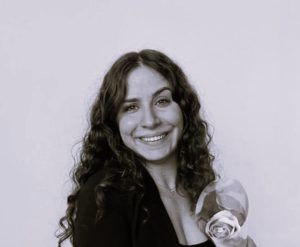
Maysa Ismael
Maysa Ismael, a Chevening Scholar, holds an MA in Sociology, specializing in Human Rights, Culture and Social Justice, from Goldsmiths, University of London. Her research focused on the vernacularization of women’s rights in IDP settings. In Damascus, Syria, she worked with the United Nations High Commissioner for Refugees and the International Organization for Migration.
In London, she has worked in the fields of freedom of expression, protection of civilians in conflict, and women, peace, and security (WPS). She has also collaborated with various organizations to advance the leadership, empowerment, and meaningful participation of refugees and migrants.
Participant in: March 2017 Fellowship: Peacebuilding and Women’s Meaningful Participation in Peacebuilding Processes
Samira Zair
Samira Zair is a founding member of the Syrian Women’s Network, which brings together female activists, journalists and academics. The Network aims to laws for full equality for women in the Syrian Constitution, and to integrate gender sensitive approaches to transitional justice, reconciliation and peace building processes. Samira is also the chair of the Syrian Women for a Citizenship-Bases State Committee.
Participant in: March 2017 Fellowship: Peacebuilding and Women’s Meaningful Participation in Peacebuilding Processes
Begum Zorlu
Begüm Zorlu is a researcher, freelance photo-journalist and translator. Whilst studying Democracy and Comparative Politics, Begüm provides advice on conflict resolution and current affairs for Gülseren Onanç, former vice chairwoman of CHP (Republican Peoples’ Party), peace and women’s rights activist. Begüm coordinated the Peace Journalism Project at Independent Communication Networkand is the founder and editor of the peace journalism website ‘Neynik’. Begüm was a teaching assistant of Modern Turkish History at Sabanci University and worked as a Research Assistant at the Ä°stanbul Policy Center. Her area of focus is social movements with an emphasis on the Kurdish Issue in Turkey, peace journalism, peace processes, Middle East and the Arab Uprisings.
Participant in: March 2017 Fellowship: Peacebuilding and Women’s Meaningful Participation in Peacebuilding Processes
Beilqes Alzawm
Beilqes Alzawm is the Human Rights Officer at the Embassy of Yemen in London, where she is responsible for strengthening bilateral relations between the British and Yemeni governments. Beilqes’ work focusses on humanitarian aid, press freedom and the abolishing of execution. She has also developed projects to tackle child and forced marriages in Yemen. Prior to joining the Embassy of Yemen in London, Beilqes was the Political and Economic Advisor for EU Affairs and the Embassy of Yemen in Hungary. Beilqes was the Sustainable Development & Gender trainer for the Women National Committee in Sana’a, where she led focus groups and trainings for women on sustainable business practices and gender rights. She has also developed projects to improve reproductive health in Yemen, and campaigned for the legal age of marriage to be raised to 18.
Participant in: March 2017 Fellowship: Peacebuilding and Women’s Meaningful Participation in Peacebuilding Processes
Manal Dammaj
Manal Dammaj is the second secretary at the Embassy of Yemen in London, prior to this she spent 10 years at the Ministry of Foreign Affairs in Yemen. During this time, Manal was an officer at the Arab World Affairs Unit, and a specialist in women’s and children’s affairs. Before joining the Ministry of Foreign Affairs, Manal worked with Islamic Relief on their Poor and Orphans Support Project, and with women and marginalised people in rural Yemen, and also spent time volunteering at a women’s centre for victims of domestic violence.
Participant in: March 2017 Fellowship: Peacebuilding and Women’s Meaningful Participation in Peacebuilding Processes
Hana Faidi
Hana Faidi is currently a project manager for the Economic Empowerment Project at Libyan Women’s Forum based in Tripoli, Libya. She is also the founder of Threads for Change, a non for profit organisation that seeks to uplift women economical through innovative micro-economic solutions to unemployment in rural communities in North Africa. She has been involved in a number of empowerment and human rights based programmes with Lawyers for Justice in Libya, Syrian Refugee Aid and the United Nations Intensive Summer Programme. Hana hold an MSc in Emerging Economies and International Development from Kings College London and a BA Hons in Political Science from McMaster University in Ontario, Canada.
Participant in: December 2018 Fellowship: Peacebuilding and Women’s Meaningful Participation in Peacebuilding Processes
Kathleen Thein
Kathleen Thein is a professional educator and passionate about women’s rights and peace security. She has made numerous interfaith peace talk on behalf of Hindu women representatives. Currently, she is the co-chair of Myanmar’s Teachers of English to Speakers of Other Languages committee, and regularly travels abroad to conduct workshop of TESOL conferences. Kathleen is heavily involved in interfaith dialogue talk in several organizations. She is also chair of the Hindu Women’s Association and promoting the importance of women program.
Participant in: August 2018 Fellowship: Peacebuilding and Women’s Meaningful Participation in Peacebuilding Processes
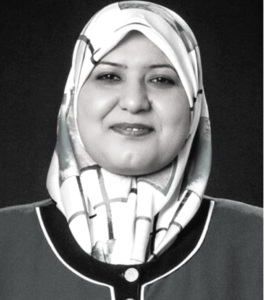
Feryal Alkaabi
Feryal Alkaabi is the Director of AWAN, an organisation working for the advancement of Iraqi women’s social, economic and political position through raising awareness and capacity building, and is a founding member of a group of CSO’s working on UN Security Council Resolution 1325. Feryal has contributed to numerous research and newspaper articles about violence against women and the political empowerment of women.
Participant in: June 2017 Fellowship: Peacebuilding and Women’s Meaningful Participation in Peacebuilding Processes
Razaw Ahmed
Razaw Ahmed is a lawyer with the Kurdistan Lawyers Syndicate and Humanitarian Liaison Officer with UNAMI. She has previously worked as a lawyer and advocate for the Institute for War and Peace Reporting, and for a range of NGOs and civil society organisations in Erbil and Sulaymaniyah. Razaw is also a fellow of the John Smith Trust Rule of Law programme.
Participant in: June 2017 Fellowship: Peacebuilding and Women’s Meaningful Participation in Peacebuilding Processes
Hadia Zarzour
Hadia Zarzour is the co-founder of non-profit organisations the Syrian Community Network. Having completed her undergraduate degrees at Damascus University, Hadia obtained a Fulbright Scholarship to complete her Master’s degree in Chicago in 2009, and has completed training in psychosocial support to mothers who have survived war and conflict. With the Syrian Community Network, Hadia develops treatment and rehabilitation plans for Syrian refugees in the US. In 2012, Hadia co-founded Insan for Psychosocial Support, a non-profit dedicated to the provision of support to Syrian children and adults in Turkey, Lebanon and Jordan.
Participant in: November 2016 Fellowship: Peacebuilding and Women’s Meaningful Participation in Peacebuilding Processes
Bara’ah Al Dalati
Bara’ah Al Dalati is doing an MSc in Political Economy of Emerging Markets at Kings College London. Currently she is preparing her dissertation which tries to explore the state-civil society relations with focus on humanitarian response. Before coming to London, Bara’ah worked in Damascus with UN agencies and international organizations like IOM, WHO and DRC on Livelihoods projects and HR. She also established and supported several local initiatives focusing on youth empowerment and capacity building for employment and social mobilization. As a professional activist, Bara’ah is interested in promoting peace and social justice through economic empowerment projects and bringing values to civil society work to achieve better impact.
Participant in:
December 2018 Fellowship: Peacebuilding and Women’s Meaningful Participation in Peacebuilding Processes
August 2022 Fellowship: The Arts as a Tool for Peacebuilding
Marina Haider
Marina Haider is Human Rights Officer for the UNOHCHR, where she is responsible for integrating gender into the monitoring of human rights violations in Yemen. She further works on protecting the rights of individuals that are affected by the current crisis as well as on the prevention of and response to Gender-Based-Violence in Yemen. She obtained a Master’s degree in Journalism and Mass Communication at Manipal University, India, and an undergraduate degree in Computer Science at Mosul University, Iraq. Before joining the UNOHCHR, Marina worked for UNICEF’s Education section on child protection and gender sensitivity. She also worked as a child protection officer at Save the Children.
Participant in: November 2016 Fellowship: Peacebuilding and Women’s Meaningful Participation in Peacebuilding Processes
Bilkis Abu Osba
Bilkis Abu Osba is Professor of Social Science at Sana’a University, Yemen. She obtained a PhD on political parties and democratic change and her research has further focused on gender and women’s participation in politics. During the elections in 2016, Bilkis campaigned for introducing a women’s quota to bring more women into decision-making positions and change society’s traditional image of women. Further, Bilkis is the first vice-chairwomen of the Supreme National Authority for Combating Corruption and is working with the Awam Foundation for Culture and Development.
Participant in: November 2016 Fellowship: Peacebuilding and Women’s Meaningful Participation in Peacebuilding Processes
Palwasha Hassan
Palwasha Hassan is the director of Afghan Women’s Educational Center. She holds a master’s degree in Post-war Recovery Studies from York University, UK and is a former fellow at the United States Institute of Peace. She is a dedicated Women’s Rights activist pioneering critical work for promotion of Women’s rights and civil society in Afghanistan that includes first women legal support organization Roazana, Women and street Children Center, Madadagar Women and Children Safe Home Network, and Irfan Cultural Center, among others. She is a strong advocate on women peace building and political participation. Ms. Hassan is born and raised in Afghanistan in her early teens she migrated with her family to Pakistan where she completed her school and acquired under grad degree in Science. In her school years she volunteered with a Women center for refugee women where she with few other women laid the foundation of Afghan Women Network, a visionary movement of women which is playing pivotal role in Women’s right lobby in the country from last twenty years.
Participant in:
August 2018 Fellowship: Peacebuilding and Women’s Meaningful Participation in Peacebuilding Processes
August 2019 Fellowship: The Arts as a Tool for Peacebuilding
Jamila Ali Rajaa
Jamila Ali Rajaa is an advisor to the Ministry of Foreign Affairs in Yemen and a senior mediator, researcher and analyst. Her recent work has focused on peace and security processes in Yemen and other Arab countries and Jamlia was a member of the Sa’ada Working Group of the National Dialogue Conference. Further, Jamila has provided consultation to a wide range of international and regional humanitarian and development agencies on different aspects of the Yemeni transition. She is also the founder and manager of Consult Yemen, a consultancy advising on politics, conflict resolution, media, human rights, gender and development. Jamila obtained a MA in Journalism at the American University in Cairo, Egypt and is a senior researcher, analyst and lecturer. She has published a number of papers and presentations on Yemen’s transition, state building, and women’s participation in peace processes. She was invited to speak at a conference about Yemen at Harvard University and has attended a fellowship at Stanford University on the rule of law, democracy and development.
Participant in: November 2016 Fellowship: Peacebuilding and Women’s Meaningful Participation in Peacebuilding Processes
Dr. Shaheen Afroze
Dr. Shaheen Afroze is Research Director and Head, Non-Traditional Security Studies Division and International Studies Division at the Bangladesh Institute of International and Strategic Studies (BIISS). BIISS is the premier think tank of Bangladesh established on 25 June 1978 by the Govt. of the People’s Republic of Bangladesh for the purpose of undertaking and promoting research and contributing to the development of objective and independent thinking on international affairs, security, and developmental issues. It is a statutory and autonomous institution and is affiliated with the Ministry of Foreign Affairs.
Dr. Afroze has an M.A degree in Contemporary History from the University of Dhaka. She did her Ph.D in International Relations from the University of Glasgow, UK, under Commonwealth Scholarship. Her major areas of interests are foreign policy and security of small states, non-traditional security studies including human security, peace and conflict studies, countering violent extremism and gender studies. She has edited a number of books and published a large number of articles in academic journals and books and also presented a large number of research papers in academic forums at home and abroad. She was awarded the Freedom Foundation Fellowship under which she produced a monograph titled “Women in Frontal Wars: The Liberation War of Bangladesh 1971.” She is one of the Editors of the BIISS Journal which is a quarterly peer reviewed journal.
Dr. Afroze is also an Academic Advisor in National Defence College, and Armed Forces War Course (AFWC) Mirpur, Dhaka. She served as a member for two terms in the International Research Committee of Regional Center for Strategic Studies (RCSS), Colombo, Sri Lanka.
Participant in: August 2018 Fellowship: Peacebuilding and Women’s Meaningful Participation in Peacebuilding Processes
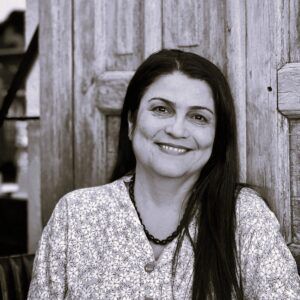
Bahar Munzir
Bahar Munzir is the General Director of the People’s Development Organisation (PDO), in Iraqi Kurdistan. PDO works to promote political participation, particularly of women and youth, to combat gender based violence, to promote human rights and gender equality, and also works with internally displaced people and refugees to improve their health and living conditions.
Participant in: March 2017 Fellowship: Peacebuilding and Women’s Meaningful Participation in Peacebuilding Processes
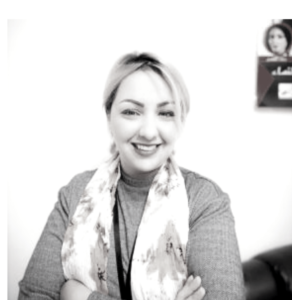
Saba Al-Nadawi
Saba A. Al-Nadawi assumed her role as Human Rights Officer on March 2014 with United Nations Assistance Mission for Iraq, Baghdad Office and relocated to Erbil during the Iraqi Crisis with Islamic State militants in Nineveh province. She had an official role with OHCHR Syria country office in 2018, where the main work was investigating and conciliating complaints received from the public concerning allegations of violations of the Human Rights Act. In missions in both Iraq and Syria part of these duties contributed to the publishing of seven reports on the Protection of Civilians in the Non-international Armed Conflict in Iraq, and five reports to the SG on the situation in Syria. These reports addressed all issues with respect to the human rights and identifies related problems in political, ethnic, racial, gender equality and socio-social issues.
She works closely with the Special Investigation Team from Geneva providing a vital link to the victims of ISIL violations, and preparing special meetings with Minority leaders and survivor. She was involved in meetings for the official visit by Special Rapporteur on minority issues Visit to Iraq, 28 February to 6 March 2016, also with UN Deputy High Commissioner for Human Rights Kate Gilmore during her visit to Iraq in April 2016, and the visit of Assistant Secretary General Ivan Šimonović, Assistant Secretary-General for Human Rights October 2014 and the visit of Adama Dieng of Senegal as his Special Adviser on the Prevention of Genocide 2015.
In 2017 and 2018, she presented on the situation of minorities and women survivors in the Minority Forum and during the Human Rights Council sessions to talk about recommendations for the post-conflict period.
She has worked with art city to present and highlight issues related to violations and abuses against the community post conflict in 2019 through a film festival on human Rights issues, and working on capacity building to the officials and civil society organizations to submit their shadow reports for the UPR 2019. Before joining the United Nations, in the course of her 10 year career she has successfully implemented many projects requiring a high level of coordination and networking. Her extensive communication with foreign and domestic partners has always displayed a strong focus on the field of Advocacy and defending of human rights.
An Iraqi national, Ms. Nadawi worked as an economic security officer at the International Committee of the Red Cross. She has experience and has published extensively in the fields of international relations, law, human rights, and development of national institutions. In an expert capacity, she has been a member La’Onf, the Iraqi Nonviolence Network and received John Humphrey Freedom Award from Canada 2009.
She has a graduate degree in agriculture engineering, an equivalent to master’s degree in law and comparative law from the Iraqi Institute for strategic Studies, and has also completed online studies on minority rights and armed conflict, human rights and humanitarian law. She is widowed; her husband having been killed by Al-Qaida 2008 and since that time she has worked hard to build peace and train women about the importance of overcoming the pain through peace-building.
Participant in: March 2017 Fellowship: Peacebuilding and Women’s Meaningful Participation in Peacebuilding Processes
Hadeel Hazim Majeed Altak
Hadeel Hazim Majeed Altak is a development professional with 20+ years of experience advancing gender equality, Women, Peace and Security (WPS), access to justice, and economic empowerment across Iraq and the MENA region.
She has proven expertise in leading complex programs, building strategic cross-sector partnerships, and driving evidence-based, inclusive advocacy at national and regional levels.
She is committed to creating meaningful impact through principled leadership, collaborative action, and sustainable development solutions.
Participant in: May 2018 Fellowship: Peacebuilding and Women’s Meaningful Participation in Peacebuilding Processes
Rihab Elhaj
Rihab Elhaj is the co-founder of the New Libya Foundation, an NGO which supports the development of Libyan civil society. As the President, and Executive Director of the NLF, she lead the organization through the implementation of fourteen programs and over 300 events, including five capacity building centers, two war-time humanitarian aid missions, three policy advocacy campaigns, and two extensive leadership programs, training over 3,000 activists and assisting in the establishment of 67 grassroots organizations. Rihab is currently based in the USA, and has served as a consultant and analyst to UNOCHA and PAX for Peace, and the World Bank, providing situational analysis and policy recommendations.
Participant in: March 2017 Fellowship: Peacebuilding and Women’s Meaningful Participation in Peacebuilding Processes
Shatha Qteshat
Shatha Qteshat is the Director of Community Development, International Relations and Projects at the General Union of Societies in Amman, Jordan. She has coordinated multiple projects including an initiative to support women’s inclusion in community empowerment, which helps to provide better basic services for underprivileged families. She also established a safe space centres for survivors of gender and sexual based violence. Shatha has been involved with multiple projects and organisations based around humanitarian assistance, women’s empowerment and community development and has held managerial and officer positions at General Union of Charitable Associations, UNICEF and CARE International all based in Jordan. She has a Bachelor of Public Administration from Yarmouk University – Jordan.
Participant in: December 2018 Fellowship: Peacebuilding and Women’s Meaningful Participation in Peacebuilding Processes
Rita Matar
Rita Matar is a Peace Building Coordinator for the UNDP Mechanism for Social Stability Component of the Peace Building Project in Lebanon. In her work she supports local level conflict-resolution, building mechanisms for social stability and sustainable peace building. Prior to this, Rita was a Training Program Associate at Expand Your Horizons, a project funded by USAID, and a Field Coordinator at UNDP.
Participant in: December 2018 Fellowship: Peacebuilding and Women’s Meaningful Participation in Peacebuilding Processes
Naziha Arebi
Naziha Arebi is a documentary filmmaker and photographer. Her films focus on telling human stories as a tool to instigate discussion and change, often with a focus on gender. She has directed and produced a number of documentaries on a range of topics, for example the female candidates in Libya’s first election and educational shorts on the Libyan Constitution and Reconciliation process. Naziha has worked for the BBC and Aljazeera and frequently works with Oxfam, Hivos and UN Women. Her photographic work as been exhibited around the world and has been published online and in print at a range of media outlets, including Le Monde. Naziha is a member of the Libyan Women’s Platform for Peace.
Participant in: November 2016 Fellowship: Peacebuilding and Women’s Meaningful Participation in Peacebuilding Processes
Rania Ali
Rania Ali is a Syrian Journalist and Filmmaker who has been based in Vienna, Austria, since 2016. Rania worked on filming the award-winning documentary ‘Escape from Syria’, which was published by the Guardian. She has also written several articles with a focus upon refugees and host communities. She currently works with several NGOs, including Swiss NGO Terre Des Hommes, as a journalist and advocate. She also presented at TEDxParis in 2017, and the annual TechFugees event.
Participant in: December 2018 Fellowship: Peacebuilding and Women’s Meaningful Participation in Peacebuilding Processes
Huda Nassar
Huda Nassar has been Director for the Middle East at the Awareness Foundation since 2008. She is responsible for the development and implementation of all Awareness Foundation initiatives in the Middle East, assisted by a highly qualified group of consultants. Born and raised in Syria, Huda received her MA in Pastoral Theology from Birmingham University, England.
When conflict followed swiftly on the heels of the Arab Spring, Huda developed a ground-breaking initiative to train young people to be Ambassadors for Peace in their communities. Helping women fulfil their personal goals while helping them to positively transform their communities through our Enterprising women Programme. Huda work with displaced and disadvantage children through Little Heroes programme to help rebuild those lives with purpose while planting the seeds of trust, understanding, reconciliation and love. Huda is working to extend this initiative to the rest of the Middle East.
Huda works to bridge new relationships of respect and understanding between the West and the Middle East. She gives talks and lectures at conferences and events in the UK, North America, Hong Kong and the Middle East, focussing on the importance of preserving and supporting the Christian presence and identity in the Middle East.
As Director for the Awareness Forum, Huda organises conferences, lectures, roundtable discussions and events both in the UK and the Middle East.
Participant in: December 2018 Fellowship: Peacebuilding and Women’s Meaningful Participation in Peacebuilding Processes
Sana Kikhia
Sana Kikhia is the Executive Director of the Syrian Legal Development Programme, a Syrian led human rights and international law organisation working on fighting impunity and advancing justice and accountability in Syria.
Participant in: December 2018 Fellowship: Peacebuilding and Women’s Meaningful Participation in Peacebuilding Processes
Sonia Ben Miled
Sonia Ben Miled is the Women, Peace and Security Programme Manager at the Tunisian NGO Aswat Nissa, whose mission is to integrate gender into public policy in Tunisia. Through her work with Aswat Nissa, Sonia has participated in all the stages of the preparation of the Tunisian 1325 National Action Plan. Sonia was previously involved in an advocacy campaign on the equal representation of women in political parties and in political parties’ electoral lists for the municipal elections. Sonia is part of the program Young leaders by the German Foundation Friderich Ebert. She took part in many trainings on women’s political participation led by Aswat Nissa and other organizations, namely a journalistic training on legal issues and the functioning of State institutions given by Barr Al Aman in partnership with CFI – Agence de coopération des medias, a communication training led by BBC Media Action, and a UN Women training on result-based management. Sonia published articles on women’s political participation in the HuffPost Tunisia and on Aswat Nissa’s website. Sonia holds a degree in English Civilization and Literature and a Master in Communication from l’Institut Supérieur des Langues de Tunis.
Participant in: December 2018 Fellowship: Peacebuilding and Women’s Meaningful Participation in Peacebuilding Processes
Haneen Al-Zaben
Haneen Al-Zaben is the Programme Officer of women human rights operations in Jordan for Kvinna till Kvinna foundation. Whilst actively engaged in women and gender settings in her country, Haneen worked on various projects along with civil society organizations at the grass-root level to combat current discriminatory against women and advocating for a democratic society where all are equal. Advocating and shedding lights on the vital role Jordanian women play in decision making, refreshing economic, and building peace when empowered to occupy political positions. Moreover, assisting in linking local actors with the international community through addressing women concerns using various universal human rights instruments (i.e. CEDAW, UPR…) seeking for better legislations ad gender equality.
Participant in: December 2018 Fellowship: Peacebuilding and Women’s Meaningful Participation in Peacebuilding Processes
Shahrazad Magrabi
Shahrazad Magrabi is the Executive Director of Libyan Women Forum (LWF), a local Libyan civil society organization for women’s empowerment. Shahrazad is a passionate advocate for the active engagement of women in both public and private spheres, and gender equality. She has implemented several political and economic empowerment training programs through LWF. LWF’s first project dealt with the issue of the disarmament, demobilization and reintegration (DDR) of militia fighters in Libya. Shahrazad was among the 13 women selected for the National Preparatory Dialogue Commission established by the government of Prime Minister Ali Zeidan in January 2014. She also collaborated with the UN Mission in Libya in preparing for the conference of women’s agenda for peace in 2015.
Participant in: August 2016 Fellowship: Peacebuilding and Women’s Meaningful Participation in Peacebuilding Processes
Weaam Youssef
Weaam Youssef, is a senior program and protection specialist committed to advancing the rights, safety, and agency of women across the MENA / SWANA region and the Global South with over 15 years of experience in human rights, displacement, and gender justice. Weaam’s work focuses on designing and leading impactful programs that strengthen protection systems, inform policy development, and drive evidence-based advocacy, grounded in inclusive partnerships, safeguarding, and participatory consultations.
She brings deep expertise in human rights protection, urgent response, risk assessment, and strategic advocacy, complemented by a strong track record in program leadership, team management, and cross-regional collaboration. Throughout her career, Weaam has supported women human rights defenders and marginalized communities facing reprisals, displacement, and complex security risks, while contributing to the development of research, advocacy materials, and human rights trainings.
Her academic background includes an MA in Applied Human Rights from the University of York (Chevening Scholar), a Migration Policy Fellowship at the European University Institute, and a Forced Migration & Refugee Studies Fellowship at the University of Oxford. She also holds a Humanitarian Diplomacy Diploma from Diplo Foundation and was awarded the SDGs & the Law Scholarship at the University of Cambridge.
In addition to her programmatic work, she serves in multiple advisory and strategic roles, including as an Advisory Committee Member with AWID, an Advisor to the Urgent Action Fund (UAF) for the MENA / SWANA region, and an Advocacy Lead within CIVICUS. She has further contributed to global protection and advocacy efforts through engagement in international networks and Advocacy Working Groups focused on Women Human Rights Defenders.
She remains dedicated to advancing gender equality, intersectional protection, and sustainable social change through collaborative, rights-based approaches.
Participant in: August 2016 Fellowship: Peacebuilding and Women’s Meaningful Participation in Peacebuilding Processes
August 2022 Fellowship: The Arts as a Tool for Peacebuilding
Jela Keyany
Jela Keyany is a programme coordinator at the Erbil office of Bahar Organisation. She is responsible for the organisation’s response strategy in Iraq. Prior to this Jela was a protection associate at the UNHCR Coordination Office in Erbil, a cooperation and capabilities analyst at the Joint Crisis Coordination Centre in Erbil, a programme manager and developer at Emma Organisation for Human Development. She holds an LLM in International Public Law from the University of Amsterdam and a LLB from the University of Utrecht. Her areas of expertise are in genocide prevention, international humanitarian law, sexual and gender based violence and community protection.
Participant in: December 2018 Fellowship: Peacebuilding and Women’s Meaningful Participation in Peacebuilding Processes
Taban Shoresh
Taban Shoreshis the founder and CEO of the NGO the Lotus Flower which she founded in 2016. Her organisation offers support to displaced female victims of conflict in the Middle East. The organisation has three centre in Kurdistan which help vulnerable females access education and helps them with their wellbeing and mental health, which in turn helps refugee women reintegrate back into their communities.
Participant in: December 2018 Fellowship: Peacebuilding and Women’s Meaningful Participation in Peacebuilding Processes
Pascale Warda
Pascale Warda is the president of the Hammurabi Human Rights Organization, which won the U.S. Department of State’s 2012 Human Rights Defenders Award. She was the minister of migration and displacement in the Iraqi Interim Government and one of only six women in the 32 member interim Iraqi Council of Ministers, which operated following the transfer of power from the Coalition Provisional Authority in 2004. A Chaldean Catholic and ethnic Assyrian, she was born in Dahuk but later exiled to France; there and later in Syria she worked with the Assyrian Democratic Movement. After returning to Iraq in 2001, she served for three years as the head of the Assyrian Women’s Union. She has also served as external affairs manager for the Assyrian Aid Society-Iraq and co-founded the Iraqi Women’s Centre for Development in Baghdad. She holds an M.A. in human rights studies from the Catholic University of Lyon.
Participant in: December 2018 Fellowship: Peacebuilding and Women’s Meaningful Participation in Peacebuilding Processes
Sarah Hasan
Sarah Hasan is a Project Coordinator on the Women Voices project at Internews, she is based in Erbil, Iraq. She has 10 years of experience working as a social worker, case manager and mediator working with women, refugees and vulnerable and minority groups. Prior to her current position at Internews, she has worked at a number of organisations including; FHI 360, Almesella Organisation and Heartland Alliance and IRC, all based in Erbil, Iraq. She holds a BA Hons in Sociology from the University of Salahaddin.
Participant in: December 2018 Fellowship: Peacebuilding and Women’s Meaningful Participation in Peacebuilding Processes
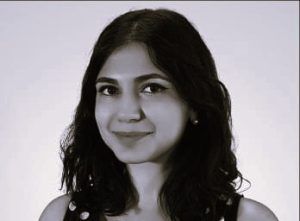
Talar Demirdjian
Talar Demirdjian is a Lebanese practitioner working on conflict, humanitarian response, and inclusive governance. Her work focuses on strengthening locally led action and creating spaces where dialogue, accountability, and meaningful participation are central to decision making.
She currently works with the Danish Refugee Council in Lebanon, supporting collaboration between diaspora organisations and local actors to enhance humanitarian and recovery efforts. Across her career, she has worked on conflict analysis, gender and social inclusion, migration and refugee policy, digital rights, and humanitarian innovation in the Middle East and international contexts. Her experience spans research, programme leadership, and strategic advisory roles, with a consistent focus on embedding equity and conflict sensitivity into policy and practice.
Talar is particularly interested in advancing women’s leadership in fragile and conflict-affected settings, and in exploring how mediation, reconciliation, and inclusive dialogue can strengthen both peacebuilding and humanitarian systems. She believes sustainable peace depends on shifting power toward those closest to conflict and ensuring their voices meaningfully shape the structures that affect their lives.
Participant in: December 2018 Fellowship: Peacebuilding and Women’s Meaningful Participation in Peacebuilding Processes
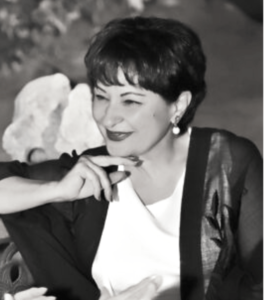
Dr. Guita Hourani
Dr. Guita Hourani is the Director of the Lebanese Emigration Research Centre (LERC) and Assistant Professor at the Faculty of Law and Political Science at Notre Dame University. She is also Co-Founder, Director of the International Campaign, and the Secretary-General of Lebanon Dialogue Initiative. She has a Ph.D. from the Graduate School of Global Studies, Tokyo University of Foreign Studies in Japan. She is presently Country of Origin Information Expert on Lebanon for the Fahamu Refugee Programme Oxford, England and Member of the Committee for Women Political Empowerment, Lebanon among others.
She was a Fellow of the Civic Education and Leadership Fellowship program at the Maxwell School of Citizenship and Public Affairs of Syracuse University in New York and a Fellow at the Institute of Christian Oriental Research at the Catholic University of America in Washington, D.C, USA. She also served as a member of the Migration Expert Committee of the Directorate of Migrants at the Lebanese Ministry of Foreign Affairs and a member of the UNDP National Academic Working Group on Migration in Lebanon. She was an International Development Consultant at the World Bank in Washington, D.C. While in the USA, she pioneered a course on the role of women in war, peace and conflict resolution and lectured on it in various universities and institutions.
She co-edited and published with Dr. Rita Stephan and Dr. Cornelia Horn a memorial volume dedicated to the late Professor Rita Sabat (1974 – 2013) entitled “In Lin with the Divine”: the Struggle for Gender Equality in Lebanon (2015). She is the author of Understanding Socioeconomic and Political Mobility of Naturalized Kurds in Lebanon (2018) and The Impact of the Summer 2006 War on Migration in Lebanon: Emigration, Re-Migration, Evacuation, and Returning (2006). She co-edited with Mario Najm and Jasmin Lilian Diab Proceedings of the Dialogue and Best Practice Forum: Peace, Stability, and Prosperity–The Case of Serbia and Kosovo (2017) and co-edited with Jasmin Lilian Diab Dialogue and Best Practice International Forum: History, Geography, Reconciliation–The Case of Northern Ireland (2019).
Dr. Hourani has conceptualized, designed methodologies, implemented and written final reports on projects related to migration, refugees, socioeconomic mobility, political participation, human insecurity, integration policies, dialogue, and access to information.
Among her current research projects a study on Lebanese women migrant returnees and their political participation and a study on the role of the Lebanese political parties in the diaspora.
Participant in: December 2018 Fellowship: Peacebuilding and Women’s Meaningful Participation in Peacebuilding Processes
Muzhda Azeez
Muzhda Azeez teaches at Salahddin Univesity in the Social Work Department, focussing on topics such as gender equality, child and family law, and social work. Muzhda is also a member of the committee working to establish gender equality research at the University. Prior to this, Muzhda was a Programme Officer at the Kvinna till Kvinna Foundation in Erbil, Iraq, where she worked on projects with a focus on gender-based violence, UNSCR 1325, peace-building, and community-level capacity-building. Muzhda also monitored activities aimed at building knowledge and capacity around financial independence, and social and legal support.
Participant in: December 2018 Fellowship: Peacebuilding and Women’s Meaningful Participation in Peacebuilding Processes
Narmen Salahi
Narmen Salahi is the Government Coordinator for INMAA for Development, an NGO based in Kirkuk. She works directly with parliamentarians in this role and has coordinated and attended a round table discussion with parliamentarians and academics on the conflict in the region, and how to build peace. Prior to this Narmen was a Monitoring and Evaluation Officer for International for Monitoring and Evaluation. Narmen obtained a diploma in Islamic Studies and German as a foreign language at the Ruprecht University Heidelberg, in Heidelberg, Germany.
Participant in: November 2016 Fellowship: Peacebuilding and Women’s Meaningful Participation in Peacebuilding Processes
Elsa Saade
Elsa Saade is a social and political activist working in the fields of humanitarian assistance and capacity building. Elsa is a Human Rights Officer at the Gulf Centre for Human Rights, where she works to support women human rights defenders and promotes freedom of expression and peaceful assembly. She is active in Lebanese civil society movements, engaging in campaigns specifically related to women’s rights, war reconciliation, observing elections, youth leadership, and peace building.
Participant in: March 2017 Fellowship: Peacebuilding and Women’s Meaningful Participation in Peacebuilding Processes
Maha Nassar
Maha Nassar spent four years studying Arabic literature in Syria and later moved to Egypt to study theology at the Evangelical Theology Seminary in Cairo. She received a degree in theology, the first woman ever to receive one there. She is am responsible for the provision of humanitarian aid for the National Evangelical church in Lattakia, Syria, where she is the first female Elder. She is also a volunteer for the Awareness Foundation, and has played a significant role in the establishment of their “Ambassadors for Peace” programme.
Participant in: August 2016 Fellowship: Peacebuilding and Women’s Meaningful Participation in Peacebuilding Processes
Shahrazad Odeh
Shahrazad Odeh is a human rights defender and researcher. She currently works with the Public Committee Against Torture in Israel as a freelance attorney and lecturer. Whilst working there, she has introduced a gender sensitive approach to the documentation of torture, which is now used throughout the organisation’s work. Shahrazad also provides legal consultation for families with disabled children; and holds a research position at the Hebrew University of Jerusalem. Here, she obtained her LLM in Public International Law and Gender Studies in 2015. Shahrazad’s research focuses on the legal rights of children and the status of Palestinian women; topics that she has been working on with a number of institutions, such as MAKAN, the Palestinian Rights Studies Centre, in London, UK. Shahrazad has testified in front of the Israeli parliament and the European Union on human rights violations during the 2014 military operations, and violations of due process and the excessive use of force by the Israeli military and police in the arrest and detention of Palestinian youth. In addition, Shahrazad is legal advisor and spokeswomen for Taita Leila, an organisation that aims to empower Palestinian women.
Participant in: November 2016 Fellowship: Peacebuilding and Women’s Meaningful Participation in Peacebuilding Processes
Majeda Korbane
Majeda Korbane is a social worker and women’s rights activist. She was a member of Ornamo Organisation for Justice and Human Rights and conducted research documenting cases of hostages with a particular focus on women and children. She was also a member of Musawa Women’s Studies Center, which works with female Syrian refugees on economic empowerment, their rights and developing their capacity to participate in peace building efforts. Majeda is also a member of the Syrian Women’s Initiative for Peace and Democracy.
Participant in: June 2017 Fellowship: Peacebuilding and Women’s Meaningful Participation in Peacebuilding Processes
Jihan Sindi
Jihan Sindi is an advisor to the Presidency of the Council of Ministers of Kurdistan Regional Government, Iraq. She obtained a Master’s in International Peace and Conflict Resolution in 2003, and took part in the Leaders in Development programme at Harvard University in 2009. Jihan is a Member of the KRG’s High Commission for Revitalisation, as well as a Member of the Board of Directors for ITV (Iraq Satellite TV). She has acted as the contact and coordinator person between the Council of Ministers of KRG and a number of foreign representations in the region, such as the Korean Army and US Regional Reconstruction Team. Jihan has also assisted in the supervising and organising of capacity building programmes for employees of the KRG.
Participant in: November 2016 Fellowship: Peacebuilding and Women’s Meaningful Participation in Peacebuilding Processes
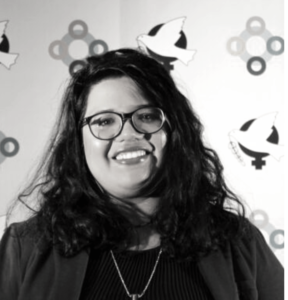
Inas Miloud
Inas Miloud is an indigenous feminist activist. She is the former Lead Coordinator of 1325 Network in Libya, and Former Indigenous Senior Fellow at the UN Voluntary Fund for Indigenous Peoples. She is the co-founder and currently Co-Lead Director of Twiza, a collective engaged in climate justice, movement building & collective healing. Her works have been particularly focused on gender, peace and security, militarization, indigenous issues, and intersectionality.
Participant in: November 2016 Fellowship: Peacebuilding and Women’s Meaningful Participation in Peacebuilding Processes
Mariela Shaker
Mariela Shaker is a violinist, and is currently studying towards a Masters degree in music at DePaul University in Chicago. She started playing the violin at the age of 10, when she joined the Arabic Institute of Music in Aleppo in 1999, graduating with distinctions in 2004. She took part in many concerts and festivals in Syria, including at the St Ephrem Syriac Orthodox Cathedral. In 2013, she received a scholarship to study at Monmouth College in Illinois, where she went on to receive a bachelors in Music Performance, and also served as concert master for the Monmouth College Chamber Orchestra. In 2015, she gave a recital at the Kennedy Centre, and has has also performed at the White House, the Pentagon, the United Nations, and the Arab American Institute.
Participant in:
August 2016 Fellowship: Peacebuilding and Women’s Meaningful Participation in Peacebuilding Processes
August 2019 Fellowship: The Arts as a Tool for Peacebuilding
Kholoud Htewash
Kholoud Htewash is the communications director and executive board member of The Voice of Libyan Women, a youth-led organisation that aims to improve the political participation and the economic empowerment of women in Libya and advocates against gender-based violence. Kholoud is responsible for managing all media and communication pertaining to the organisation, and supports the staff and board members in their activities. In 2013, Kholoud obtained an undergraduate degree in Web Design and Development from Abertay University in Dundee, UK, and is currently reading for an MSc in Strategic Communication and Public Relations at Queen Margaret University in Edinburgh, UK.
Participant in: November 2016 Fellowship: Peacebuilding and Women’s Meaningful Participation in Peacebuilding Processes
Abida Kakar
Abida Kakar is a team leader at Women for Peace and Participation (WPP) based in Kabul. She has extensive experience working with a number of national and international NGOs and organisations including USAID and the UNDP. At the UNDP office in Kabul, she was the first female “National Professional Officer”. Under her management she always ensures women are treated equally. Her expertise and interests are in international development programme design and implementation, human resources management, women and youth empowerment, capacity building and gender equality. Her aim is to provide support to women and youth at all levels to step up and express their rights for the betterment of themselves, families, societies and at the end for their country.
Participant in: August 2018 Fellowship: Peacebuilding and Women’s Meaningful Participation in Peacebuilding Processes
Ayse Bingol
Ayse Bingol is a lawyer and human rights defender. She has brought a number of cases before the Constitutional and Supreme Court of Turkey, as well as the European Court of Human Rights. Ayse also works with internally displaced persons in Turkey and provides pro-bono legal assistance to survivors of gender-based violence. In 2011, she obtained a LLM in Human Rights at Queen Mary University in London, UK, and obtained an undergraduate degree from the Faculty of Law at Istanbul University in Istanbul, Turkey, in 2002. In addition to her legal work, Ayse has carried out consultancy work for institutions such as Open Society Justice Initiative, Economic and Social Research Centre and Democratic Progress Institute, and is a founding member of the Peace Foundation (Baris Vakfi), which advocates for a peaceful resolution of the Kurdish question.
Participant in: November 2016 Fellowship: Peacebuilding and Women’s Meaningful Participation in Peacebuilding Processes
Esra Elmas
Esra Elmas is the Turkey Programme Co-ordinator at the Democratic Progress Institute. Esra is the co-founder of Istanbul Bilgi University for Conflict Resolution Studies and Research. She is also a PhD student in Political Science at Écoles des Hautes Études en Sciences Sociales. She has an MA degree in Cultural Studies, and her publications cover areas such as Turkish modernization, internal migration, civil-military relations, and the history of Turkish media.
Participant in: August 2016 Fellowship: Peacebuilding and Women’s Meaningful Participation in Peacebuilding Processes
Nadine Gerges
Nadine Gerges works for Youth with a Mission (YWAM) in Northern Ireland, working with young refugees on forgiveness and reconciliation. She has assisted in the organisation of faith and conflict conferences in Lebanon with NGOs working with refugees. Prior to this, she worked with young Syrians, Lebanese and Palestinians in Lebanon and as a Facilitator and translator for Humedica International Aid in the Syrian refugee camp in the Bekaa Valley, Lebanon.
Participant in: August 2016 Fellowship: Peacebuilding and Women’s Meaningful Participation in Peacebuilding Processes
Razan Ghazzawi
Razan Ghazzawi is a freelance researcher and journalist. Razan received a Chevening scholarship to complete a Master’s degree in Gender, Sexuality and the Body at the University of Leeds. Her research focuses on sexuality politics in the context of the ‘refugee crisis’ in the West. She will be commencing a PhD at the Centre for Gender Studies at Sussex University in 2017 on a similar topic. Razan has co-authored several research reports, amongst other things on the role of women’s peace activism in Syria. Further to her work as a researcher, Razan has been a freelance journalist and blogger since 2007. She has produced several reports for a number of media outlets such as Now Lebanon and ARTE. She worked as a Media Officer at the Syrian Center for Media and Freedom of Expression in Damascus, Syria, and has worked with the Institute for War and Peace Reporting in Gaziantep, Turkey. In addition, Razan is currently working with the US based foundation Free Syria.
Participant in: November 2016 Fellowship: Peacebuilding and Women’s Meaningful Participation in Peacebuilding Processes
Dr. Sanaa Alsarghali
Dr. Sanaa Alsarghali is the co-founder and director of the Constitutional Studies Center. She is the 9th member of the Palestinian drafting committee appointed by the Palestine Liberation Organization legislative arm; the Palestinian National Council in 2019. In July 2020 UNESCO approved the appointment of Dr. Alsarghali as the new holder of UNESCO Chair on Human Rights, Democracy and Peace hosted by An-Najah University. Sanaa Alsarghali was previously a Lecturer at An-Najah Law School in Palestine. She was awarded a full scholarship from An-Najah University to study for a PhD in Constitutional Law in order to participate in constitutional building in Palestine. Sanaa’s PhD thesis focused on the presidential concentration of powers within the Palestinian Basic Law. In 2016 Sanaa was elected as the Chairwoman of TAM, an NGO that intends to change the stereotypical image of the Palestinian women in the Media. She is the youngest Chairwoman of an active NGO in Palestine. Previously, she worked as a TV presenter on Al Fajer TV. Her social and political talk show ‘Tam Time’ was screened on the Palestinian National TV for two years. Sanaa also helped in producing several documentary movies that focused on the protection of social rights.
Participant in: August 2016 Fellowship: Peacebuilding and Women’s Meaningful Participation in Peacebuilding Processes
Atiaf Alwazir
Atiaf Alwazir is a researcher, human rights activist, citizen journalist and blogger, and co-founder of the media advocacy group Support Yemen. She has a Master in International Relations from American University, and her dissertation focussed on women in prison in Yemen. Since 2011, she has chronicled the revolution in Yemen on her blog, ‘Woman from Yemen’. She also has many years of experience of campaigning for social justice programmes in the Middle East and North Africa. She was born in Sana’a and grew up in the USA, and in Egypt. Her father is Zaid Ali Alwazir, a Yemeni scholar, who produced a large number of publications on political Islam. Atiaf additionally has several years of experience in research and education and is currently an Instructor and Academic Advisor at American University.
Participant in: August 2016 Fellowship: Peacebuilding and Women’s Meaningful Participation in Peacebuilding Processes
Reem Assil
Reem Assil is the Co-Founder of Makani Cambridge and Managing Director of Reem Assil LTD. She previously served as Chair of the Syrian Platform for Peace, an open platform aiming to promote and build peace among Syrians. She is a member of several Syrian opposition bodies and has worked on the coverage of and communication with Syrian activists on the ground. Since early 2016, Reem has been a PhD candidate at the Centre of Religions for Reconciliation and Peacebuilding at the University of Winchester, UK, studying peace education and religious reconciliation. Previously, she obtained a Master’s in biotechnology from the University of Damascus, Syria, and was a PhD candidate in immune-parasitology at the University of Montpellier, France – a study, which was interrupted due to the conflict in Syria. Further, Reem is working as a translator and is co-founder and manager of Free Syrian Translators.
Participant in: November 2016 Fellowship: Peacebuilding and Women’s Meaningful Participation in Peacebuilding Processes
Dr. Shaheen Akhtar
Dr. Shaheen Akhtar is a Professor in International Relations and Editor of Journal of Contemporary Studies at the Faculty of Contemporary Studies, National Defence University in Islamabad. Her areas of expertise are conflict resolution and peacebuilding in South Asia, foreign policy of major powers, and non-traditional security: energy, water, climate change and gender issues in South Asia. She has published a number of papers regarding peacebuilding and Kashmir. She is also part of the Kashmir Initiative Group (KIG) which aims to bridge the gap between local communities and policy makers.
Participant in: August 2018 Fellowship: Peacebuilding and Women’s Meaningful Participation in Peacebuilding Processes
Asmaa Al Ameen
Asmaa Al Ameen is an accomplished project manager and humanitarian professional with over two decades of experience leading development initiatives across Iraq and internationally. She holds a Master’s degree in International Humanitarian Law and a background in civil engineering, combining technical expertise with a deep commitment to human rights and community empowerment.
She has directed major programmes with organisations such as INMAA Organization for Development and the Barzani Charity Foundation, where she spearheaded women’s empowerment projects, coordinated with international NGOs and donors, and managed multi-sector teams. Her leadership has extended to projects funded by UNOPS, UNAMI, UNHCR, USAID, UNICEF, and other global agencies, with a focus on access to justice, conflict resolution, and sustainable development.
Asmaa is also an active member of several international networks, including Every Woman Treaty, Girls Not Brides, and Widows for Peace Through Democracy, reflecting her dedication to advancing women’s rights and social justice worldwide. Fluent in Kurdish, Arabic, Turkish, and English, she brings strong cross-cultural communication skills to her work. Driven by a passion for equity and resilience, she continues to collaborate with NGOs and civil society partners to strengthen communities, promote peace, and ensure inclusive development.
Participant in: August 2016 Fellowship: Peacebuilding and Women’s Meaningful Participation in Peacebuilding Processes
Sawsan Al-Refaei
Dr. Sawsan Al-Refaei (She, her, elle) is an expert in equity, public policy and advocacy. She has managed large scale programs and provided technical support to governments, international non-profit organizations, and United Nations Organizations in areas of public policy, equity-based strategy and planning, results-based frameworks, and advocacy. She is a published researcher in the area of gender-based violence and programming during emergencies. Sawsan holds a master’s degree in health policy, planning, and financing, from the London School of Economics. She also has a diploma in Population and Gender Studies from the University of Costa Rica.
Participant in: May 2018 Fellowship: Peacebuilding and Women’s Meaningful Participation in Peacebuilding Processes
Khulood Al Saidi
Khulood Al-Saidi is the Women, Peace and Security Projects Manager at Beyond Borders Scotland.
An experienced practitioner in peacebuilding and conflict resolution, with extensive expertise spanning the MENA region, including Iraq, Yemen, Libya, Tunisia, and Lebanon. She has led reconciliation, peacebuilding and capacity-building programmes for UN agencies and other distinguished international organisations, focusing on advancing the Women, Peace, and Security agenda by building the capacities of peace agents and local mediators, and integrating conflict- and gender-sensitive approaches into local and regional projects and initiatives.
As a guest author of Climate Change, Conflict, & Gender Insights and Perspectives from the Middle East and North Africa, which is part of the Transboundary Environments Practitioner Briefing Series published by MEDRC, she highlighted the role of women ‘insider mediators’ and their critical roles in addressing resource-based conflicts and governance. Examples of women’s roles in addressing disputes over water access in Yemen, as well as women’s roles in natural resource governance to address resource-related conflict in Sudan, are used.
Khulood is the former manager of the 1325 Women in Conflict Fellowship Programme, a WPS adviser and an Alumni network member since 2018, holding an MA in Advanced Practice in Peacebuilding and Conflict Resolution from the University of Bradford, UK, as a Chevening Scholar.
Participant in: May 2018 Fellowship: Peacebuilding and Women’s Meaningful Participation in Peacebuilding Processes
Roua Al Taweel
Roua Al Taweel is a PhD candidate at Ulster University specializing in transformative/transitional justice in Syria, with dual MA degree in Women’s and Gender Studies at the University of Hull. Her MA thesis was on ‘Critically Reading the Dominant Human Rights Discourses: Freedom of Movement in the Context of Syria Forced Displacement’. Human Rights in relation to forced displacement is an issue of concern on personal, academic, and professional levels. Roua has been in a direct contact with refugees and IDPs since 2006. It started in Damascus with Lebanese and Iraqis refugees as well as Syrian IDPs (as a result of the drought) and continued in Sudan where she worked with IDPs from Darfur. Another key experience was working with Syrian forced migrants in the hosting communities of Egypt and Turkey as well as the IDPs in northern Syria. Her scope of work varied from providing humanitarian aid and first-aid services, administration work, conducting surveys, facilitating youth and women empowerment programs and workshops, and working on project proposals. She was a Project Manager at the Syrian Women’s Network, and a Youth Empowerment Program Consultant at the International Medical Corps. She has also formerly worked as an aid work at the Syrian Arab Red Crescent, and a Peer Educator at Y-PEER.
Participant in: August 2016 Fellowship: Peacebuilding and Women’s Meaningful Participation in Peacebuilding Processes
Noha Al-Eryani
Noha Al-Eryani is the Executive Manager for the Humanitarian Forum – Yemen, which supports and develops civil society organisations, responding to disasters and emergencies and implementing humanitarian and development projects in areas such as health, education, and gender. Prior to joining the Humanitarian Forum – Yemen in 2011, Noha worked for the Yemeni Women’s Union on projects relating to women’s income generation and social accountability.
Participant in: March 2017 Fellowship: Peacebuilding and Women’s Meaningful Participation in Peacebuilding Processes
Mona Al-Maghafi
Mona Al-Maghafi is an experienced Human Rights and Development Professional with a demonstrated history of working in international human rights and humanitarian law, gender and health. She was a Human Rights Officer at the Office of the High Commissioner for Human Rights. Mona has contributed to the reporting portfolio of the country office, with a special focus on women and girls in armed conflict. She has also investigated allegations of human rights violations, and made contributions to regular international reporting. Mona recently drafted the women and child rights sections of the HRC report update on the situation of human rights in Yemen, pursuant to Resolution A/HRC/RES/30/18 (2015). Mona also was communications focal at OHCHR in Yemen, where she led the organization of a youth talent competition, where over 3,000 youth entered their videography, photography, and poetic works highlighting key human rights issues in Yemen as well as a Yemen Researcher at Amnesty International.
Participant in: August 2016 Fellowship: Peacebuilding and Women’s Meaningful Participation in Peacebuilding Processes
Beyond Borders Scotland Ltd. A Ltd company SC440453
Contact